

































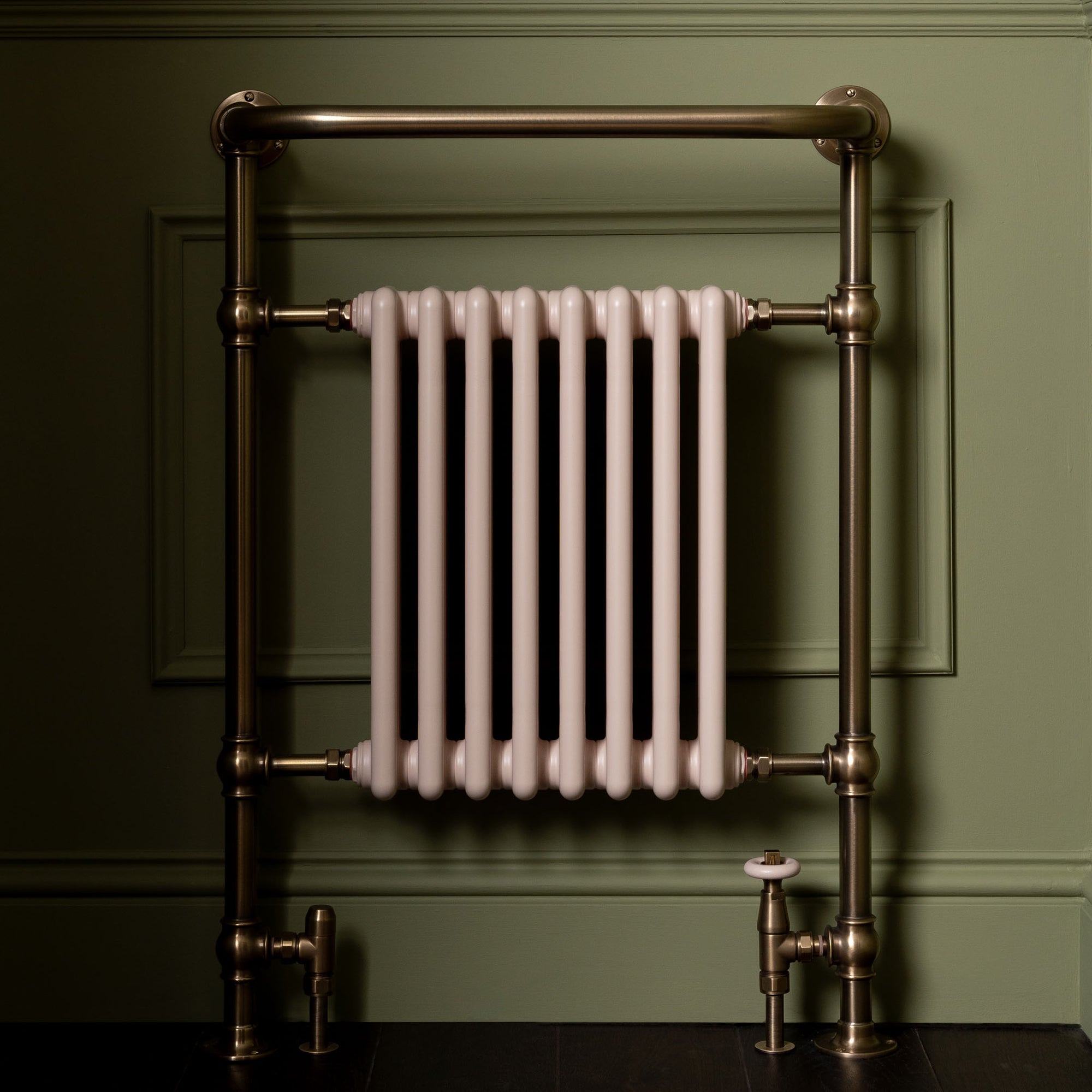



Cast iron radiators combine substantial heating performance with an architectural character that is difficult to replicate with a conventional panel radiator.
They are particularly at home in period properties, country houses and traditional interiors, but their appeal is not limited to historic buildings. Against simple plaster, natural stone, timber floors or contemporary joinery, a cast iron radiator can become a deliberate piece of furniture within the room rather than something to be hidden.
Choosing the right radiator requires more than selecting the design that looks best. Heat output, height, width, column depth, available wall space, pipe positions, system type, valves and finish all need to be considered together.
Rutland London's Luxury Cast Iron Radiators are available in a wide range of sizes, with bespoke dimensions available on request and selected designs offered for either central heating or electric operation.
What Is a Cast Iron Radiator?
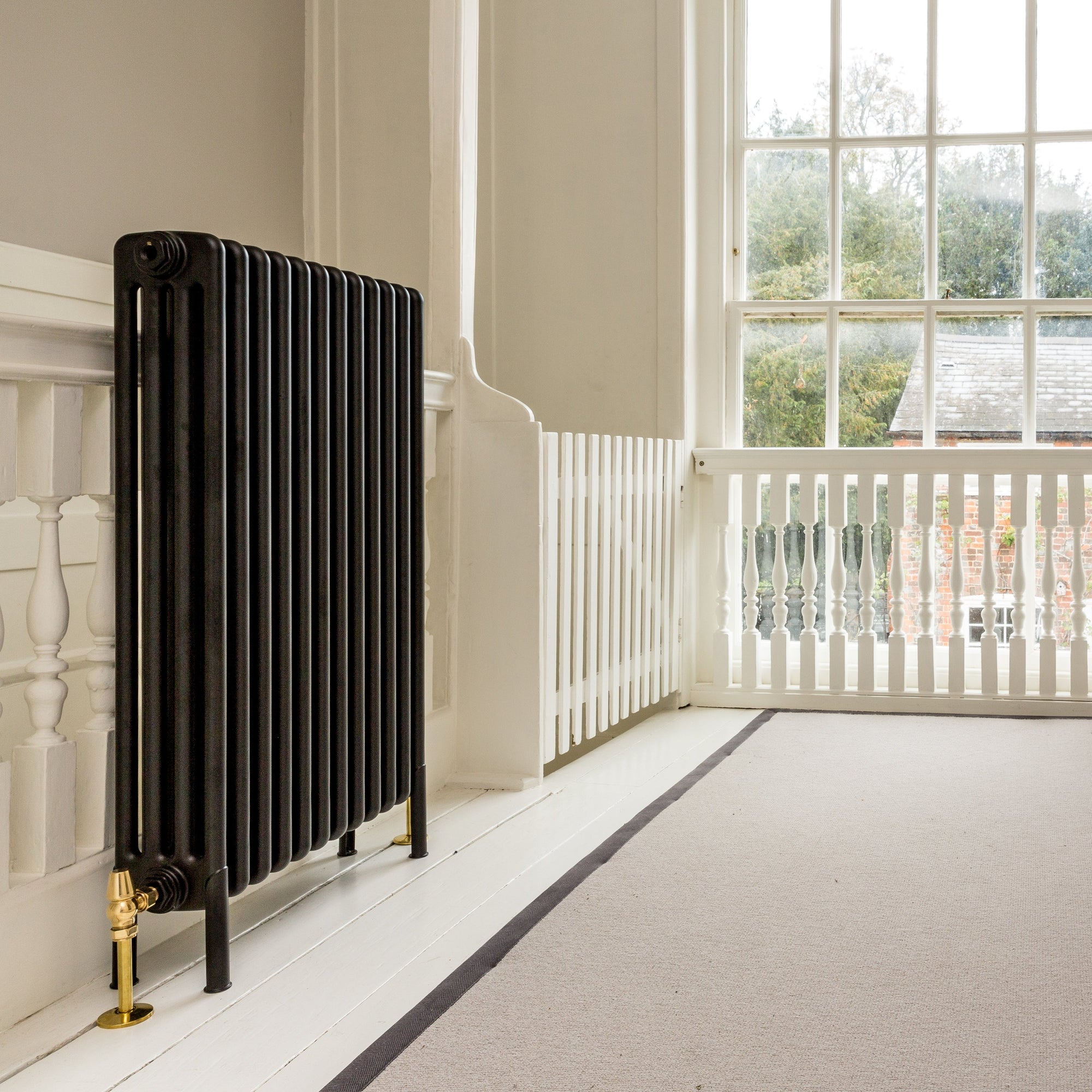
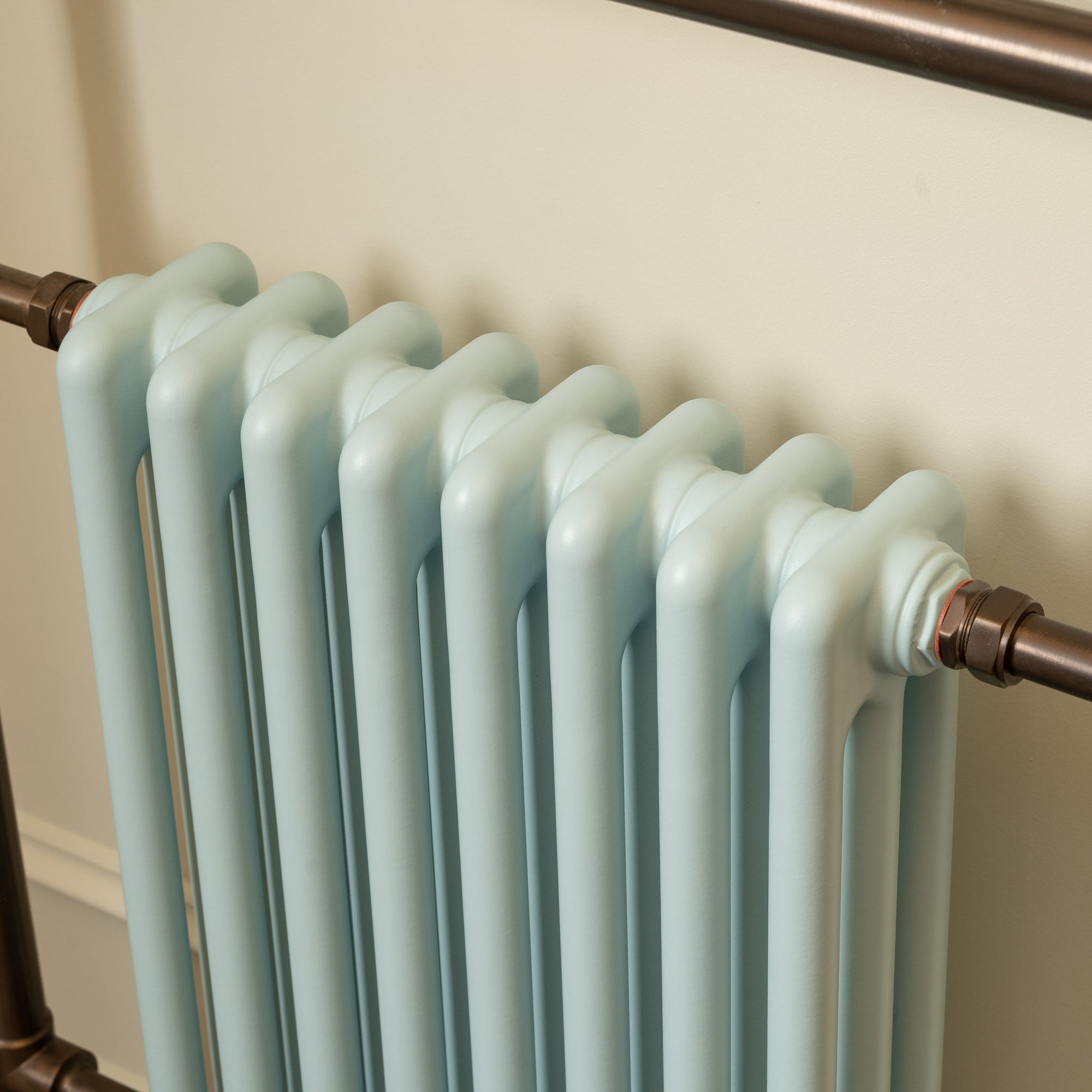
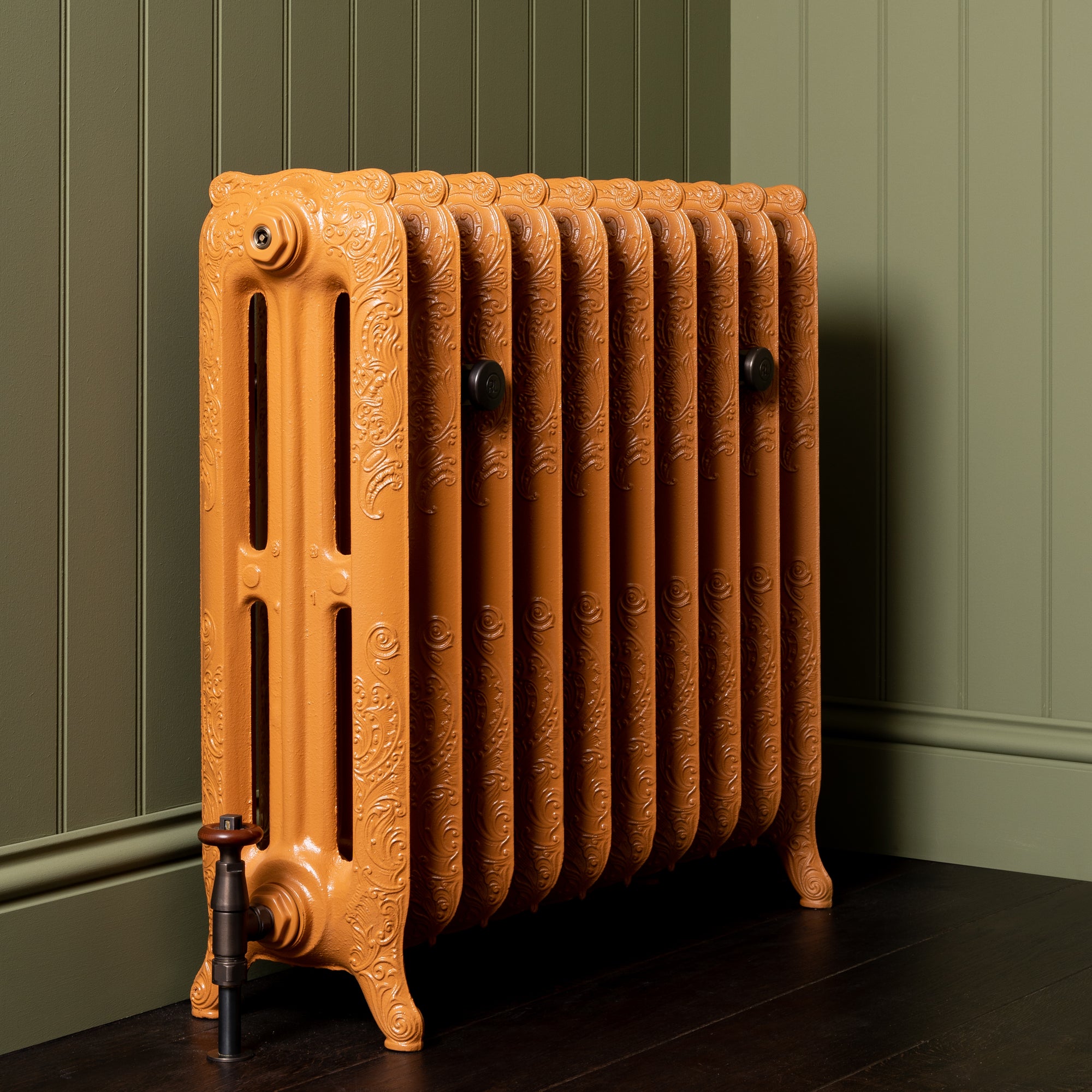
A cast iron radiator is assembled from individual cast sections through which heated water circulates. The sections contain vertical columns that increase the surface area available to transfer heat into the room.
By changing the number of sections, the width and heat output can be adapted more closely to the requirements of the project. This modular construction is one of the great advantages of a traditional cast iron radiator.
Why Choose Cast Iron?
Cast iron has considerable thermal mass. It takes time to warm, but once hot it can retain and release heat after the heating cycle changes.
There is also an important aesthetic distinction. The depth, weight and repeating sections create a strong architectural presence. In the right interior, the radiator becomes part of the design rather than an unavoidable utility.

Cast Iron Radiators in Period Properties
Cast iron radiators are a natural choice for Georgian, Victorian and Edwardian houses, country properties and other traditionally influenced interiors.
The aim does not need to be exact historical reproduction. A well-proportioned cast iron radiator can respect the character of an older building while operating as part of a modern heating system.
Cast Iron Radiators in Contemporary Homes
A cast iron radiator can be equally effective in contemporary architecture. The contrast between traditional cast metal and clean plaster, large-format stone, simple joinery or modern glazing can give an interior greater material depth.
Understanding Radiator Columns
The term “column” describes the number of vertical waterways running through the depth of each radiator section.
A deeper radiator with more columns generally provides greater surface area and potentially greater heat output for a given width, although the declared output of the actual product should always be used when sizing an installation.
Two, Four or Six Columns?
The correct depth depends on the required output, available projection from the wall and visual scale of the room. Shallower two-column radiators can suit corridors and spaces where projection is restricted. Four-column designs provide a substantial traditional profile, while six-column radiators can provide strong output where wall width is limited.
How Do You Size a Cast Iron Radiator?
The starting point should be the heat requirement of the room rather than simply the width of the available wall.
A heat-loss calculation considers room dimensions, insulation, glazing, external walls, construction and the temperatures at which the heating system will operate. Once the required output has been established, it can be compared with the declared output of the radiator at the relevant test condition.
BTUs, Watts & ΔT50 Explained
Radiator outputs are commonly expressed in watts or BTUs per hour. Published output also relates to a temperature difference, often shown as ΔT50.
A radiator does not produce the same heat output at every water temperature. If the heating system operates at lower flow and return temperatures, the actual output will be lower than its ΔT50 figure.
How Many Sections Do I Need?
The required number of sections depends on the room heat loss and the output of each section in the selected radiator design. It should not be estimated purely by room area or by copying the dimensions of an existing radiator.
Cast Iron Radiators & Lower Flow Temperatures
Modern heating systems are increasingly designed to operate at lower water temperatures. A cast iron radiator can form part of such a system, but its output reduces as the temperature difference between the radiator and room becomes smaller.
Can Cast Iron Radiators Work With Heat Pumps?
Potentially, yes, but correct sizing is essential. Heat pumps commonly operate with lower water temperatures than traditional boiler systems, so greater radiator surface area may be required to meet the same room heat loss.
The heating engineer should calculate the required output at the actual proposed flow and return temperatures before the radiator is ordered.

Floor-Mounted Cast Iron Radiators
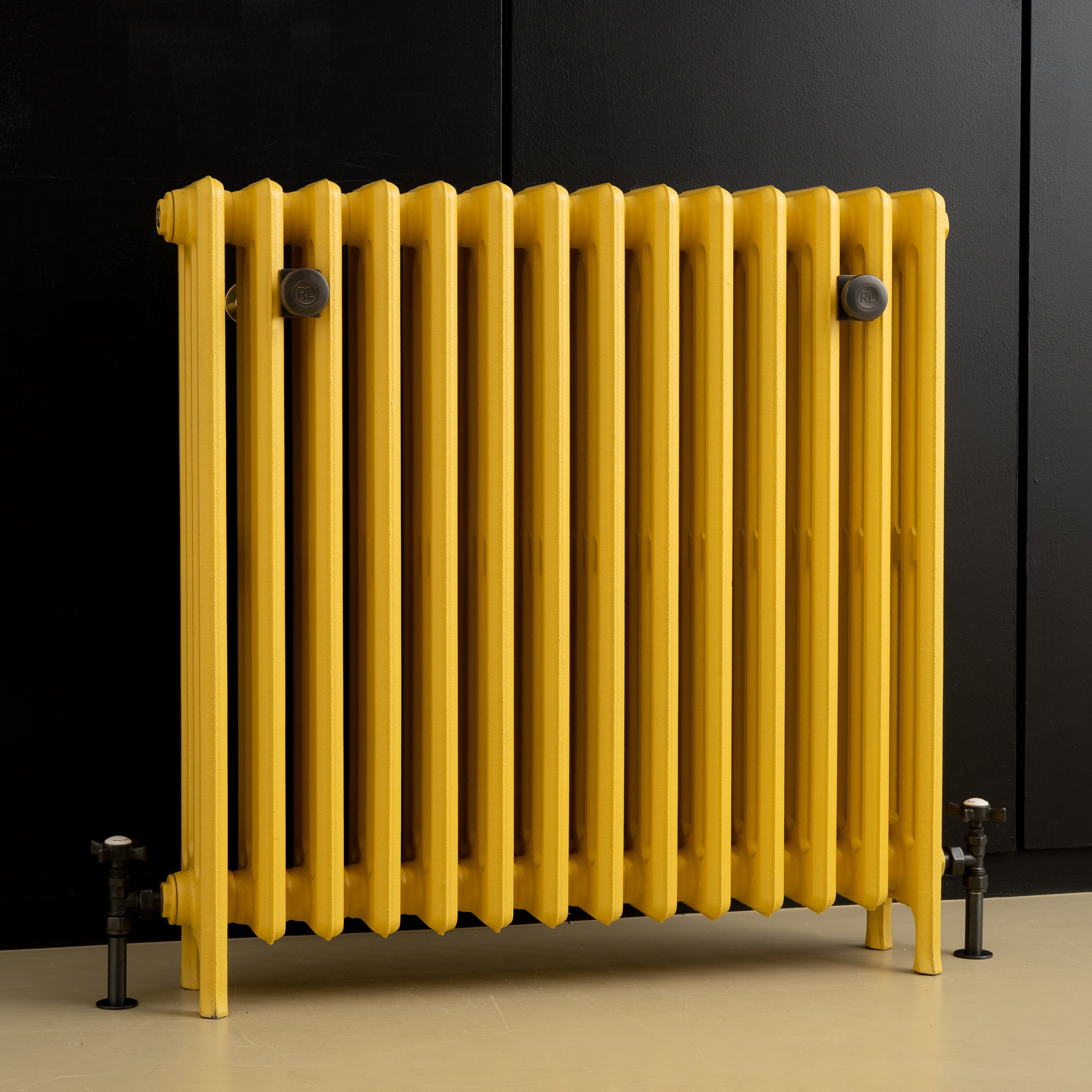
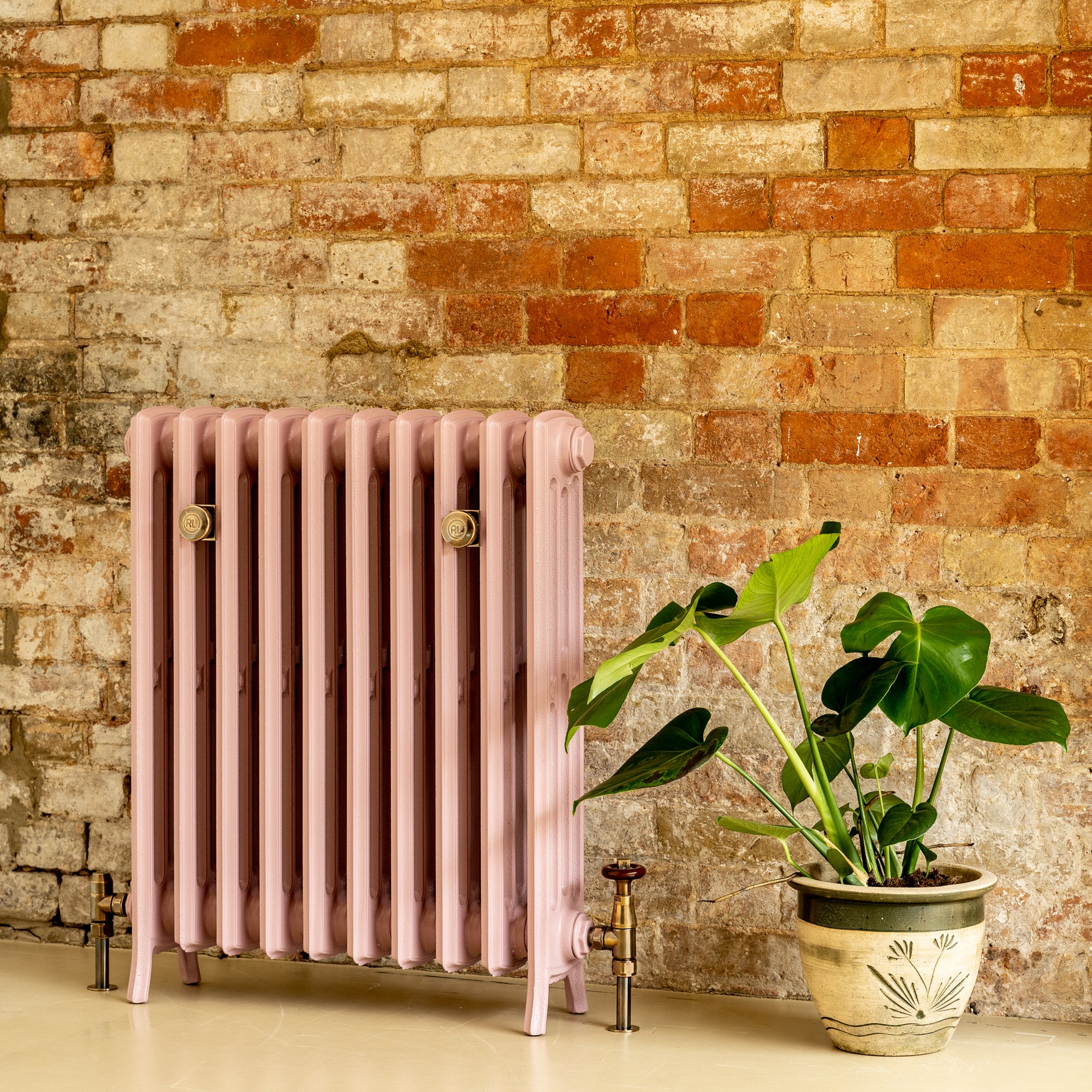
Floor-mounted cast iron radiators have a substantial, traditional presence and work particularly well in larger rooms and period properties.
Explore Rutland London's Floor Mounted Cast Iron Radiators for traditional designs in a wide range of sizes and painted finishes.
Wall-Mounted Cast Iron Radiators
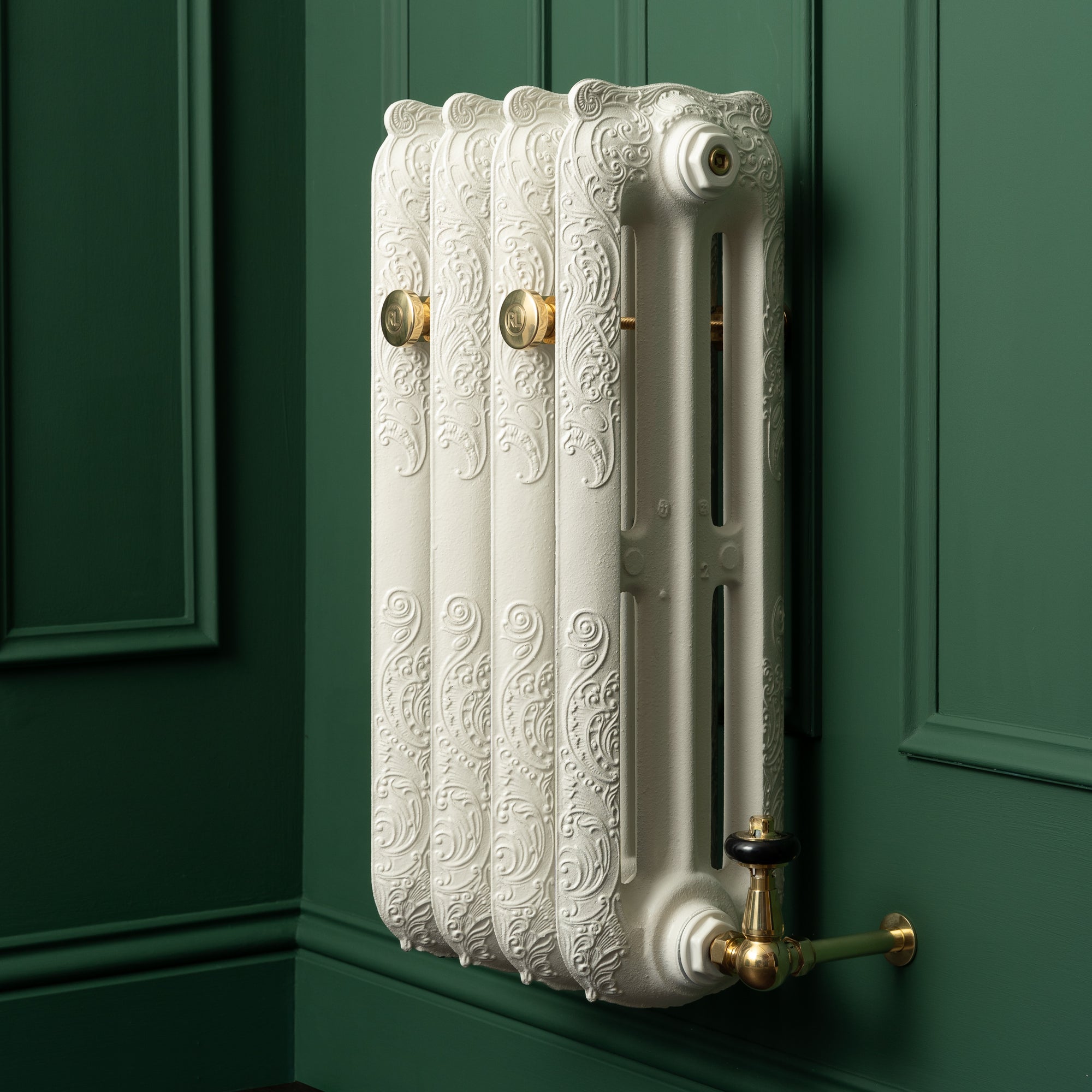
A wall-mounted cast iron radiator creates a different architectural effect, lifting the radiator clear of the floor and allowing the flooring to continue beneath it.
Because cast iron is extremely heavy, the suitability of the supporting wall is critical. Wall construction, fixings, radiator weight and installation method should all be reviewed before specification.
Explore Wall Mounted Cast Iron Radiators.
Where Should a Cast Iron Radiator Be Positioned?
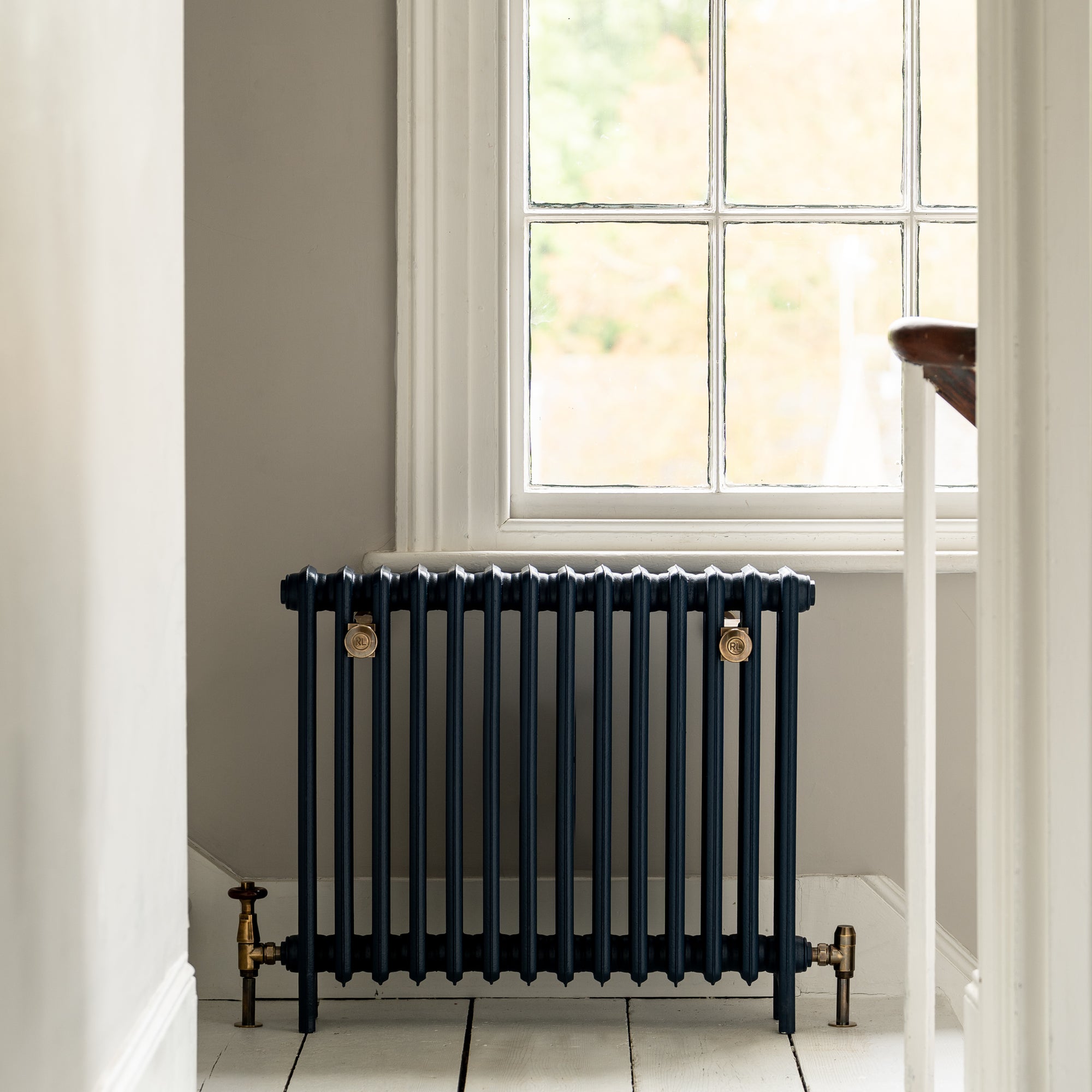
Traditionally, radiators are often positioned beneath windows or against external walls, but the best position depends on the architecture and heat-loss pattern of the individual room.
Furniture, curtains, doors and circulation routes should also be considered. A substantial cast iron radiator should have sufficient space around it to allow heat to move into the room.
Can Cast Iron Radiators Be Used in Bathrooms?
Yes, where the radiator and heating system are appropriate for the application.
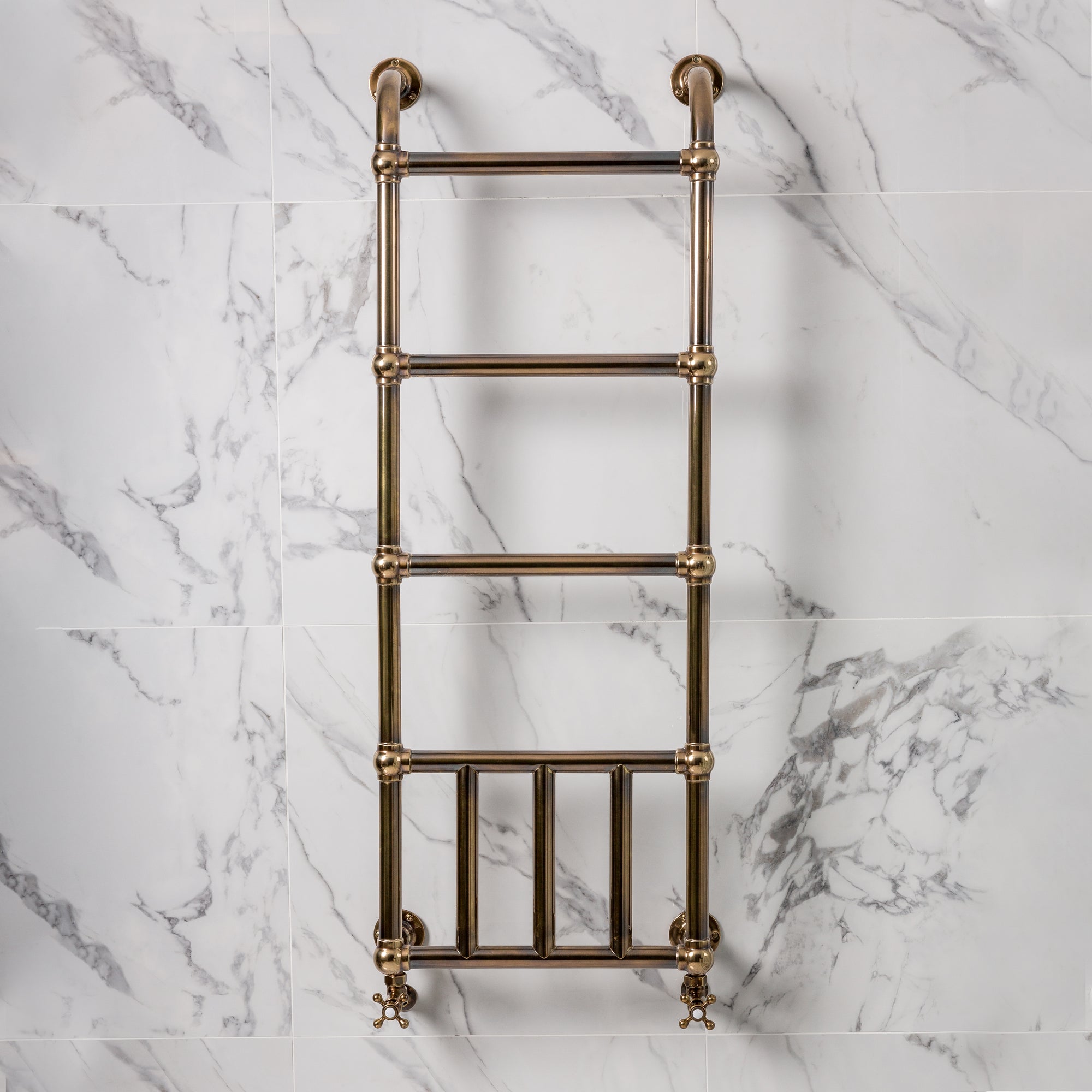
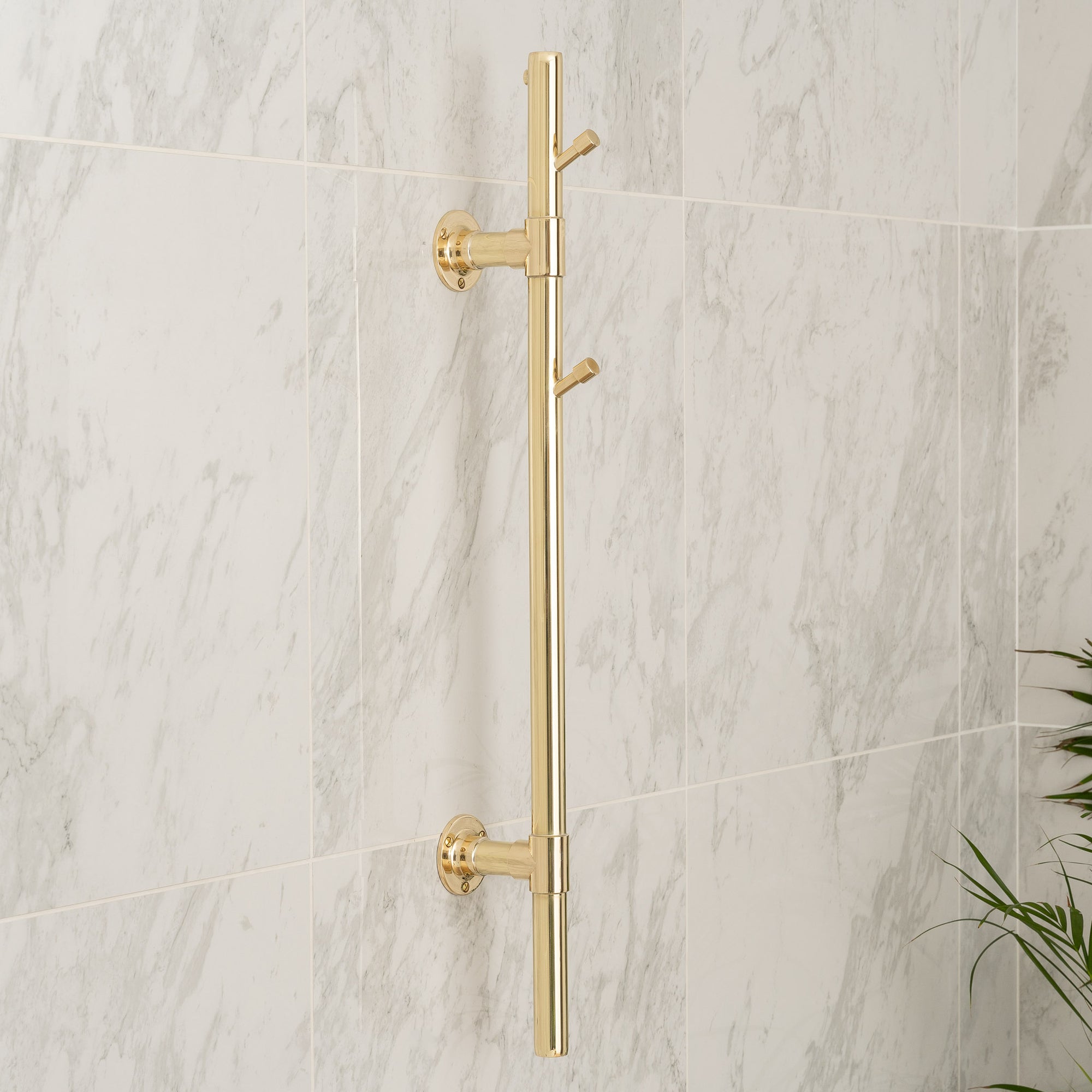
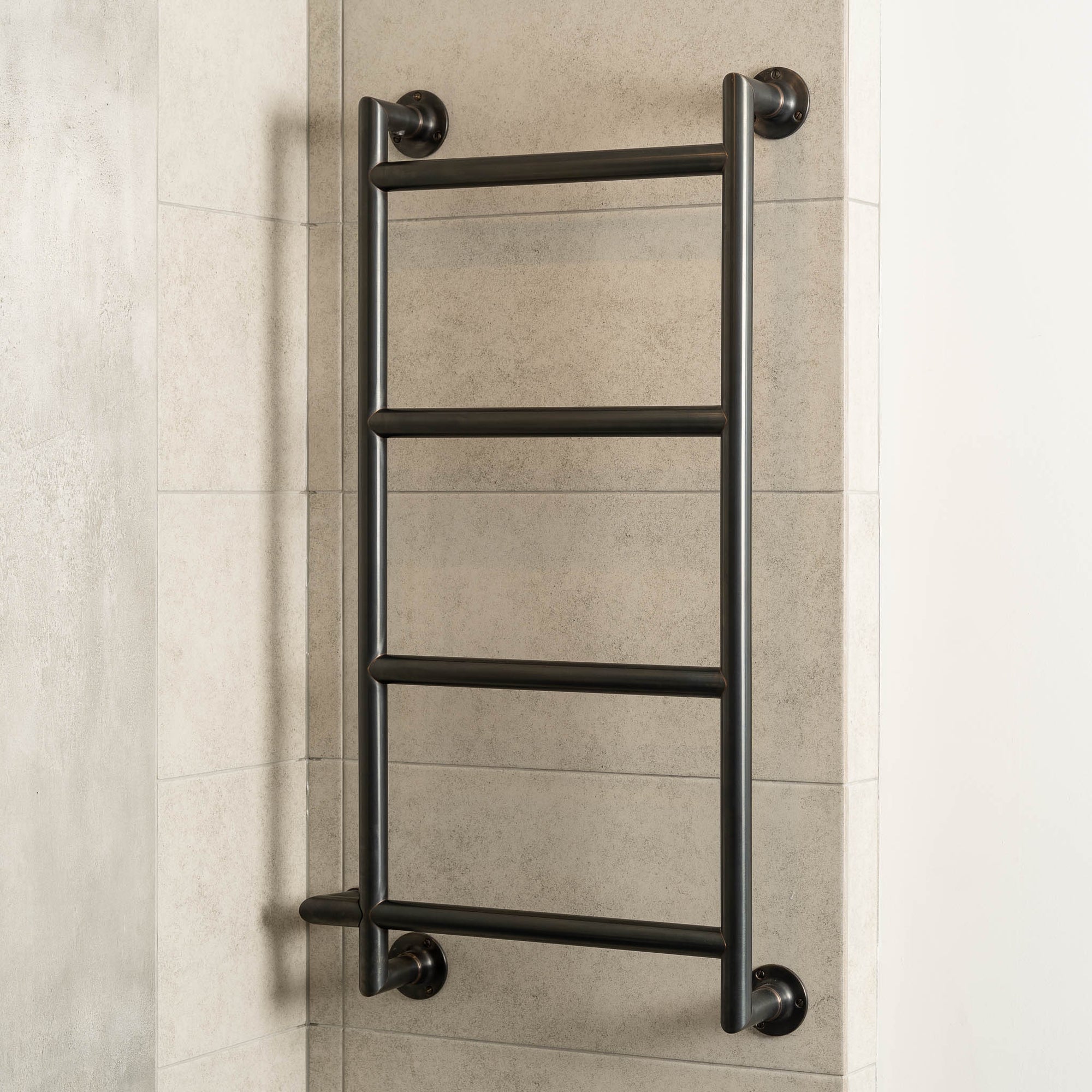
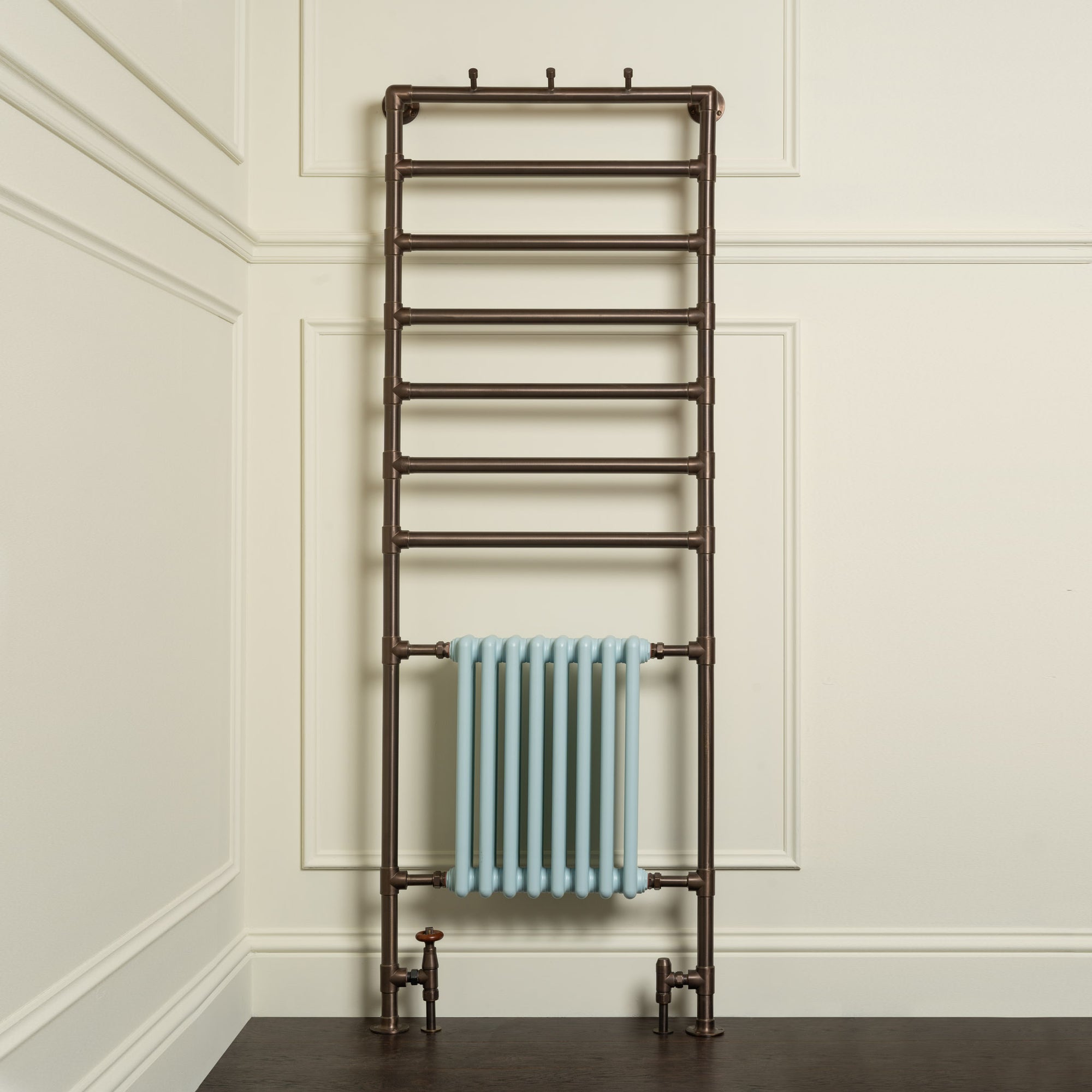
A cast iron radiator can provide useful room heating and create a strong traditional feature within a bathroom. Where towel warming is also required, Rutland London's Traditional Heated Towel Rails include designs combining handcrafted Brass rails with radiator inserts.
Closed-Circuit Heating Systems
Rutland London cast iron radiators should be installed on a suitable closed heating circuit and are not intended for connection to a domestic hot-water system.
Rutland London also advises against installation on salt-softened water systems unless otherwise agreed with the installer.
Central Heating or Electric?
Central heating is the standard configuration across the Rutland London cast iron radiator collection, while electric versions are available on request in selected sizes.
Electric operation can be useful where extending conventional heating pipework would be impractical.
Choosing Radiator Valves
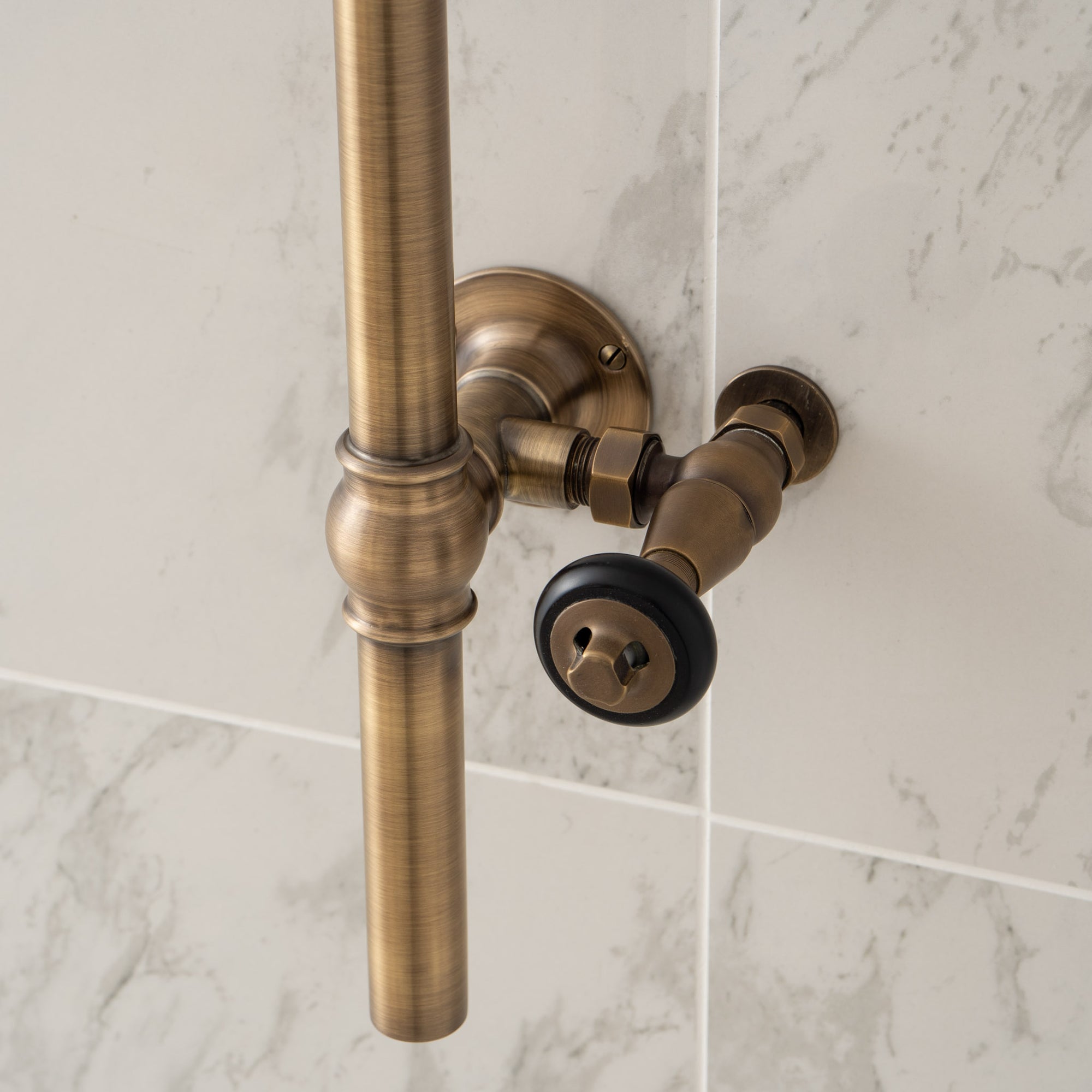
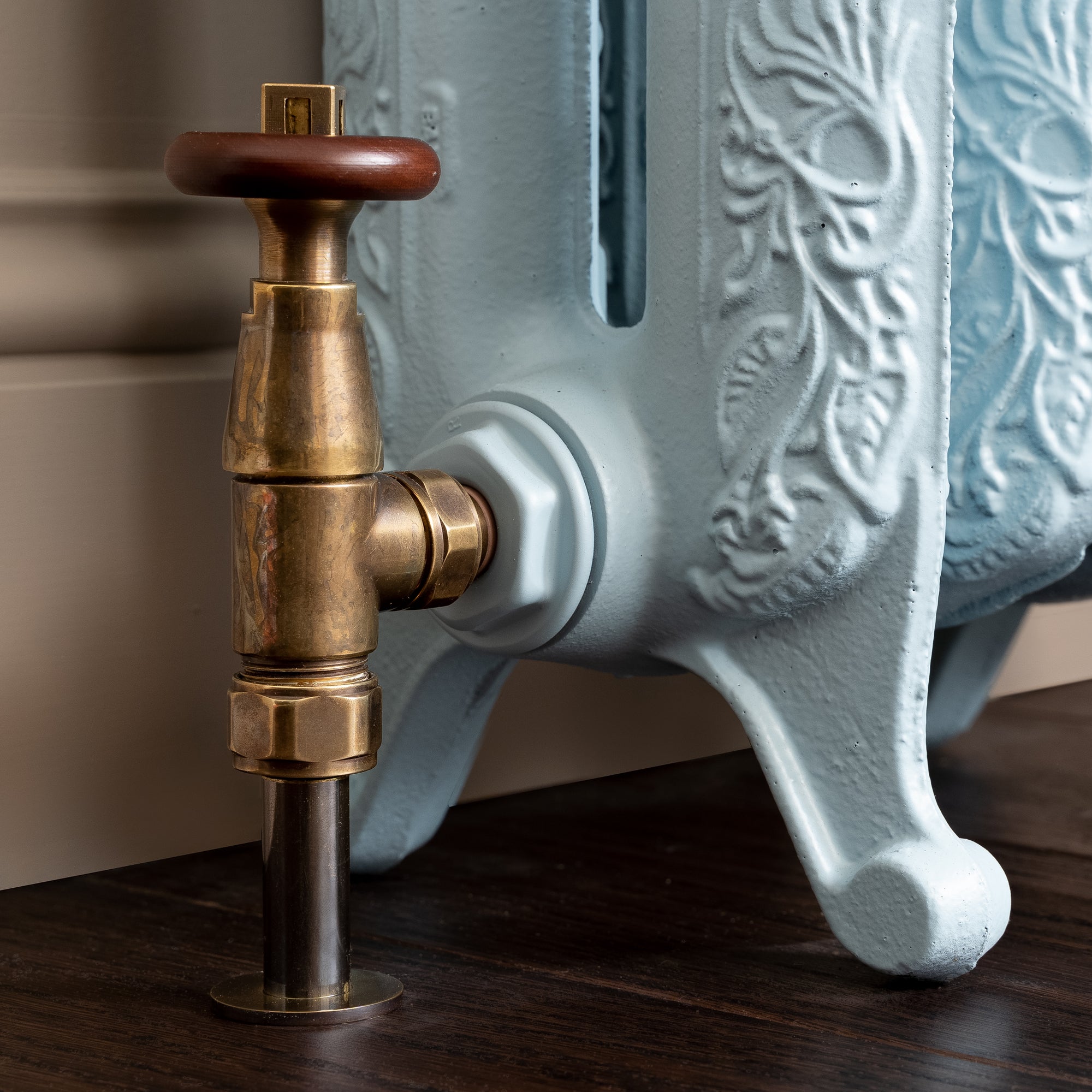
Radiator valves are highly visible on a cast iron radiator and should be treated as part of the design rather than simply as plumbing hardware.
Traditional crosshead, ceramic and metal-handwheel styles can complement the radiator, while matching pipe sleeves and cover plates can create a cleaner installation where pipework remains visible.
Manual vs Thermostatic Radiator Valves
A manual valve allows the flow through the radiator to be adjusted manually. A thermostatic radiator valve, or TRV, responds to the surrounding air temperature and adjusts flow accordingly.
The appropriate arrangement depends on the heating controls and system design, so the heating engineer should confirm the correct specification.
Choosing a Paint Finish
Paint colour can completely change the character of a cast iron radiator.
A radiator painted to match the wall can feel architectural and restrained. A contrasting colour can turn it into a deliberate focal point.
Rutland London cast iron radiators are hand finished in Hampshire, England using a durable coating system. Matt is the standard appearance, while bespoke requests including Gloss or Satin finishes can be considered.
Colours can also be selected from leading paint brands including Farrow & Ball, Little Greene and Paint & Paper Library, alongside bespoke colour requests.
Brass Components & Living Finishes
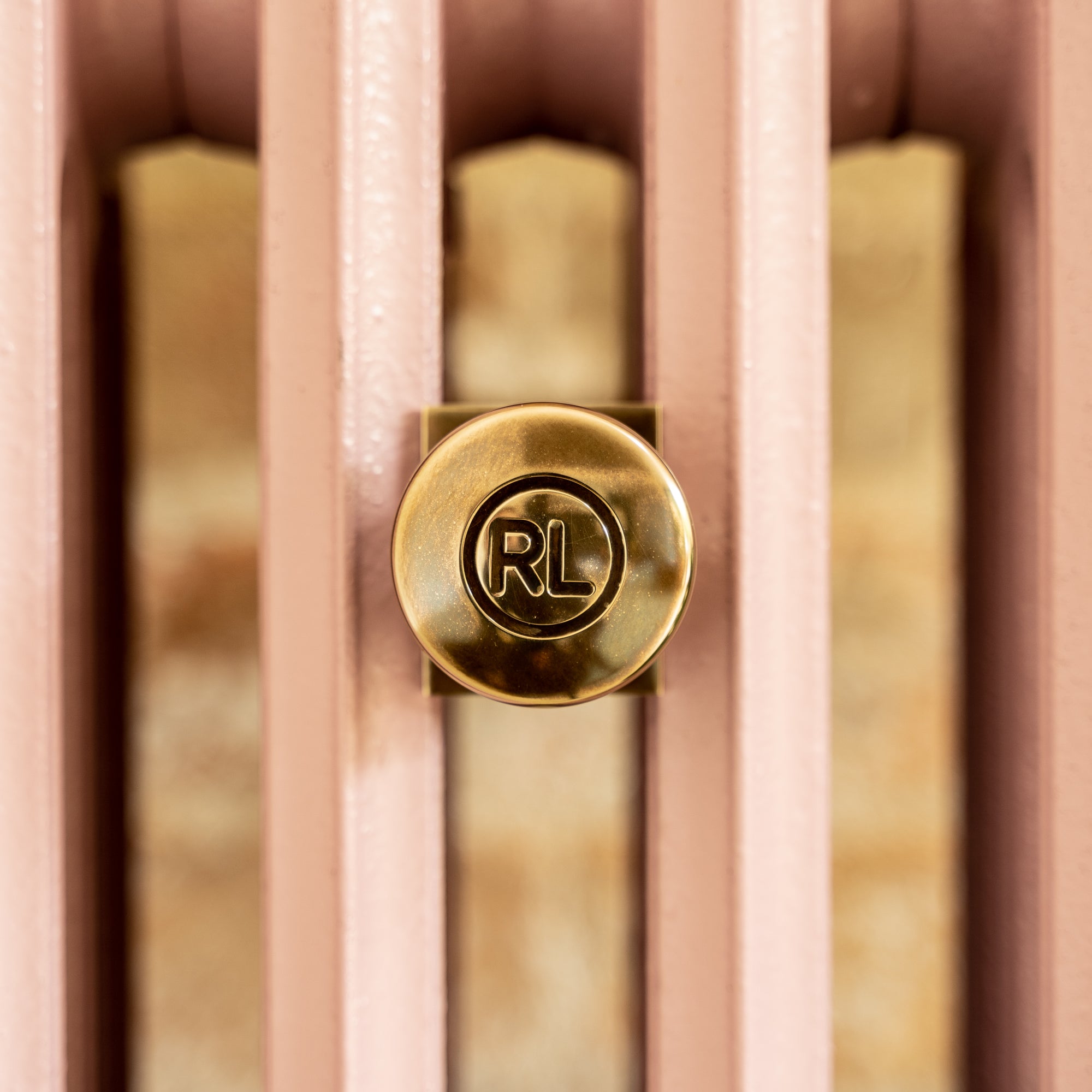
Visible Brass components provide another opportunity to connect the radiator with the wider interior.
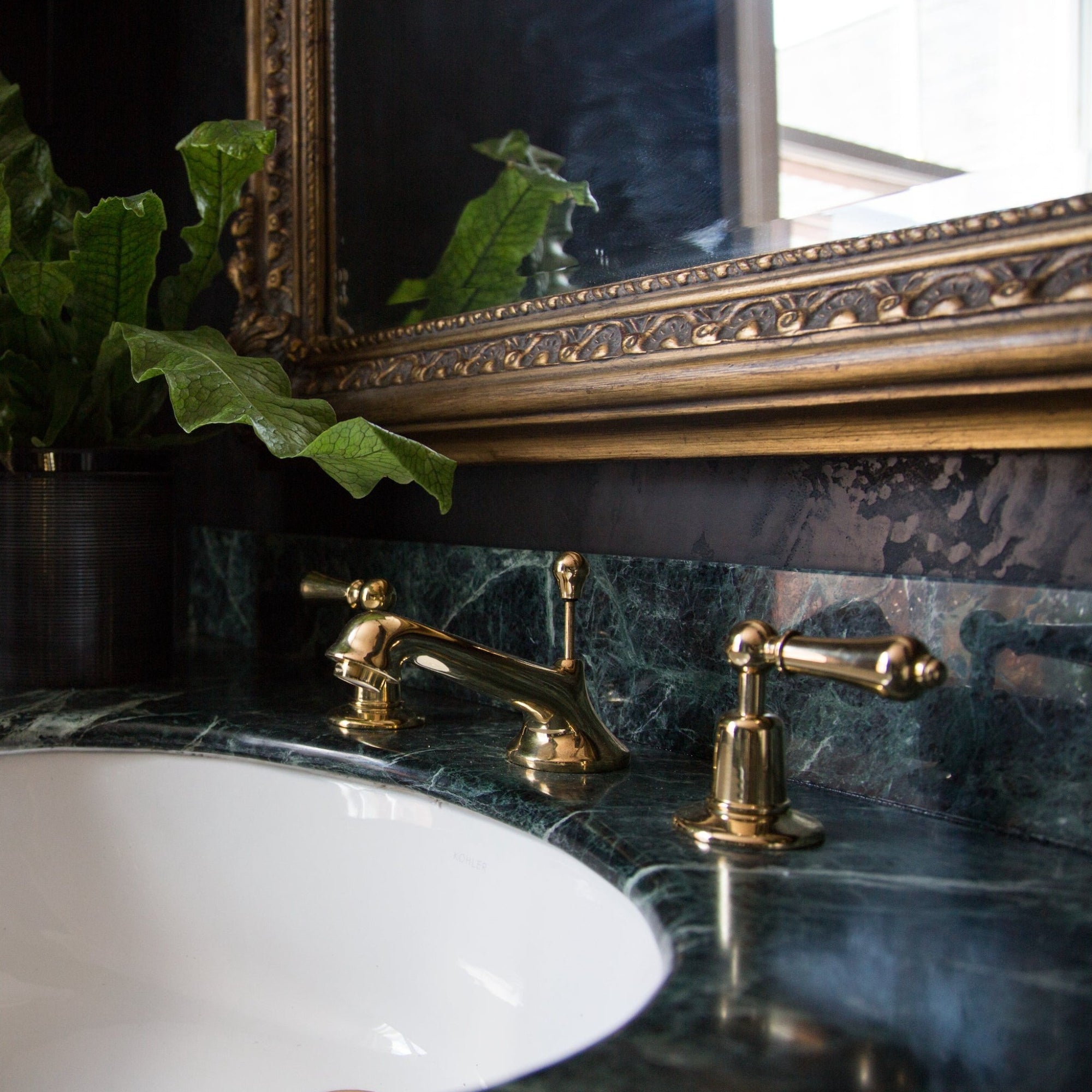
Polished (Unlacquered) Brass introduces warmth and naturally develops patina over time. Alternative Brass, Bronze, Nickel, Copper and Gold finishes can coordinate radiator details with door furniture, bathroom brassware and other architectural metalwork.
Bespoke Cast Iron Radiators
One of the advantages of sectional construction is the ability to configure the radiator more closely around the architecture and required output.
Rutland London offers bespoke sizing across its cast iron radiator collection. Where heat output is critical, note that bespoke sizes may have no performance declared unless specifically stated or tested.
Cast Iron Radiator Weight & Installation
Cast iron radiators are extremely heavy. This should be considered before delivery and installation, particularly on upper floors or where access includes narrow staircases and doorways.
Wall-mounted radiators require a supporting wall capable of carrying the specified load, while larger configurations may be supplied in separate sections to make transportation and installation more manageable.

Manufacturing Tolerances
Traditional cast iron manufacture naturally involves dimensional tolerances.
Rutland London notes that individual sections can vary by approximately 1–2mm per section. This variation can accumulate across a long radiator, so final setting-out should allow for the character of the manufacturing process.
EN 442 & Declared Heat Output
Rutland London cast iron radiators are laboratory certified for safety and performance in accordance with EN 442 and other applicable standards for declared configurations.
Published output information should be used alongside the room heat-loss calculation and intended heating-system temperatures.
Frequently Asked Questions About Cast Iron Radiators
Are cast iron radiators efficient?
A correctly sized cast iron radiator can heat a room effectively, but overall energy use depends on the heat source, system temperatures, controls, building heat loss and operating pattern. Radiator material alone does not determine whole-system efficiency.
Do cast iron radiators stay warm longer?
Cast iron has substantial thermal mass, so it generally warms and cools more slowly than lighter radiator constructions. It can continue releasing stored heat after the water temperature begins to fall.
How do I size a cast iron radiator?
Begin with a room heat-loss calculation, then select a radiator capable of providing the required output at the design temperatures of the heating system.
How many sections do I need?
The number of sections depends on the required room output and the declared output of the selected radiator design.
Can cast iron radiators work with a heat pump?
Potentially, yes. Because heat pumps often operate at lower water temperatures, the radiator may need greater surface area. The heating engineer should size it using the actual design temperatures.
Can cast iron radiators be electric?
Selected Rutland London cast iron radiators can be specified for standalone electric operation in certain sizes.
Can cast iron radiators be used on domestic hot water?
No. Rutland London cast iron radiators are intended for suitable closed heating circuits and are not designed for domestic hot-water systems.
Can cast iron radiators be used in bathrooms?
Yes, where the product, heating system and installation are appropriate for the room.
Are cast iron radiators suitable for period properties?
Yes. Their proportions and material character work naturally within Georgian, Victorian, Edwardian and country-house interiors, while modern heating engineering allows them to form part of contemporary systems.
Can a cast iron radiator be made to a bespoke size?
Yes. Rutland London offers bespoke sizing across its cast iron radiator collection, subject to manufacturing and technical requirements.
Are cast iron radiators heavy?
Yes. Their substantial weight should be considered during delivery and installation, particularly for wall-mounted models, upper floors and properties with restricted access.
Explore Rutland London Cast Iron Radiators
Rutland London supplies luxury cast iron radiators for traditional and contemporary interiors, with wall-mounted and floor-mounted designs, bespoke sizes, electric options on selected models and an extensive choice of painted finishes.
- All Cast Iron Radiators
- Floor Mounted Cast Iron Radiators
- Wall Mounted Cast Iron Radiators
- All Radiator Products
- Alresford Cast Iron Radiator
- Winchester Cast Iron Radiator
- Eversley Cast Iron Radiator

Choose a Cast Iron Radiator Around the Room, Not Just the Wall
The best cast iron radiator specification begins with the room's heat requirement.
Calculate the heat loss, establish the heating-system temperatures and then select the radiator depth, height and width required to provide the necessary output. Once the technical requirements are resolved, the paint colour, valves and Brass details can be coordinated with the architecture and wider interior.
Explore Rutland London's Luxury Cast Iron Radiators to discover traditional and contemporary designs finished by hand in England.