







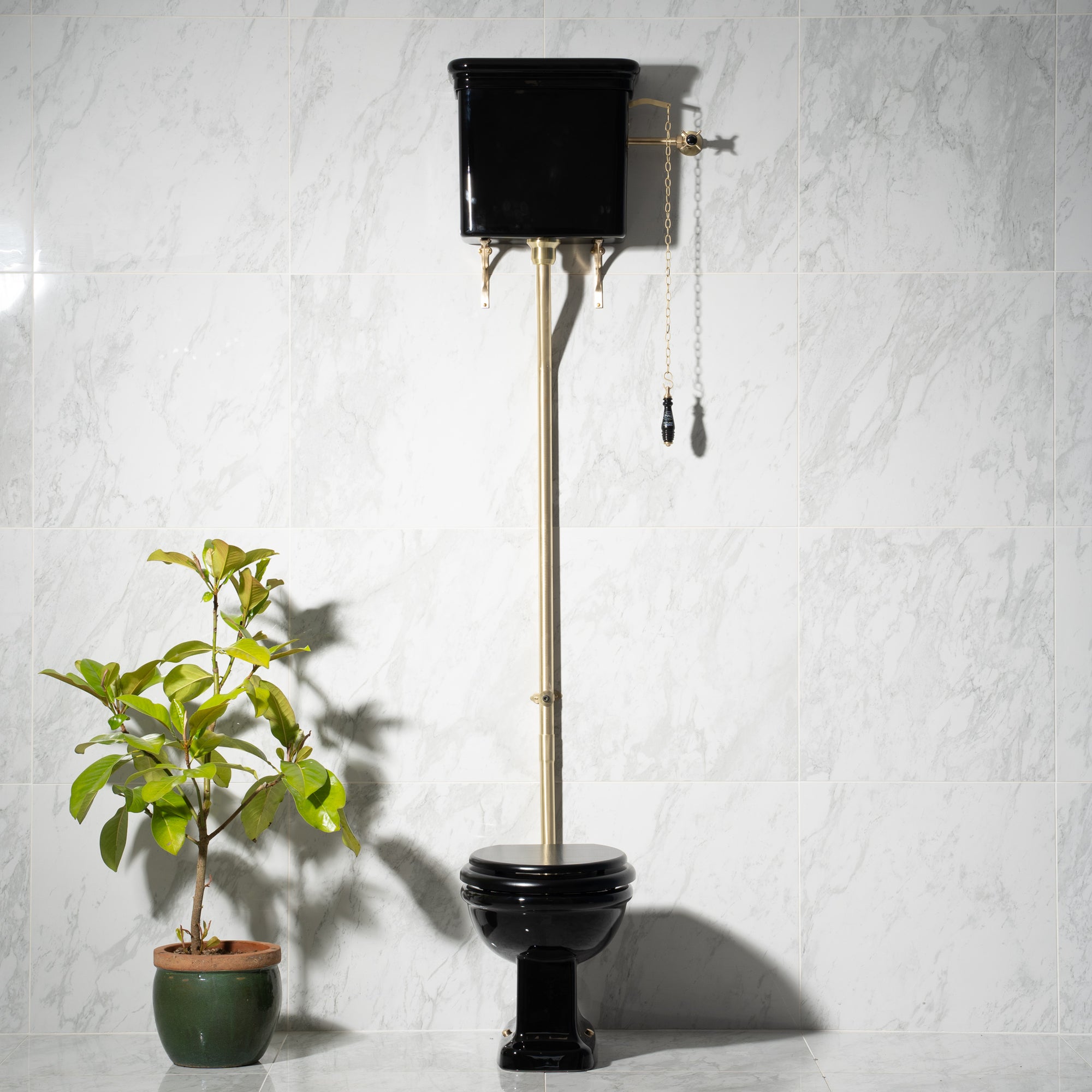

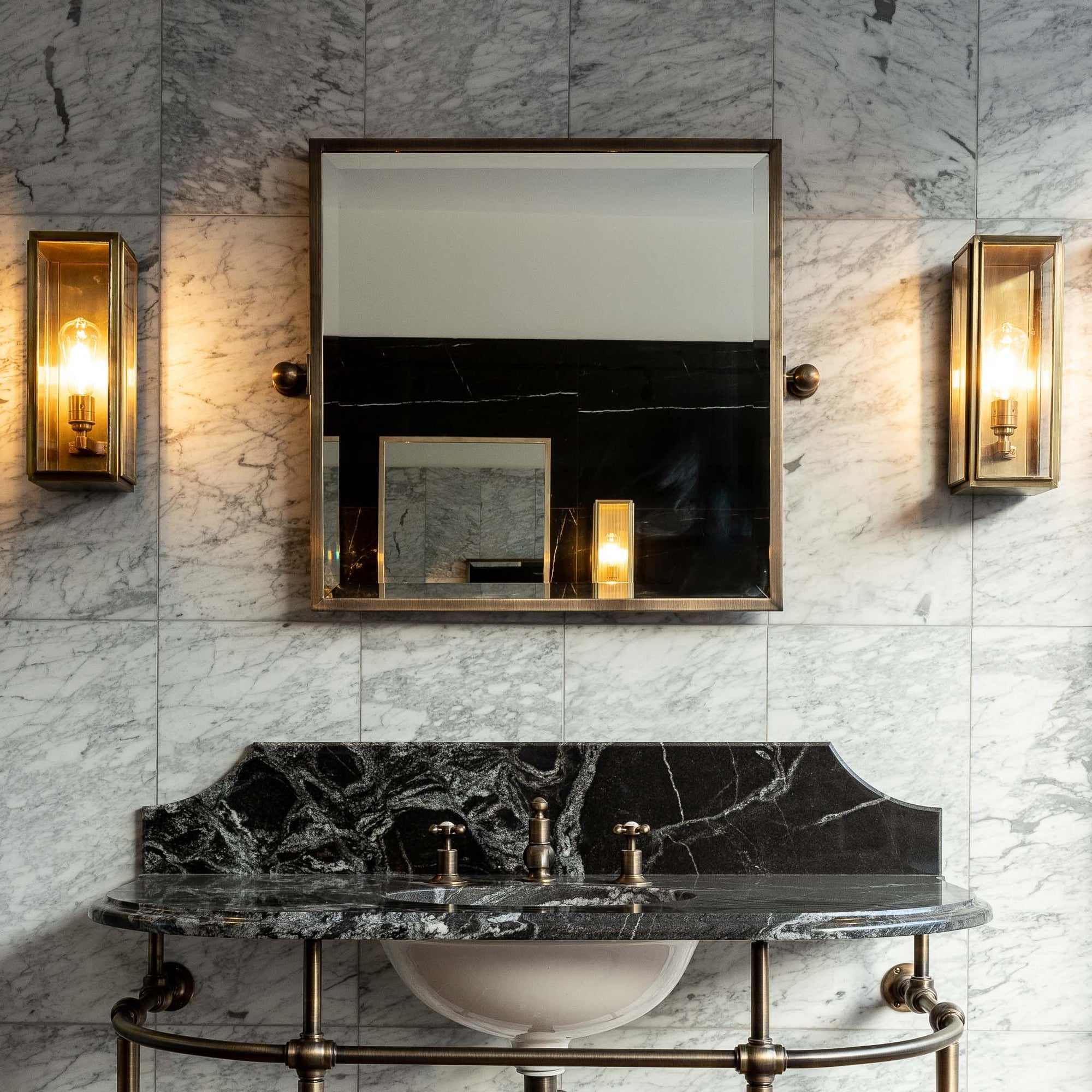

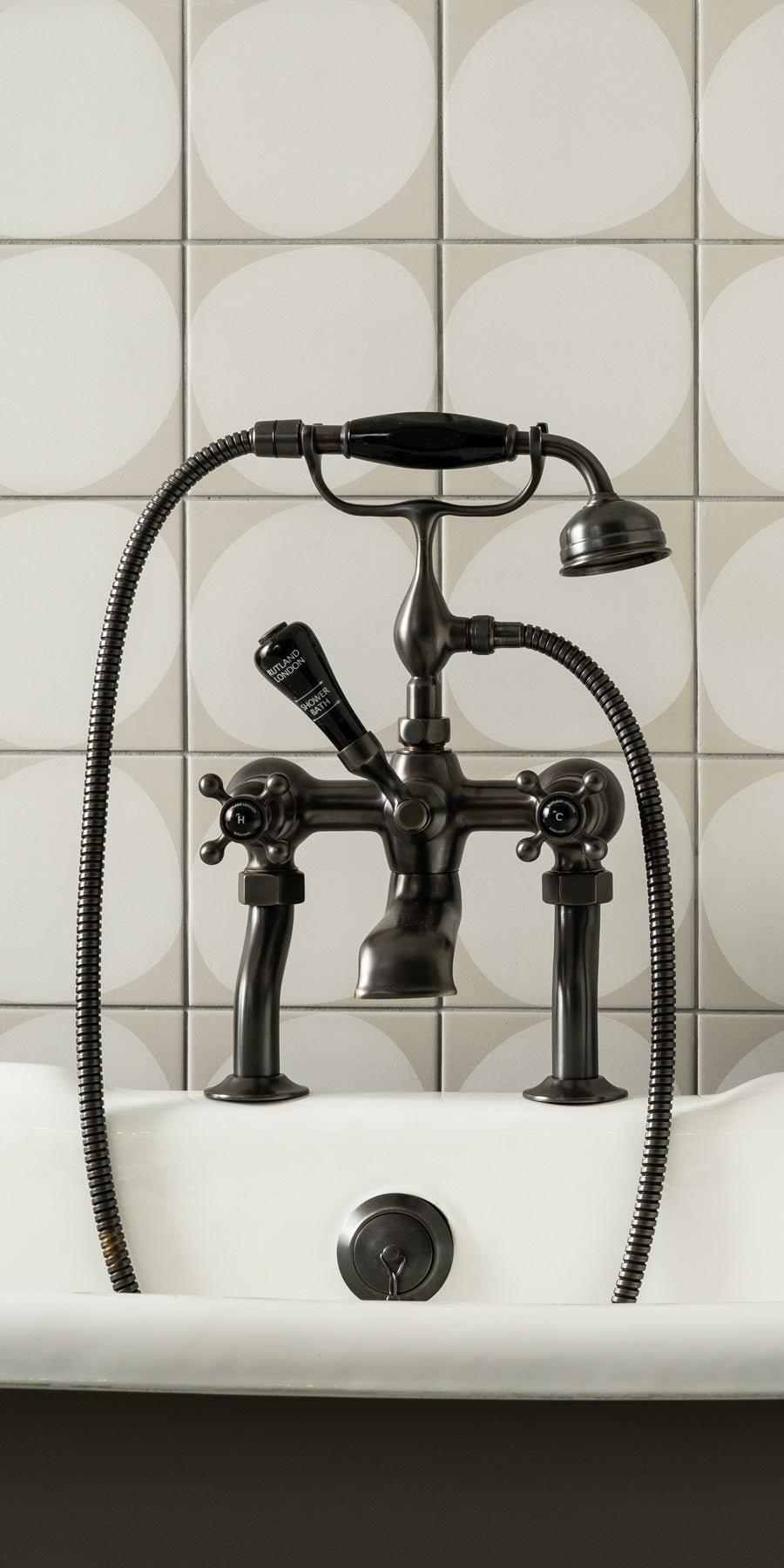

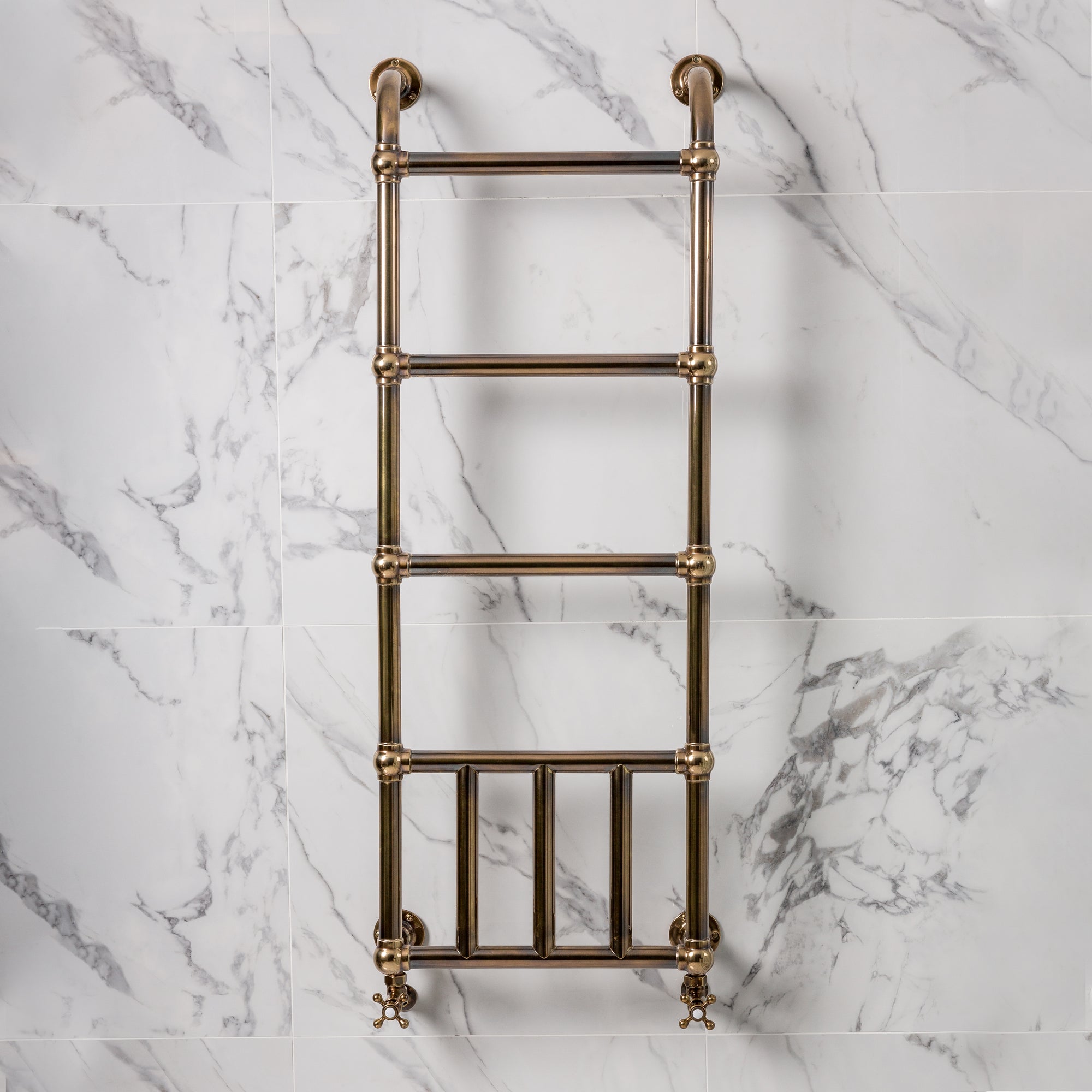


























A beautifully designed shower should combine exceptional performance with fittings that feel completely at home within the wider bathroom.
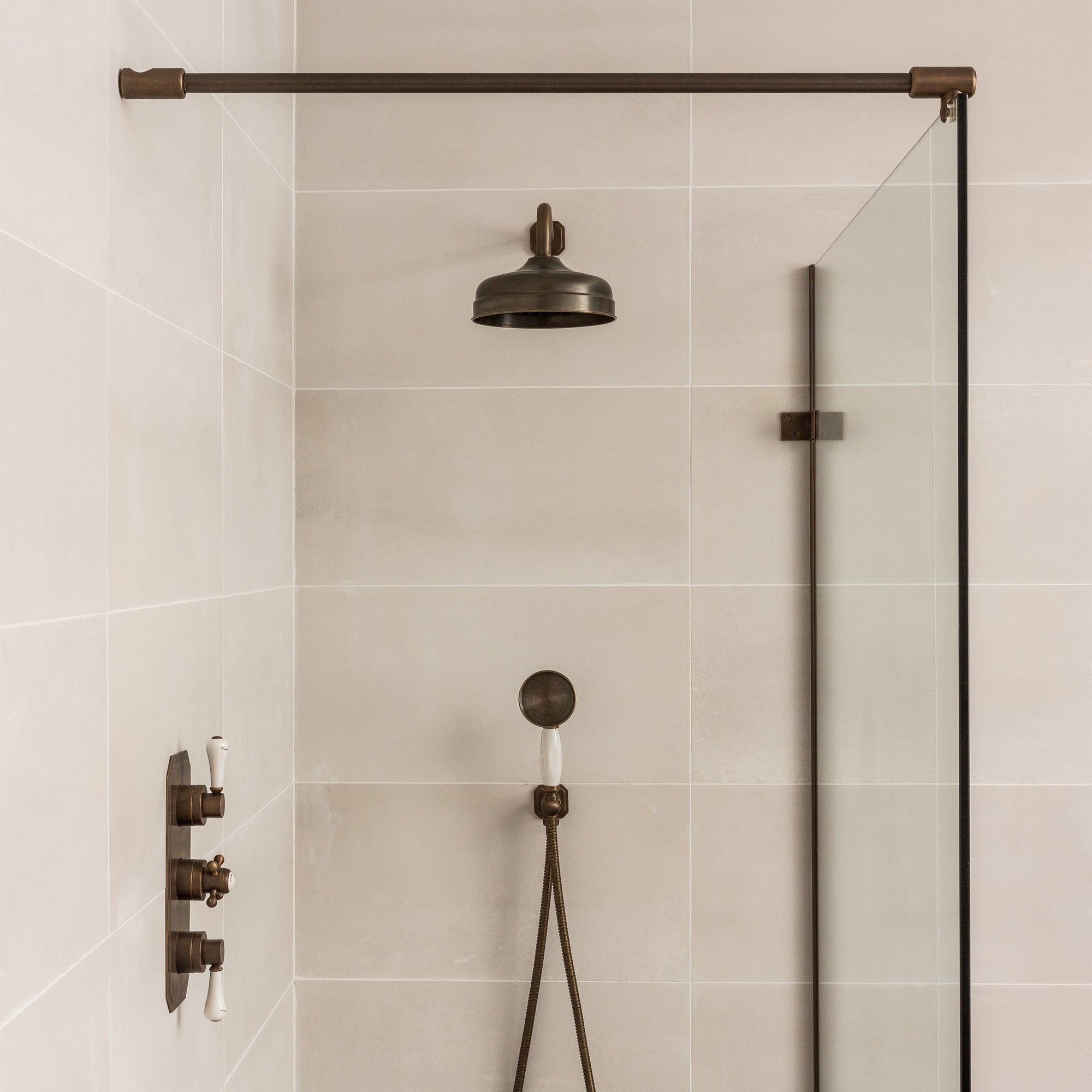
Yet specifying a luxury shower can initially seem complicated. Thermostatic valves, flow controls, diverters, shower roses, arms, handsets and outlets all perform different functions, and the correct combination depends on how the shower will actually be used.
At Rutland London, our Luxury Bathroom Taps & Showers combine traditional English craftsmanship with contemporary engineering, allowing complete shower systems to coordinate with basin taps, bath fittings and wider bathroom brassware.
This guide explains the principal components of a luxury shower, the difference between exposed and concealed systems, how thermostatic controls work, how to choose a shower rose and handset, and what should be considered before plumbing, waterproofing and marble work begin.
What Makes a Luxury Shower?
A luxury shower is not simply the largest shower rose or the greatest number of outlets.
Performance depends on the relationship between the water system, valve, controls and outlets. The fittings should also be proportionate to the enclosure and positioned so the shower is intuitive to use.
Material and finish matter too. Polished (Unlacquered) Brass, Aged Brass, Nickel or Bronze fittings can become an important architectural feature within a marble-lined shower.
What Components Make Up a Shower System?
- A thermostatic mixing valve
- One or more flow controls
- A diverter where applicable
- An overhead shower rose
- A wall-mounted or ceiling-mounted shower arm
- A hand shower and hose
- A wall outlet, parking bracket or slide rail
- Additional outlets where required
Rutland London's Showers & Components allow these elements to be considered as part of one coordinated specification.
Complete Shower Sets or Individual Components?
A complete shower set provides a straightforward way to specify components that have already been designed to work together visually.
Rutland London's Luxury Shower Sets include concealed and exposed designs manufactured from Brass and available across more than 40 finishes.
For more individual projects, separate valves, roses, handsets and other components can be selected to create a configuration tailored to the room and the client's preferences.
What Is a Thermostatic Shower Valve?
A thermostatic shower valve mixes hot and cold water to maintain a controlled showering temperature.
This allows traditional-looking controls to incorporate the performance expected from a contemporary bathroom.
The temperature control and the control of water flow are separate functions, although their precise arrangement varies between valve designs.
What Is a Shower Flow Control?
A flow control turns an outlet on and off and regulates the water delivered to it.
In a simple shower, one flow control may operate the overhead shower rose. Where an overhead rose and hand shower are both required, separate controls can allow each outlet to be operated independently, depending on the valve configuration.
What Is a Shower Diverter?
A diverter directs water between different shower outlets.
For example, it may switch the water between an overhead shower rose and a hand shower.
Diverters can be useful where a compact control arrangement is required, although separate outlet controls may provide greater flexibility on some projects.

One, Two or Three Shower Outlets?
The number of outlets should be determined by how the shower will be used rather than by an assumption that more outlets automatically mean greater luxury.
A beautifully designed shower with one generous overhead rose may provide everything required. Adding a hand shower provides flexibility for rinsing, cleaning the enclosure and showering without using the overhead rose.
More complex systems can incorporate additional outlets, but the available water pressure and flow must be capable of supporting the intended configuration.
Why Include a Hand Shower?
A hand shower is one of the most useful additions to a luxury shower.
It can be used for targeted rinsing, washing hair and cleaning the shower enclosure.
Rutland London's Shower Roses & Handsets include traditional ceramic-handled and all-metal designs that can coordinate with the wider shower system.
Slide Rail or Fixed Handset Bracket?
A slide rail allows the handset height to be adjusted, making it useful where people of different heights use the same shower.
A fixed parking bracket creates a cleaner and more restrained arrangement where height adjustment is not required.
Both should be positioned so the hose hangs naturally without interfering with controls, benches or other shower fittings.
Choosing a Shower Rose
The shower rose is one of the most visible elements of the shower and should be proportionate to the enclosure.
Rutland London shower roses are spun by hand in England and are available in a variety of sizes, allowing the specification to respond to the scale of the shower and the user's preference.
Explore the Shower Roses & Handsets collection to compare overhead roses and complementary hand showers.

Is a Bigger Shower Rose Always Better?
No.
A larger shower rose can create a generous showering experience, but it also requires suitable water pressure and flow.
It should be proportionate to the enclosure and positioned so the spray pattern works comfortably within the available space.
A smaller, correctly specified rose can perform considerably better than an oversized rose connected to an inadequate water supply.
Wall-Mounted or Ceiling-Mounted Shower Rose?
A wall-mounted shower arm creates a traditional and highly visible relationship between the rose and the wall.
A ceiling-mounted arm can produce a cleaner architectural appearance and position the rose more centrally over the intended showering position.
The choice should be established before plumbing and ceiling work are completed. Ceiling height, shower dimensions and the desired position beneath the rose should all be considered.
Exposed Shower Systems
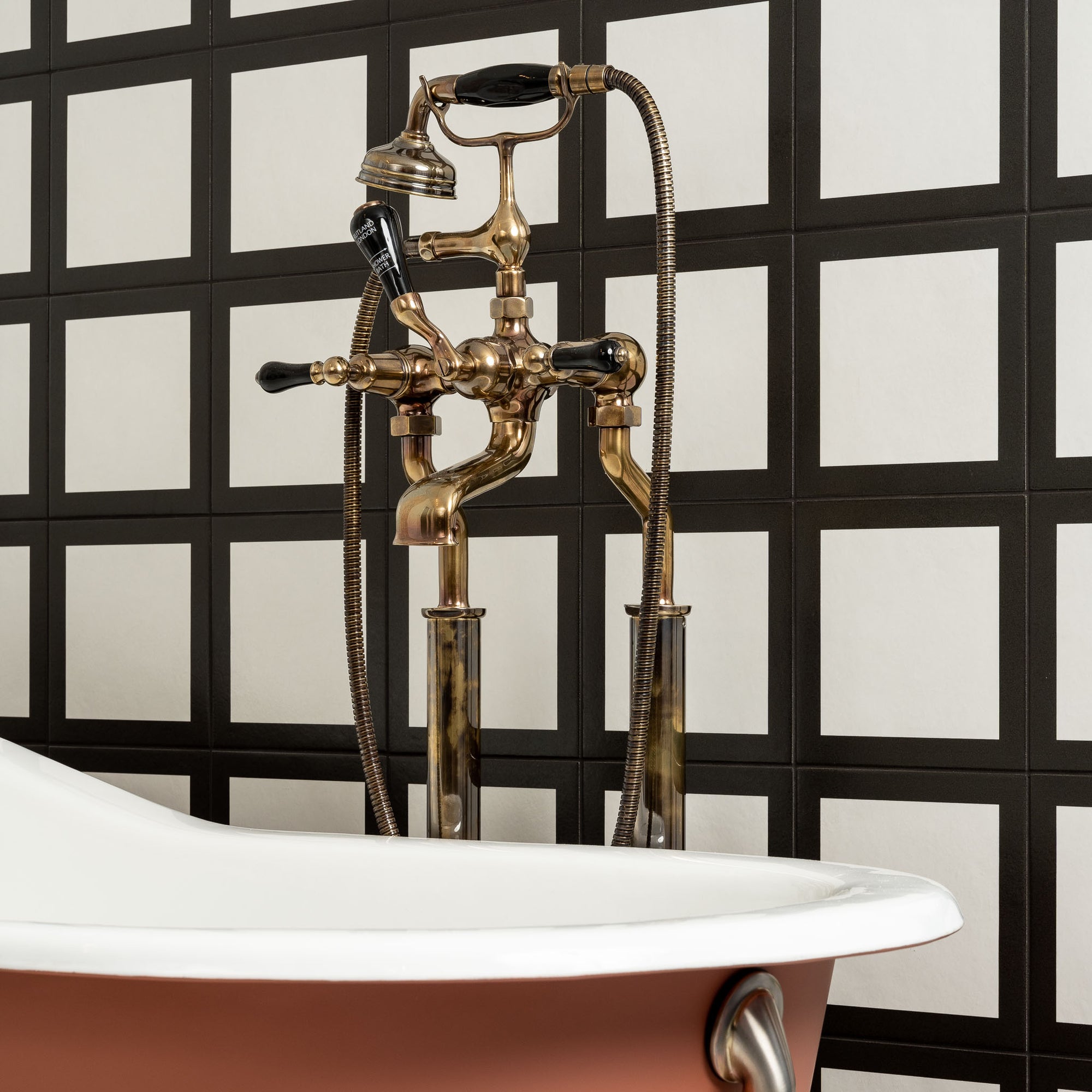
An exposed shower system deliberately displays more of its pipework and valve body.
This can be particularly effective in traditional bathrooms where the Brass, Nickel or Bronze fittings are intended to become part of the architecture.
Rutland London's Shower Sets include exposed and concealed designs, allowing the metalwork to be celebrated or visually restrained according to the interior.
Concealed Shower Systems
A concealed shower system hides the working body of the valve within the wall, leaving the controls and outlets visible.
This creates a cleaner appearance and can allow natural marble or other wall finishes to remain visually dominant.
Traditional crossheads and ceramic levers can still be used, so concealed does not necessarily mean contemporary.
The principal practical consideration is that the concealed valve and rough plumbing must be correctly positioned before the finished wall is completed.
Exposed vs Concealed Showers: Which Is Better?
Neither is inherently better.
Choose exposed fittings when the engineering and metalwork are intended to become a visible feature of the room.
Choose concealed fittings where a cleaner architectural composition is preferred or where the marble and shower enclosure should carry more of the visual emphasis.
Plan the Shower Before Installing Marble
This is one of the most important considerations when designing a luxury shower.
Do not finalise expensive marble or stonework before the valve, controls, outlets and rough plumbing have been coordinated.
Finished wall depth may include studwork, backing boards, waterproofing, adhesive and substantial natural stone. These layers affect the final relationship between concealed components and visible trim.
Technical information should therefore be reviewed before the wall is closed and before stone is cut.
Where Should Shower Controls Be Positioned?
Controls should be easy to reach and intuitive to operate.
In a large walk-in shower, there can be a practical advantage in positioning the controls near the entrance rather than directly beneath the shower rose.
This can allow the shower to be turned on and brought to temperature before the user steps fully into the water.
The exact position should also account for shower glass, door swings, niches, benches and the layout of the surrounding bathroom.
Water Pressure & Flow Matter
The performance of a shower system depends heavily on the water supply.
Large shower roses and multiple outlets can require substantial flow.
Before specifying a complex shower system, the project's plumber should establish the available dynamic pressure, flow rate and hot-water capacity.
It is particularly important to assess the system under realistic operating conditions rather than assuming that static pressure alone determines performance.
Can Multiple Shower Outlets Run Together?
This depends on the valve configuration and the available water supply.
If simultaneous operation is required, this should be identified during specification so the valve arrangement, pipework and water system can be designed accordingly.
A large overhead rose and hand shower operating together will require more available flow than either outlet used independently.
Traditional Shower Controls
Crossheads, ceramic levers and metal levers can all give a shower traditional English character.
The same handle family can then be used across basin taps and bath fittings, helping the entire bathroom feel coordinated.
Traditional appearance does not prevent the use of modern thermostatic technology behind the controls.
Matching the Shower to Bathroom Taps
One of the simplest ways to create a coherent bathroom is to specify the basin, bath and shower brassware as one family.
The same handle design can continue throughout the room, while the same finish creates a visual thread between otherwise separate areas.
Our Luxury Bathroom Taps & Showers bring these different fittings together within one coordinated collection.
Choosing a Shower Finish
The shower can contain a significant amount of visible metalwork, so finish selection deserves careful consideration.
Polished (Unlacquered) Brass introduces warmth and develops natural patina over time.
Brushed (Satin) Brass provides a softer and less reflective appearance.
Aged Brass and Antique Brass create greater depth, while Polished Nickel and Brushed (Satin) Nickel offer cooler alternatives.
Bronze, Copper and Gold can create stronger or more decorative schemes.
Explore our Brassware Finishes when developing the wider bathroom palette.

Polished (Unlacquered) Brass Showers
Polished (Unlacquered) Brass is particularly effective against natural marble and traditional ceramic surfaces.
When newly finished, it is bright and reflective. Because it is unlacquered, the surface is a living finish and will naturally respond to handling, moisture and its environment.
The resulting patina is part of the intended character of the finish.
Nickel Shower Fittings
Nickel provides a cooler alternative to Brass.
Polished Nickel can work beautifully with white and grey marble, while Brushed (Satin) Nickel provides a quieter appearance.
Nickel can be particularly effective where the surrounding stone should remain the principal visual feature.
Bronze Shower Fittings
Bronze can create strong architectural definition against pale stone and ceramic.
It also works particularly well where darker shower enclosure framing, lighting or door hardware is being used elsewhere in the bathroom.
The larger amount of visible metalwork within a shower means darker finishes can have a significant effect on the overall room.
Match the Shower Enclosure to the Shower Fittings
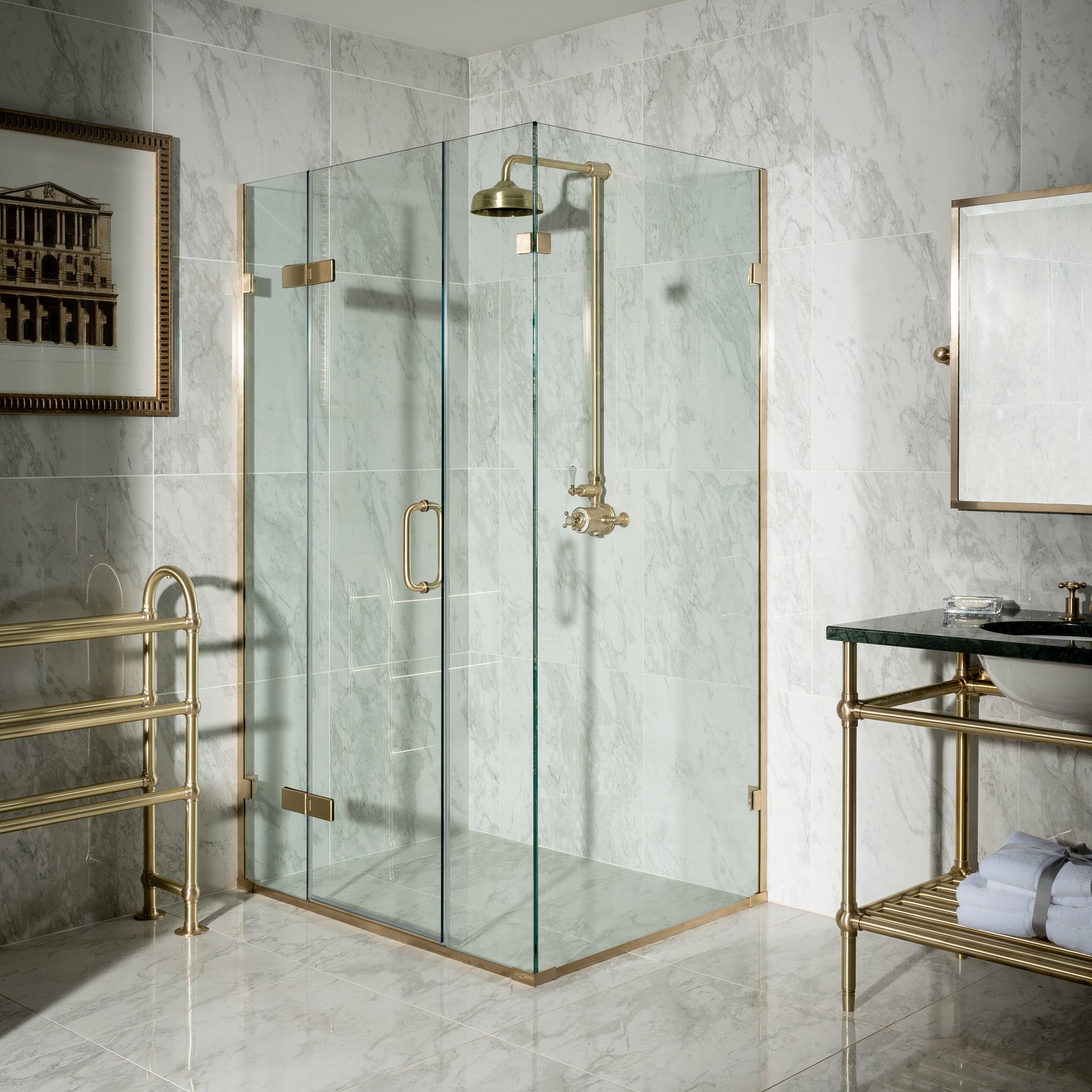
A shower enclosure and shower system should be considered together.
Framed enclosures introduce a substantial amount of visible metalwork and can be coordinated with the controls, shower rose and handset.
Rutland London's Shower Enclosures & Shower Sets bring the two categories together, with products available across more than 40 Brass, Bronze, Nickel, Copper and Gold finishes.
For a deeper look at enclosure design, read our guide to Luxury Shower Enclosures.
Luxury Showers for Walk-In Enclosures
A generous walk-in shower allows the individual components to be positioned with greater freedom.
The shower rose can be centred according to the intended standing position, the handset can be placed within easy reach, and the controls can be located near the entrance where appropriate.
The greater scale also allows the brassware to become part of the architecture rather than appearing as a cluster of fittings on one wall.
Luxury Showers for Smaller Bathrooms
A smaller shower does not require a lesser specification.
In compact bathrooms, careful component selection becomes even more important.
A single overhead rose and discreet handset can provide excellent functionality without overcrowding the wall.
Concealed controls may help create a cleaner appearance, while an exposed system can provide character where the shower itself is intended to become a feature.
Shower Niches & Benches
Niches and benches should be coordinated with the shower fittings rather than designed independently.
A handset hose should not clash with a projecting bench, and controls should remain accessible without requiring the user to reach awkwardly around a niche or glass panel.
Where natural marble is being used, aligning niches and fittings with the stone layout can also produce a much more considered result.
Should the Shower Rose Be Centred?
Not necessarily within the enclosure itself.
The more useful question is whether it is centred over the intended showering position.
In a large enclosure containing a bench, niche or multiple outlets, the ideal user position may not correspond exactly with the geometric centre of the glass.
Function should therefore guide the final position.
English Craftsmanship in the Shower
Rutland London is an English manufacturer of luxury bathroom and heating products.
Our shower collections combine Brass construction, English manufacture and finishing with contemporary engineering.
Shower roses are spun by hand in England, while valves, handsets, arms and other components can be coordinated across more than 40 Brass, Bronze, Nickel, Copper and Gold finishes.

Frequently Asked Questions About Luxury Showers
What do I need for a complete shower system?
A typical system may include a thermostatic valve, flow control, overhead shower rose and arm. A hand shower, additional controls or other outlets can then be added according to the desired functionality.
What is the difference between a thermostatic valve and a flow control?
The thermostatic function controls mixed-water temperature, while a flow control operates and regulates the water delivered to an outlet.
What is a shower diverter?
A diverter directs water between different outlets, such as an overhead shower rose and a hand shower.
Do I need a hand shower?
It is not essential, but a hand shower provides useful flexibility for rinsing, washing hair and cleaning the enclosure.
Is an exposed or concealed shower better?
Neither is inherently better. Exposed systems celebrate more of the visible metalwork, while concealed systems provide a cleaner architectural appearance.
Is a larger shower rose better?
Not necessarily. The rose should suit the enclosure and available water supply. A correctly specified smaller rose can outperform an oversized rose where flow is limited.
Can two shower outlets run at the same time?
Potentially, depending on the valve arrangement and water supply. Simultaneous operation should be identified during specification so the system can be designed accordingly.
Where should shower controls be positioned?
They should be easy to reach. In larger walk-in showers, positioning them near the entrance can allow the water to be turned on before stepping beneath the shower rose.
Can traditional showers use thermostatic controls?
Yes. Traditional crossheads and levers can be combined with modern thermostatic engineering.
What finish is best for a luxury shower?
There is no single best finish. Polished (Unlacquered) Brass introduces warmth, Nickel creates a cooler appearance and Bronze can provide stronger contrast. The finish should respond to the marble and wider bathroom palette.
Does Polished (Unlacquered) Brass develop patina?
Yes. It is a living finish and naturally evolves through handling, moisture and exposure to its environment.
Should my shower match my bathroom taps?
It does not have to, but coordinating the handle style and finish can create a more coherent bathroom.
Should I choose the shower before ordering marble?
Yes. Concealed valves, outlet positions and finished wall depths should be established before expensive stone is fabricated and installed.
Explore Luxury Showers & Components
Rutland London supplies luxury shower fittings for private residences, architects, interior designers and hospitality projects throughout the UK.
- Luxury Shower Sets
- Showers & Components
- Shower Roses & Handsets
- Luxury Bathroom Taps & Showers
- Shower Enclosures & Shower Sets
- Brassware Finishes
- Luxury Shower Enclosures Guide
- Traditional Bathroom Taps Guide
Design the Shower as Part of the Complete Bathroom
The best shower systems are not selected in isolation.
The shower rose should suit the enclosure. The controls should suit the way the shower will be used. The water supply should support the selected outlets. The rough plumbing should respond to the actual wall construction. And the visible finish should relate to the taps, shower enclosure, vanity and wider bathroom metalwork.
By resolving these decisions before marble, tile and glass are installed, a luxury shower can combine traditional English character with the performance and usability expected from a contemporary bathroom.
Explore Rutland London's Luxury Shower Sets to discover exposed and concealed designs made and finished in England for exceptional bathrooms.