




































Bathroom taps may be relatively small fittings, but they can have a considerable influence on the character of a traditional bathroom.
Crosshead handles, ceramic levers, metal levers, carefully proportioned spouts and beautifully finished Brass or Nickel can transform a simple basin or bath into an important architectural feature.
The challenge is choosing taps that feel timeless rather than excessively decorative.
At Rutland London, our Luxury Bathroom Taps & Showers are designed for traditional, transitional and contemporary interiors, with many products machined or finished in England and available in an extensive selection of Brass, Bronze, Nickel, Copper and Gold finishes.
This guide explains how to choose traditional bathroom taps, including basin taps, bath taps, wall-mounted and deck-mounted configurations, one-hole and three-hole mixers, crossheads and levers, pressure considerations, marble vanities and the brassware finishes that bring the wider bathroom together.
What Makes a Bathroom Tap Traditional?
A traditional bathroom tap is not defined by ornament alone.
Its character comes from proportion, material, handle design and the relationship between individual components.
Crosshead handles are perhaps the most immediately recognisable traditional form, while ceramic and metal levers can create a slightly softer interpretation of classical bathroom design.
Traditional taps also tend to celebrate their construction rather than hiding it completely.
Separate hot and cold controls, visible spouts and substantial Brass components can give the fitting a sense of permanence that works beautifully alongside marble, ceramic and timber.
Explore Rutland London's Brass Bathroom Taps & Showers for examples of traditional basin, bath and shower brassware machined and finished in England.
Choose the Tap to Suit the Bathroom, Not Just the Basin
One of the most common specification mistakes is choosing taps purely according to the basin or bath they will serve.
The tap should also respond to the architecture and wider material palette of the room.
A substantial three-hole basin mixer might sit beautifully on a large marble vanity but feel over-scaled on a compact cloakroom basin.
A wall-mounted tap may create an elegant composition where the marble itself is intended to remain visually prominent.
A pair of traditional pillar taps can be particularly appropriate where a simpler and more recognisably classical arrangement is desired.
The correct choice should therefore balance practical requirements with proportion and style.
Traditional Basin Taps
The basin tap is usually one of the most visible fittings in the bathroom.
It sits directly against the basin, vanity and mirror, often at eye level when the room is viewed from the entrance.
Rutland London offers basin taps in several configurations, including mono mixers, two-hole and three-hole mixers, pillar taps and wall-mounted designs.
The wider Luxury Bathroom Taps & Showers collection includes both traditional and more restrained designs suitable for different bathroom interiors.

One-Hole Basin Mixers
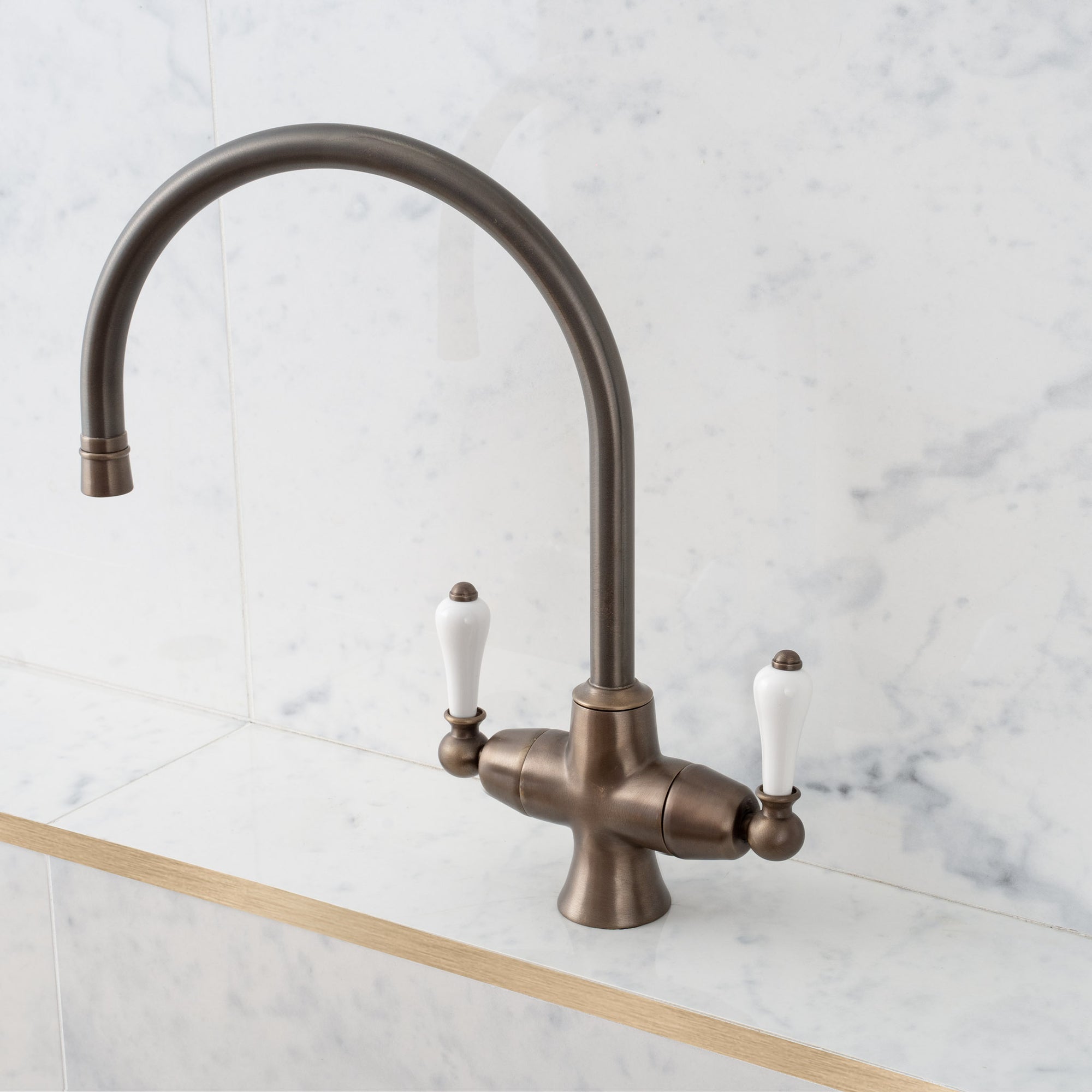
A one-hole or mono basin mixer combines the hot and cold water supply through a single tap body.
This can create a cleaner and more compact arrangement, particularly on smaller basins or more restrained vanity designs.
Traditional character can still be retained through the handle design, spout proportions and finish.
For example, a mono mixer with a ceramic crosshead or lever can combine classical detailing with a relatively compact footprint.
This makes one-hole mixers particularly useful in smaller bathrooms and cloakrooms where space is limited but traditional character is still desired.
Three-Hole Basin Mixers
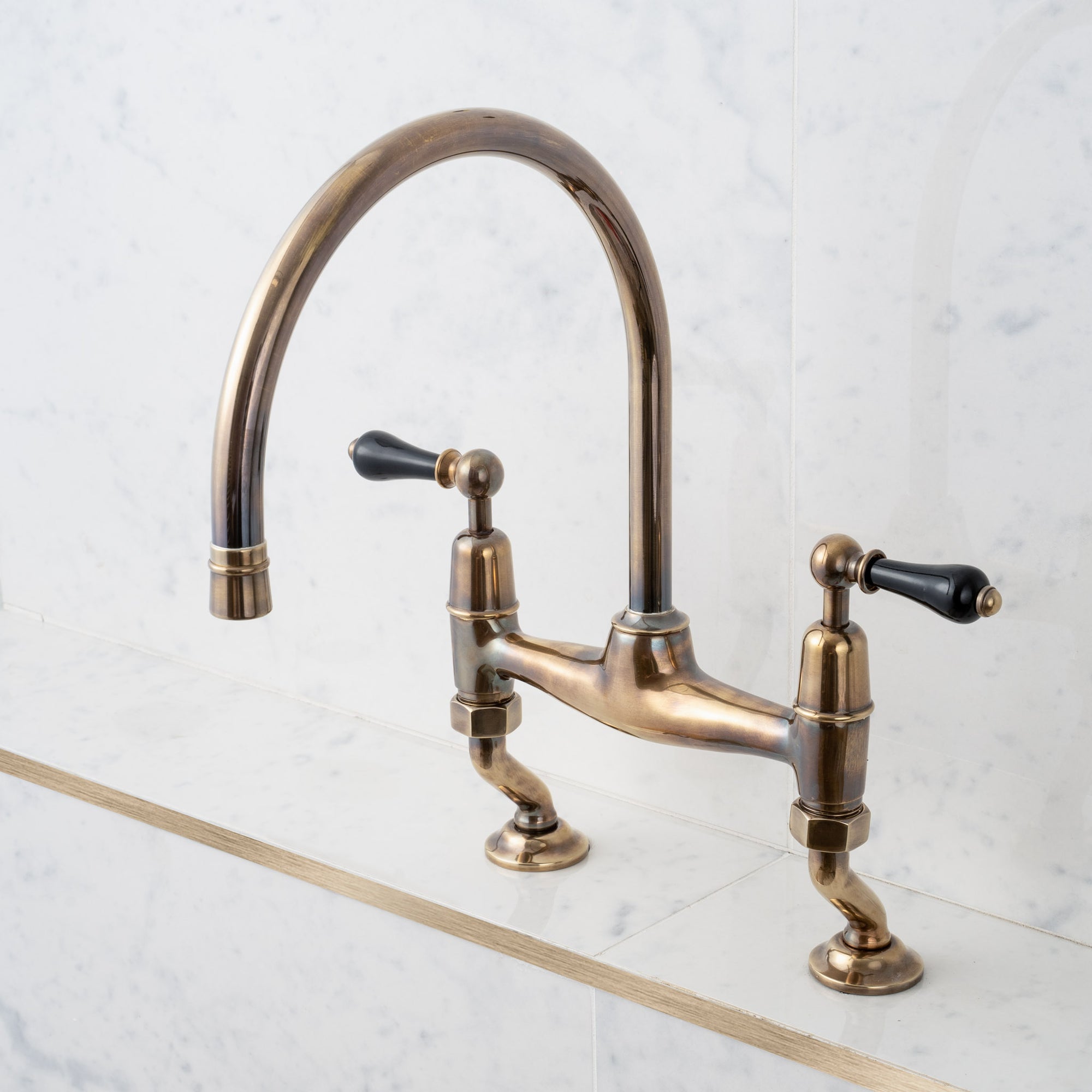
A three-hole basin mixer uses separate hot and cold controls positioned either side of the central spout.
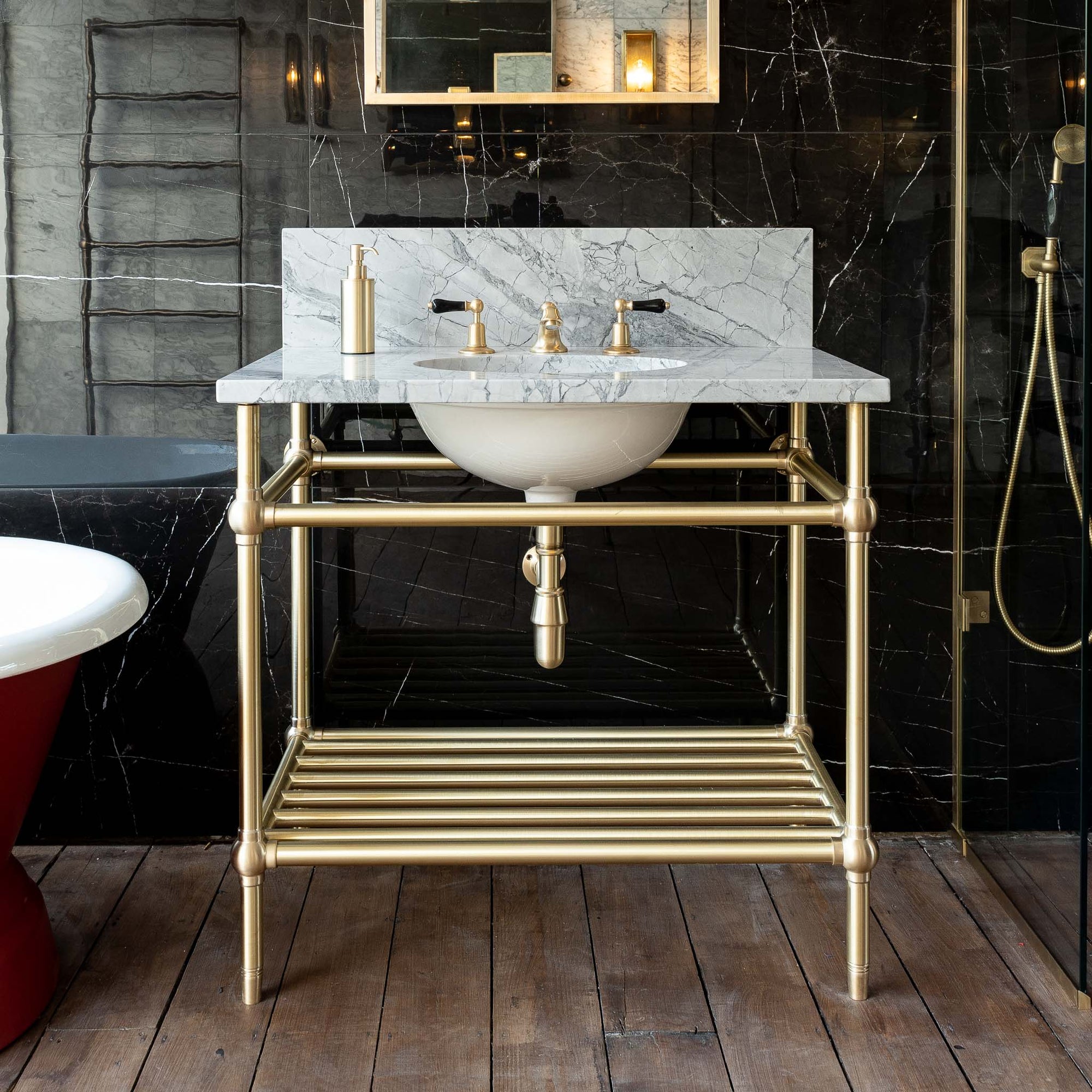
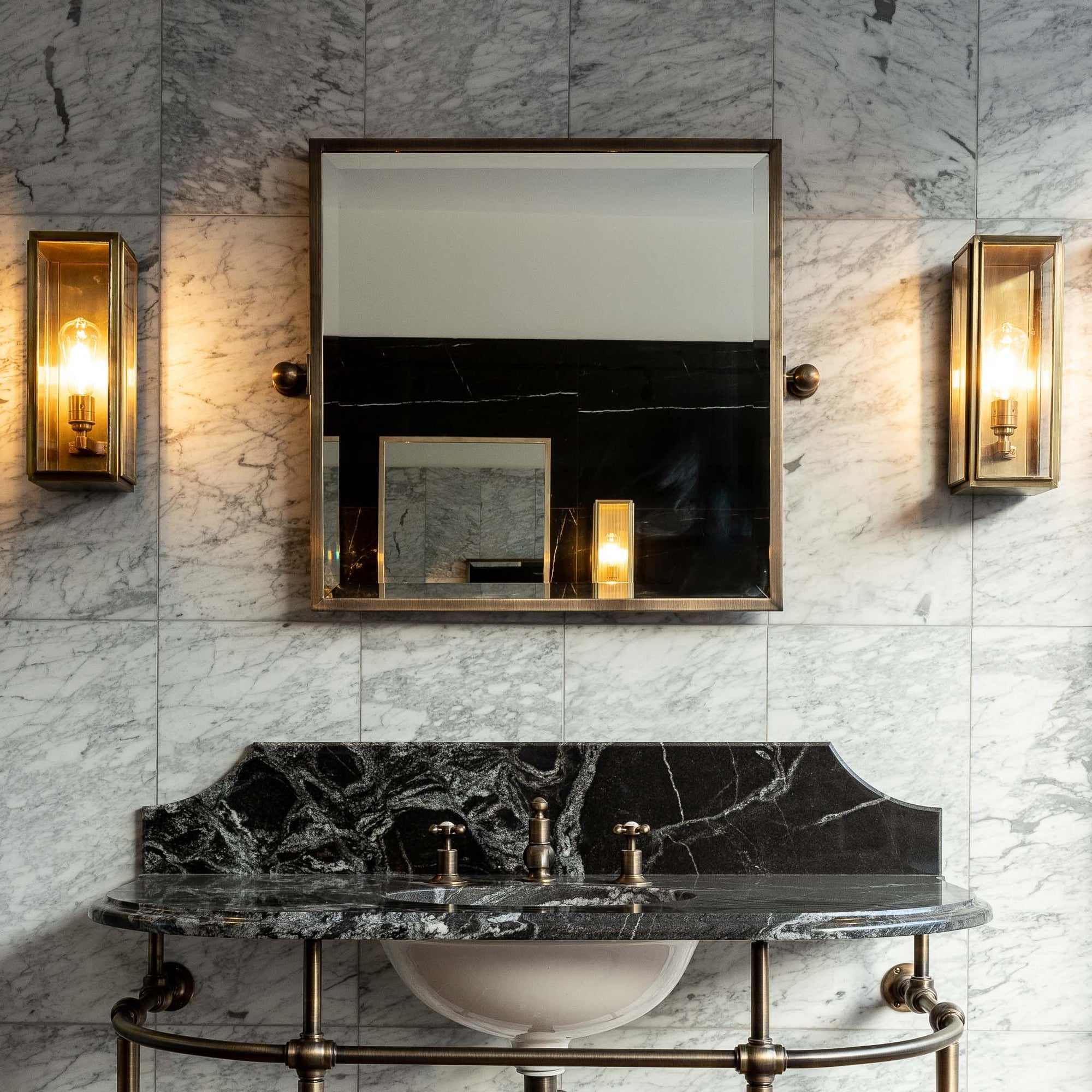
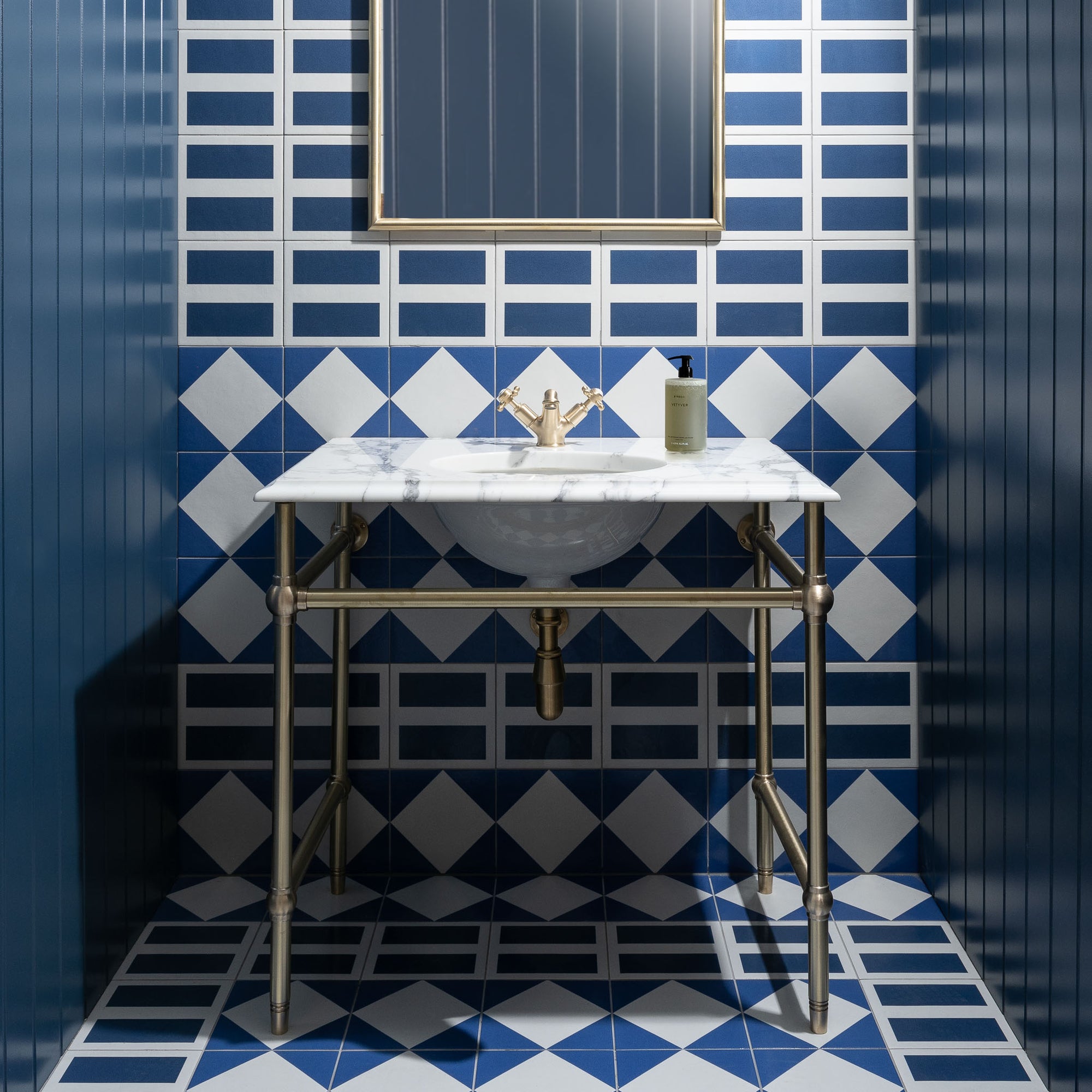
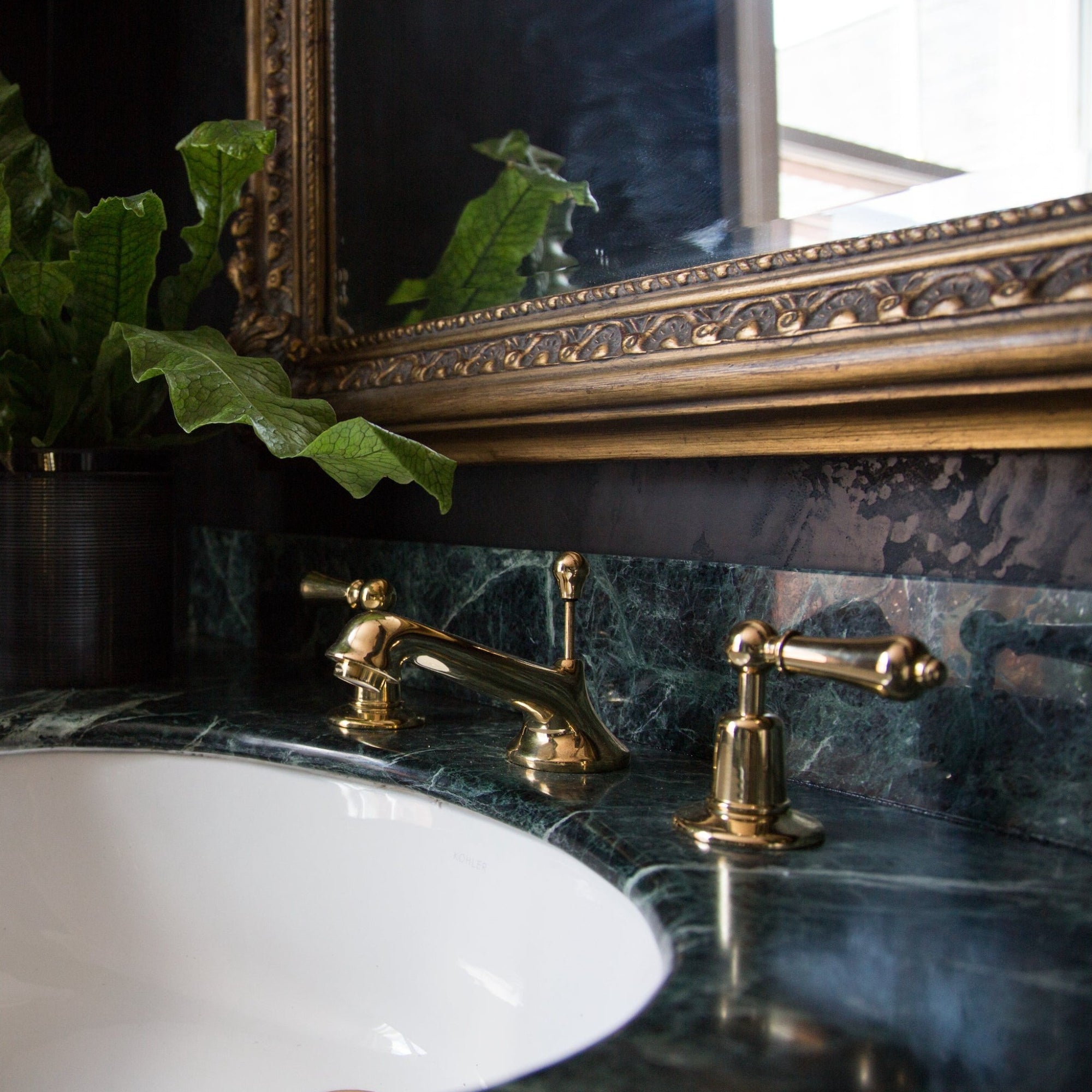
This arrangement has a particularly elegant and architectural appearance and works beautifully with marble vanity tops.
The greater spacing allows each component to be appreciated individually, which can be especially effective when specifying finishes such as Polished (Unlacquered) Brass, Aged Brass or Polished Nickel.
Rutland London's Brass Bathroom Taps & Showers include traditional three-hole basin mixers such as the Badminton and other crosshead or lever designs.
Two-Hole Basin Taps
Two-hole arrangements can provide a useful balance between the compactness of a mono mixer and the architectural character of a three-hole design.
Depending on the product, the control and spout may be separated into two individual components.
This configuration can work particularly well where the designer wants a cleaner vanity top while retaining a degree of visual separation between the controls and water outlet.
Traditional Pillar Taps
Pillar taps are among the simplest and most traditional basin configurations.
Separate hot and cold taps sit independently on the basin or vanity, each with its own spout.
The arrangement is familiar, practical and particularly suitable for classically styled bathrooms.
Rutland London's traditional Brass collections include designs such as the Rectory Basin Pillar Taps, which use ceramic crossheads and classic proportions.
Pillar taps can also work beautifully in smaller bathrooms where a full three-hole mixer would feel overly substantial.

Wall-Mounted Basin Taps
Wall-mounted basin taps can provide a more architectural alternative to deck-mounted brassware.
The taps are mounted through the wall or marble upstand behind the basin, leaving the vanity surface visually cleaner.
This can be particularly effective when using expressive natural marble because fewer fittings interrupt the stone.
Traditional wall-mounted taps can retain all the character of crossheads or metal levers while creating a slightly more contemporary composition.
Explore Wall Mounted Brass Basin Taps for traditional and transitional designs.
Deck-Mounted or Wall-Mounted Taps?
Neither approach is inherently more traditional or more luxurious.
Deck-mounted taps can feel more furniture-like and work naturally with marble vanity tops, particularly when the basin and taps are designed as one composition.
Wall-mounted taps can make the vanity feel lighter and allow more of the natural stone to remain visible.
Practical considerations also matter.
Wall-mounted taps require careful coordination of plumbing positions before the wall or marble is completed.
Deck-mounted taps may provide easier access to connections, depending on the vanity design.
The choice should therefore be made early in the project.
Crosshead Taps
Crosshead handles are one of the defining details of traditional English bathroom brassware.
Their symmetrical form has an architectural quality that works especially well with marble, ceramic and timber.
Black or White ceramic indices can add further character, while all-metal crossheads provide a slightly more restrained appearance.
Traditional crosshead taps can be used across basin, bath and shower fittings to create a consistent handle language throughout the bathroom.
Rutland London's Brass Bathroom Taps & Showers include crosshead designs for basins, baths and shower controls.
Ceramic Lever Taps
Ceramic levers offer another traditional option.
They retain the character associated with English bathroom fittings while providing a longer, easier-to-operate handle.
Black ceramic levers can introduce stronger contrast against Brass or Nickel, while White ceramic levers create a softer and more classical appearance.
These handles work particularly well in traditional bathrooms that combine painted cabinetry, white ceramic sanitaryware and natural marble.
Metal Lever Taps
Metal levers provide a slightly more restrained alternative to ceramic.
Because the entire handle can be finished to match the body of the tap, the fitting reads as one continuous piece of metalwork.
This can make metal lever taps particularly useful in transitional interiors where the bathroom should retain traditional proportions without feeling overtly period.
Products such as the Westcroft Metal Lever Three Hole Basin Mixer demonstrate how a more minimal handle can still retain the character of traditional English brassware.
Choosing Traditional Bath Taps
Bath taps generally require greater water flow than basin taps and should be selected with both performance and proportion in mind.
A large freestanding bath can support more substantial fittings, while a smaller built-in bath may require a simpler arrangement.
Options include deck-mounted bath fillers, bath and shower mixers, wall-mounted bath taps and floor-mounted bath fillers.
Rutland London's Baths & Bath Tapware collection brings together luxury baths and coordinating bath fittings for traditional and contemporary interiors.
Deck-Mounted Bath Fillers
Deck-mounted bath fillers are installed directly onto the bath rim or surrounding bath deck.
They provide a familiar and elegant arrangement, particularly with traditional freestanding or inset baths.
A pair of separate controls and central spout can mirror the three-hole arrangement used on the vanity, helping create consistency throughout the bathroom.
Wall-Mounted Bath Taps
Wall-mounted bath taps can create a cleaner architectural appearance while retaining traditional detailing.
They work especially well with baths positioned against marble or tiled walls where the brassware can become a deliberate feature of the surface.
Rutland London's Wall Mounted Bath Taps include traditional three-hole arrangements suitable for luxury bathrooms.
Floor-Mounted Bath Fillers
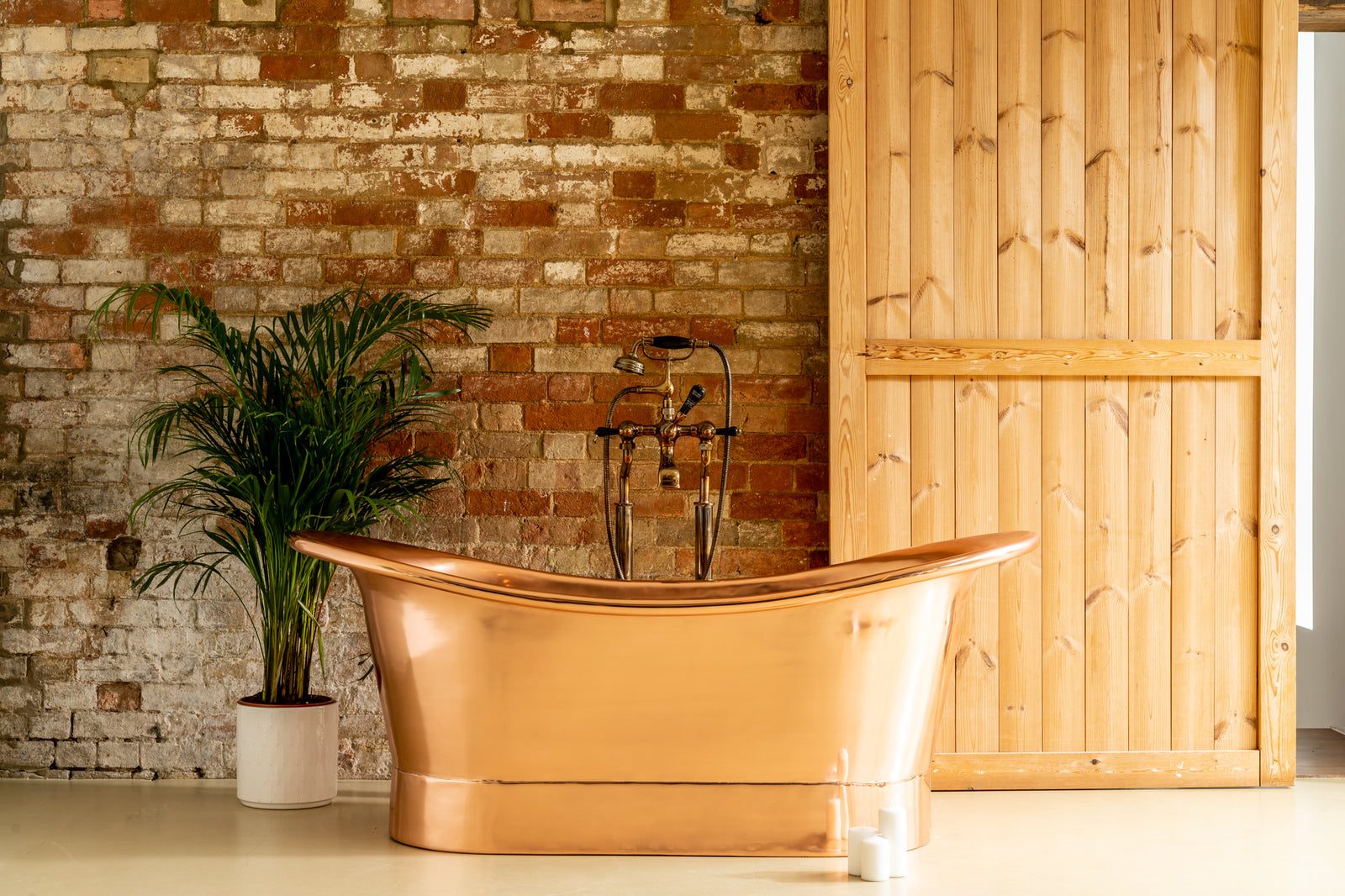
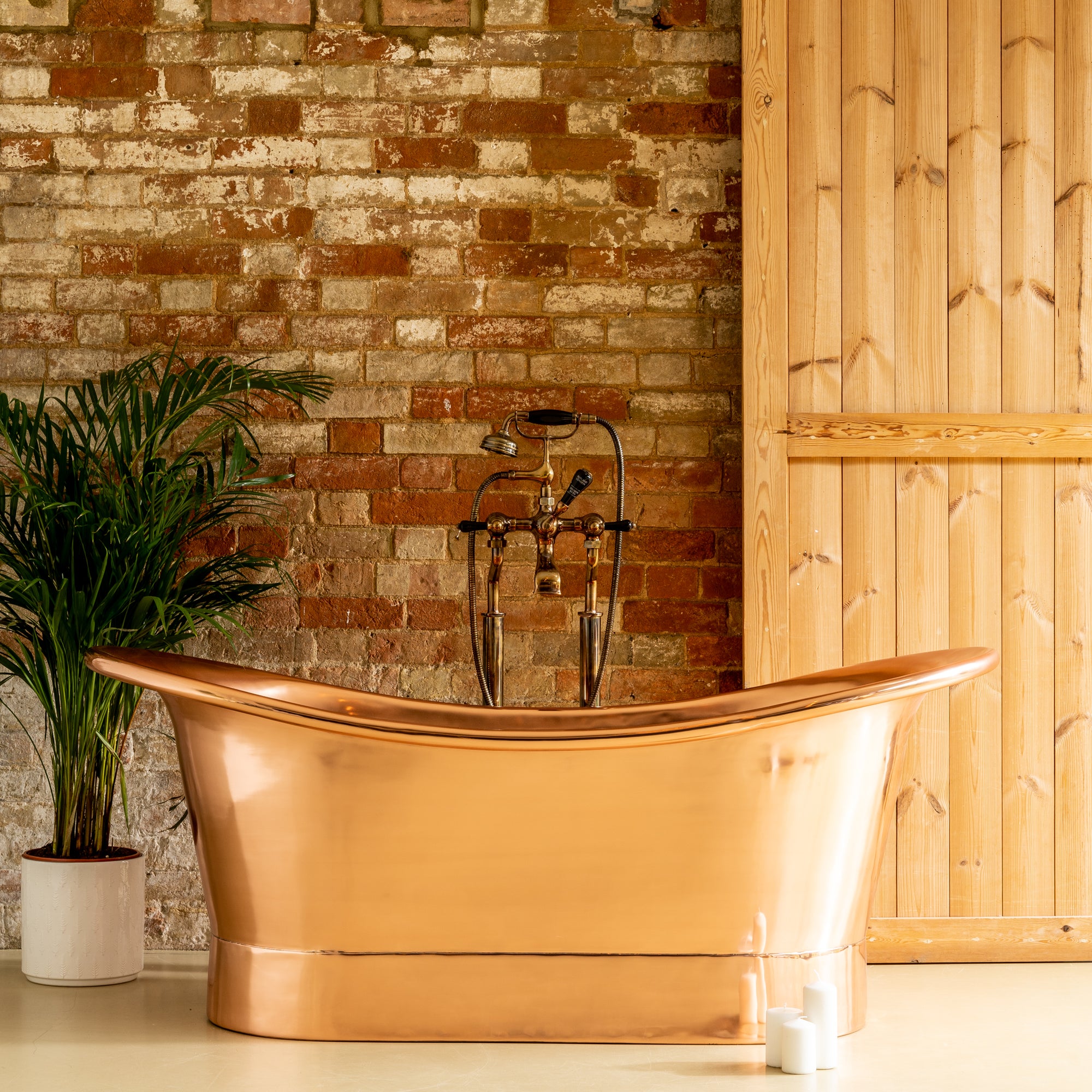
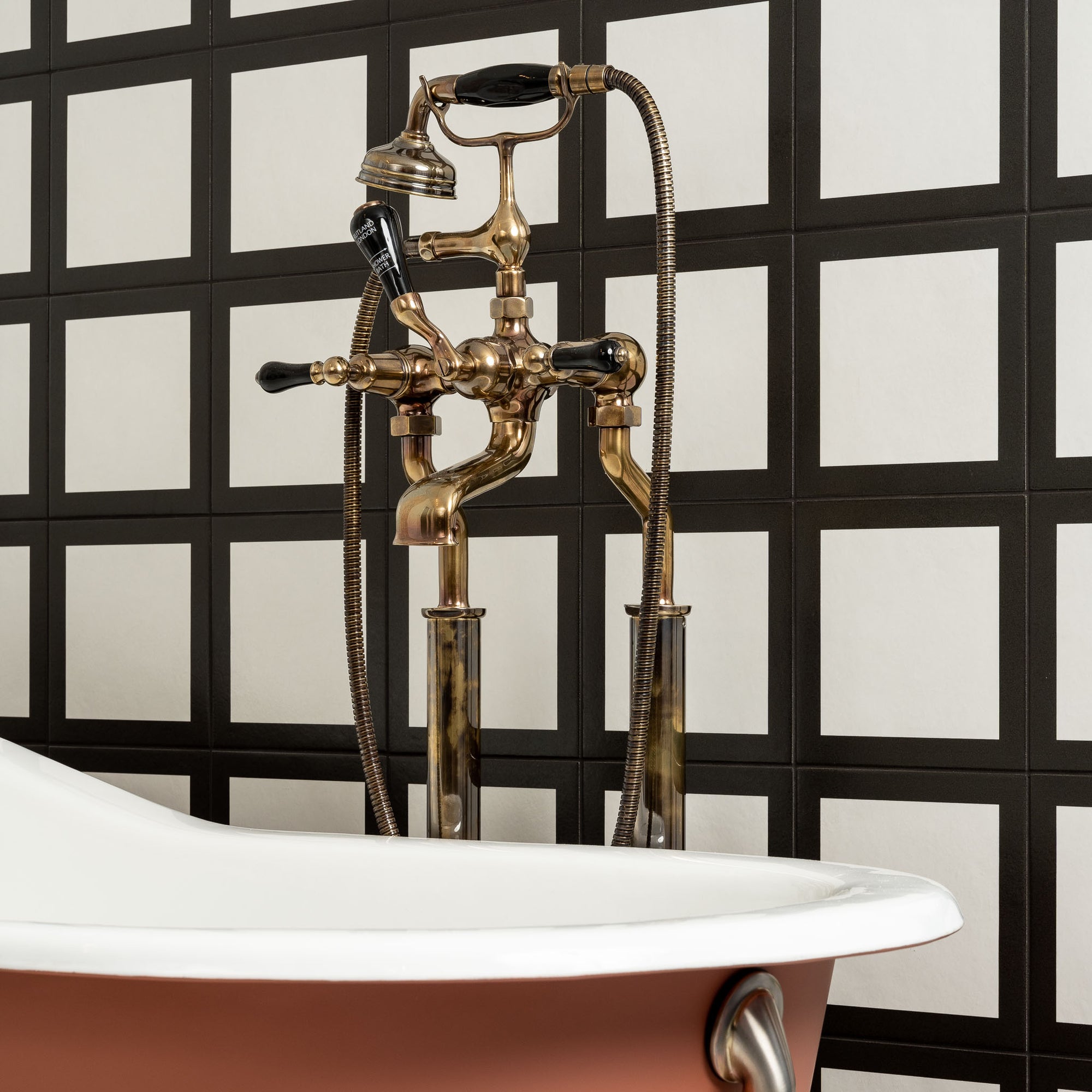
Where a freestanding bath is positioned away from the wall, a floor-mounted bath filler can provide an elegant solution.
The fitting itself becomes a substantial piece of architectural metalwork and should therefore be carefully coordinated with the bath and other bathroom brassware.
The finish has particular visual importance because a floor-mounted bath filler contains more exposed metal than a typical deck-mounted tap.
Bath & Shower Mixers
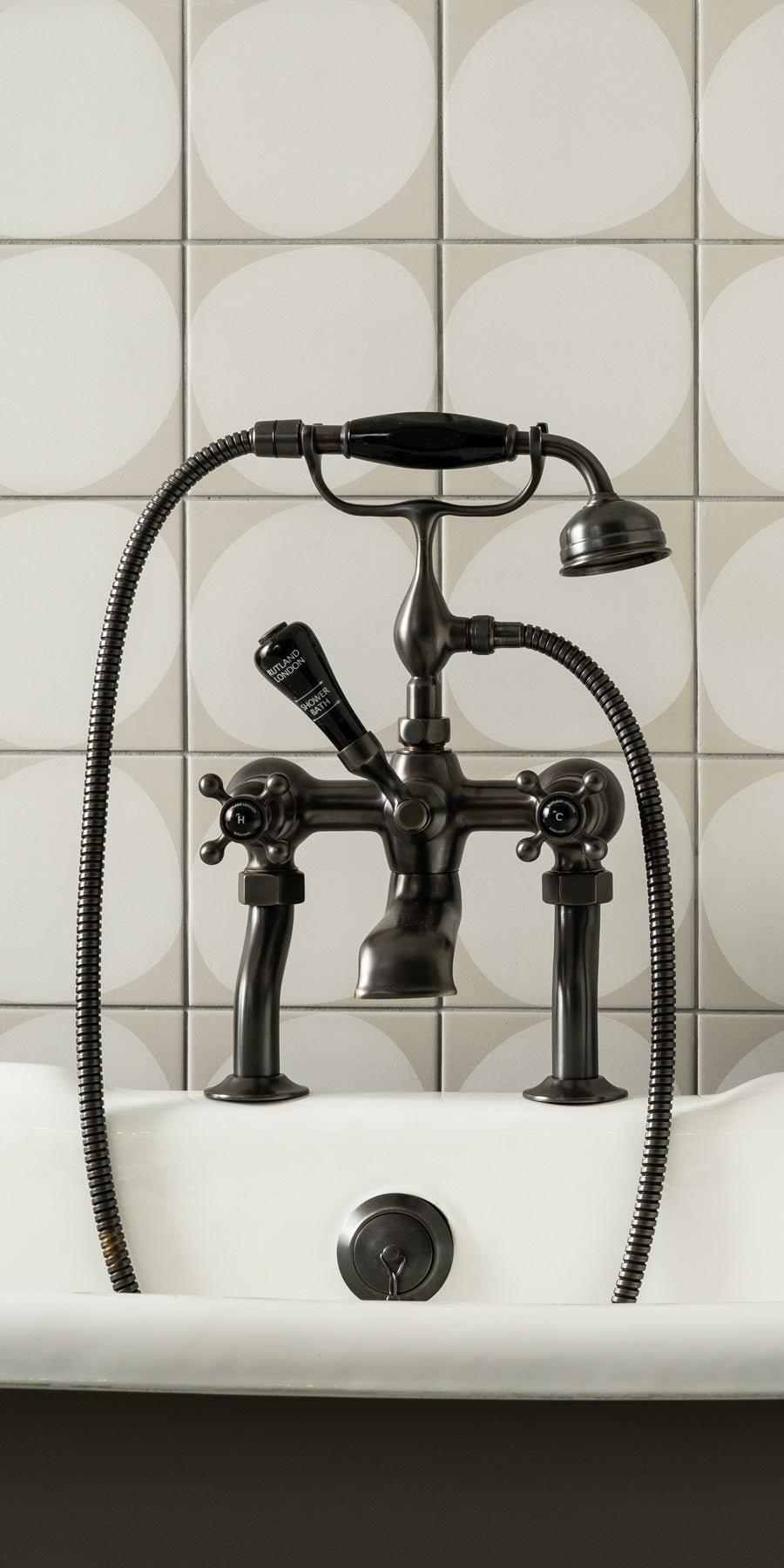
A bath and shower mixer combines the bath filler with a hand shower.
This can provide useful additional functionality for rinsing the bath, washing hair or cleaning.
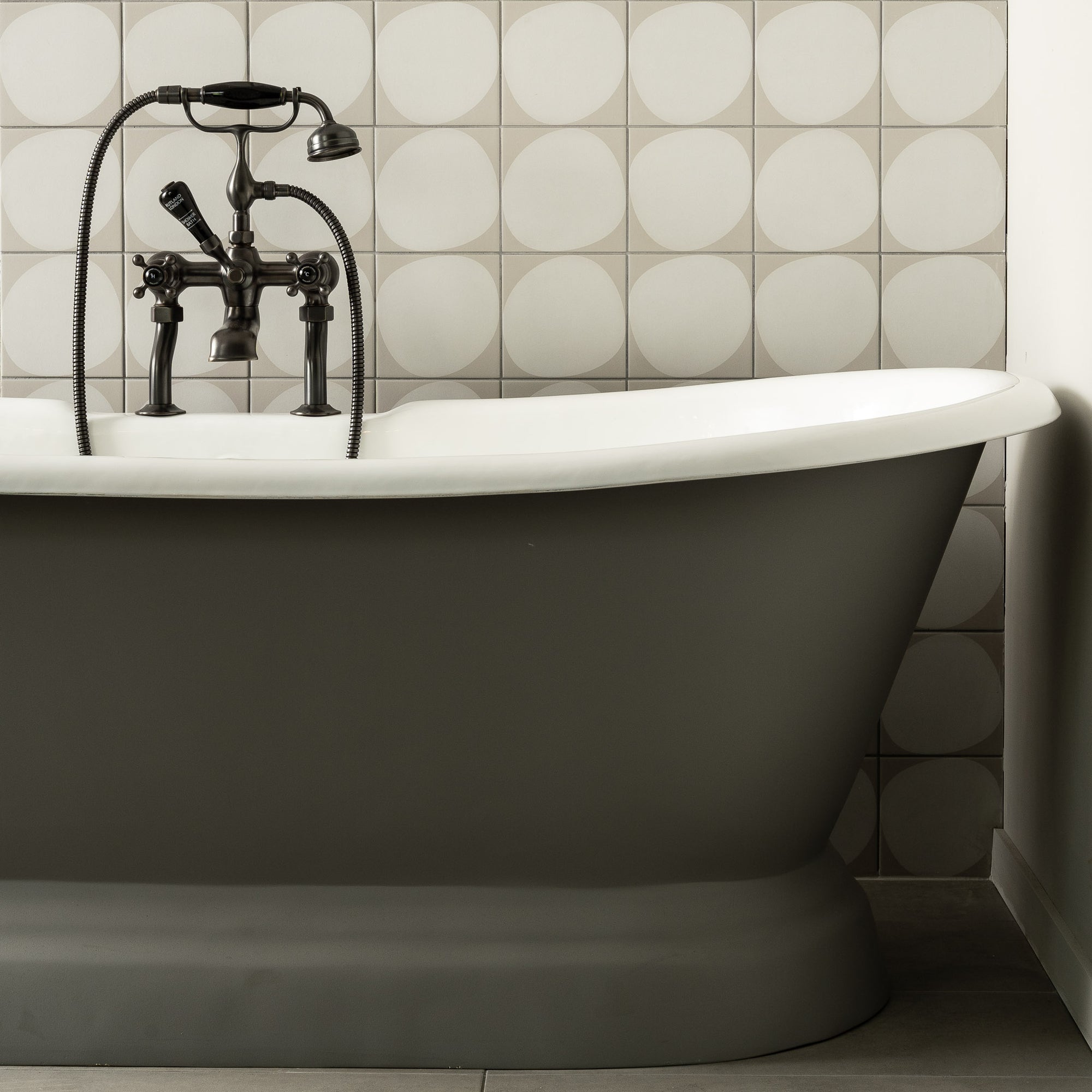
Traditional bath and shower mixers often use crossheads or ceramic levers and can become particularly decorative fittings.
The hose, handset and cradle should ideally be finished to coordinate with the main body of the mixer.
Traditional Shower Fittings
A traditional bathroom should not compromise on shower performance.
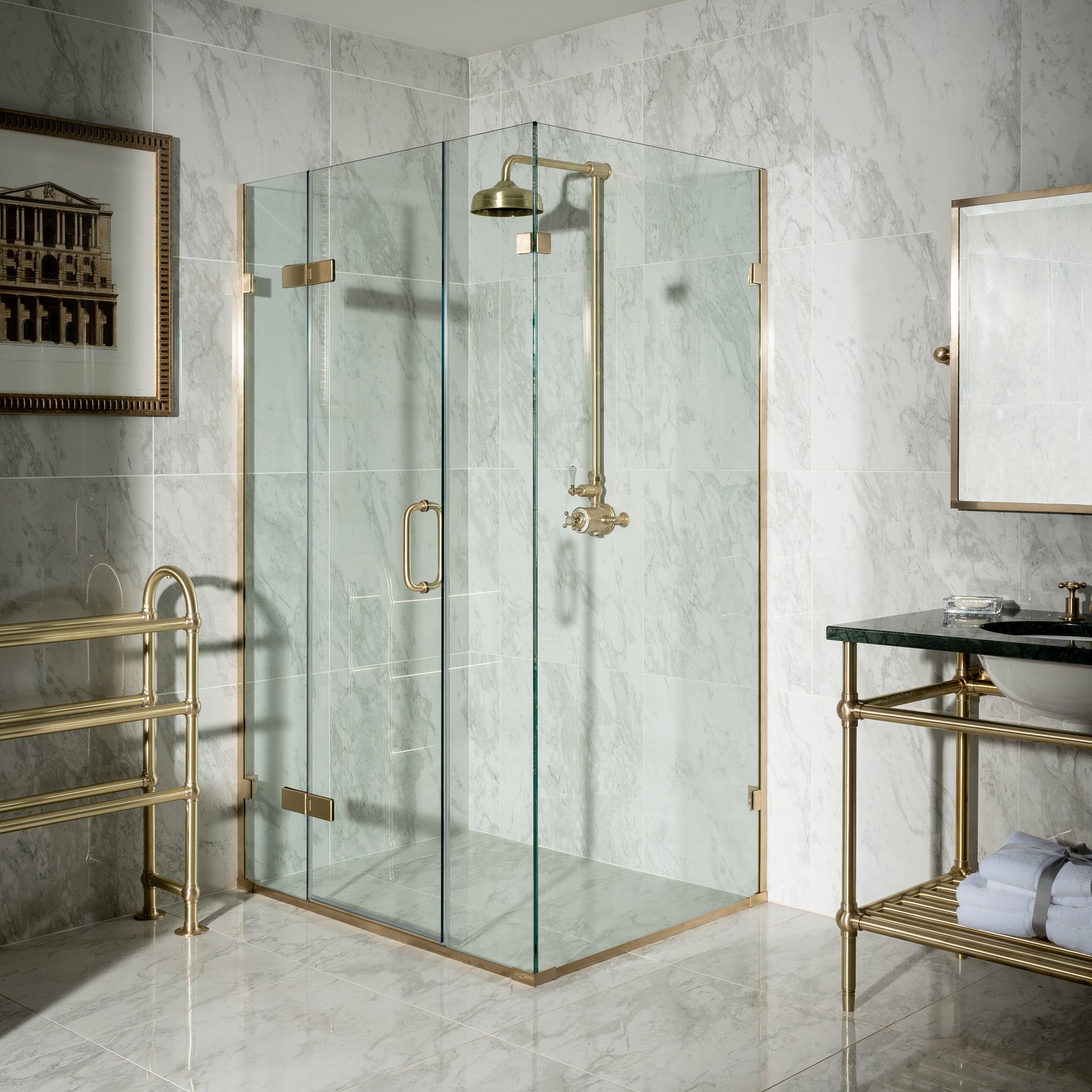
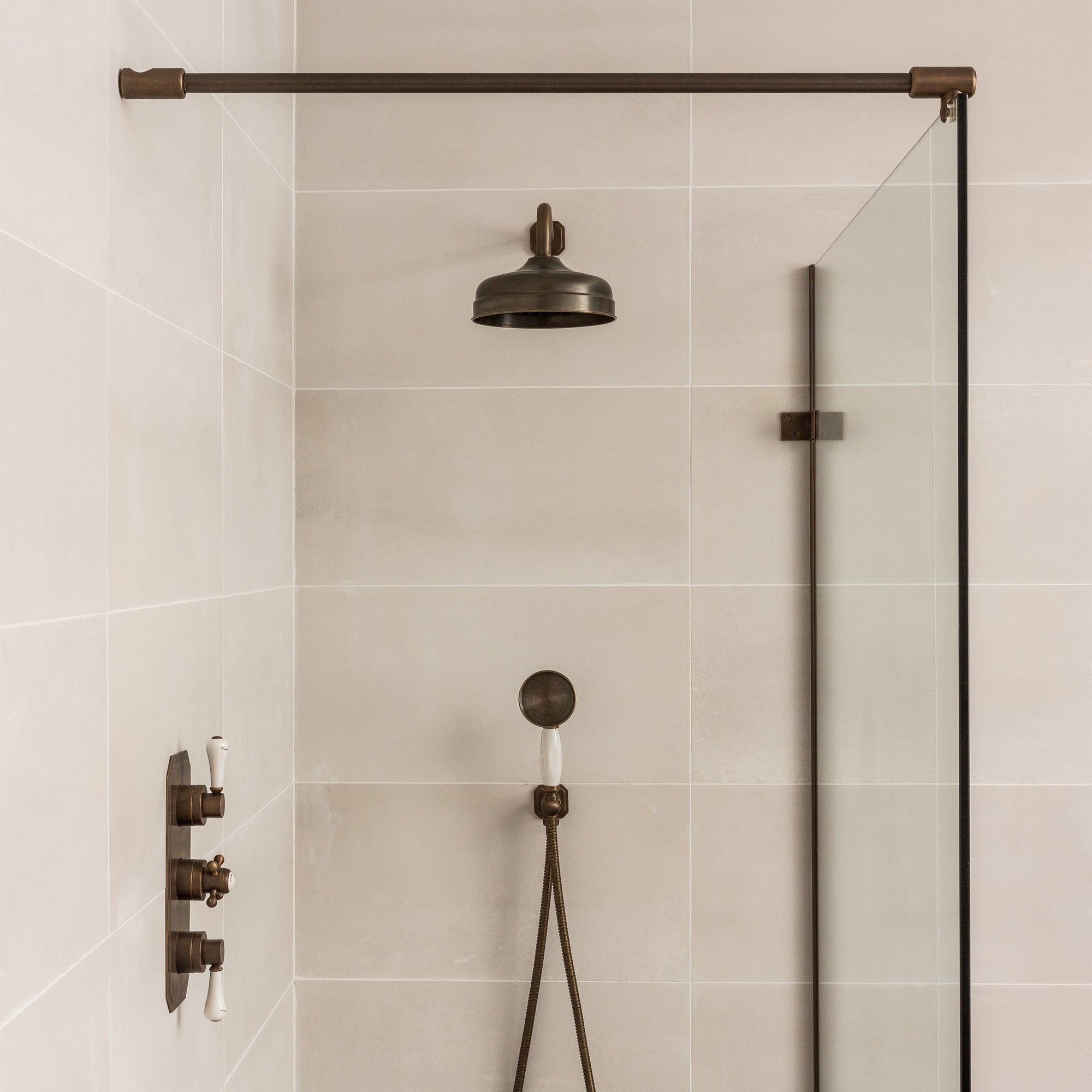
Thermostatic controls, substantial shower roses and separate hand showers can provide contemporary functionality while retaining traditional proportions and handle designs.
Rutland London's Luxury Bathroom Taps & Showers include complete shower systems, thermostatic valves, overhead showers and hand showers for coordinated bathroom specifications. :contentReference[oaicite:0]{index=0}
Exposed or Concealed Shower Systems?
Exposed shower systems make the pipework and fittings visible, allowing the Brass or Nickel components themselves to become part of the design.
This can be especially effective in highly traditional bathrooms.
Concealed shower systems hide more of the working components within the wall, leaving the controls, shower rose and handset visible.
This produces a cleaner architecture while still allowing traditional handles and finishes to provide character.
The right option depends on whether the designer wants the brassware to become a major visual feature or a more restrained element within the marble or tile.
Thermostatic Shower Valves
A thermostatic valve helps maintain a consistent shower temperature and provides modern performance within a traditionally styled bathroom.
This is a good example of how traditional design and contemporary engineering can work together.
The visible controls may use crossheads, ceramic levers or metal levers, while the valve itself provides the functionality expected from a modern luxury shower.
Choosing a Shower Rose
The size and style of the shower rose should be proportionate to the shower enclosure and wider bathroom.
A larger traditional overhead rose can become a strong visual feature within a generous walk-in shower.
Smaller designs may suit more compact enclosures.
The rose, arm and valve should ideally be specified as part of one complete system so the proportions and finish remain consistent.
Match the Basin, Bath & Shower Brassware
One of the easiest ways to create a coherent traditional bathroom is to repeat the same handle style and finish across the basin, bath and shower.
A ceramic crosshead basin mixer can be paired with corresponding bath taps and shower controls.
Metal lever basin taps can continue through to the bath and shower fittings.
The result feels considered because the individual products share a common design language.
Rutland London's Luxury Bathroom Taps & Showers are designed to allow coordinated specifications across these different areas.

Choosing the Right Brassware Finish
Finish can alter the character of a traditional tap almost as much as the handle design.
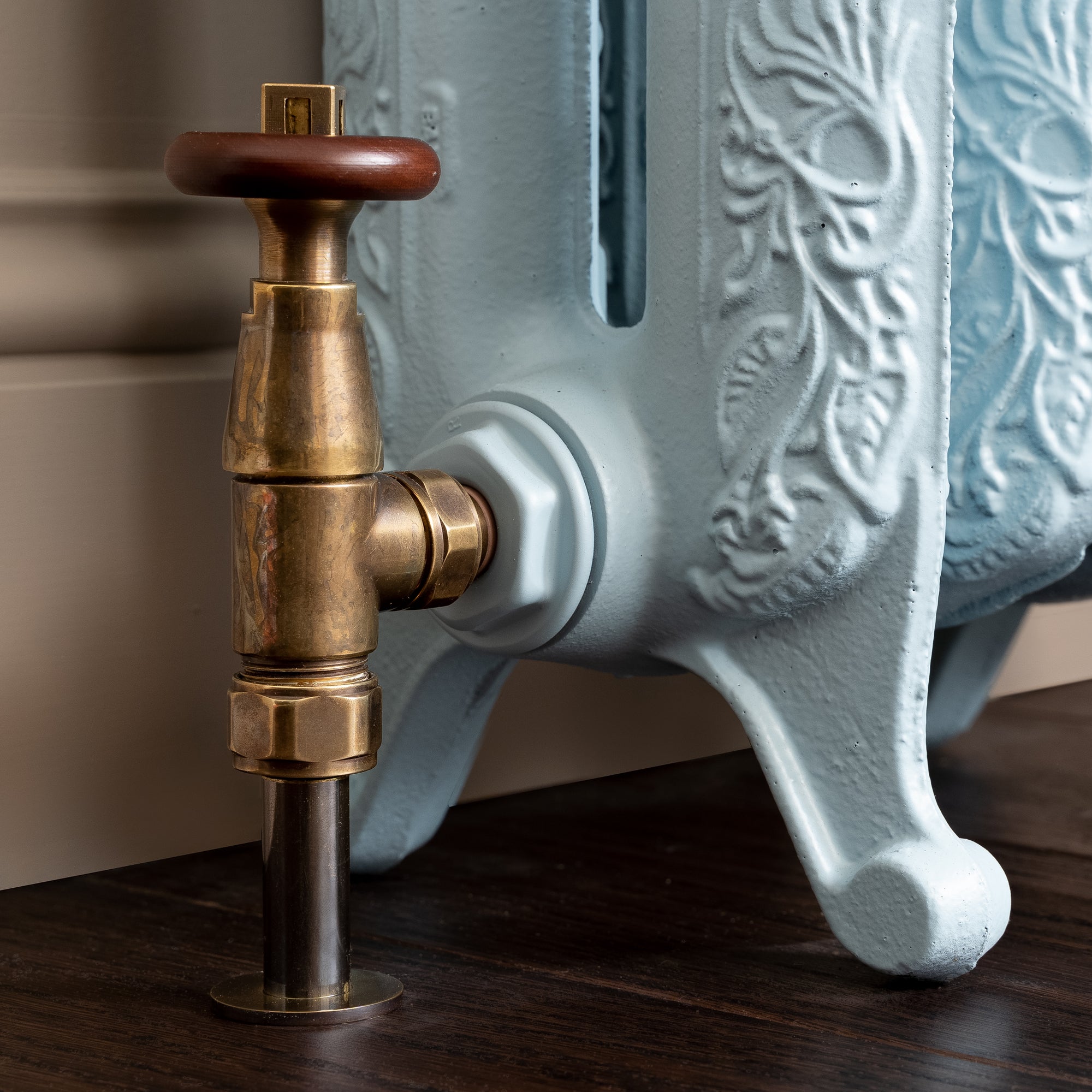
Polished (Unlacquered) Brass provides warmth and a naturally evolving appearance.
Brushed (Satin) Brass offers a softer alternative with reduced reflectivity.
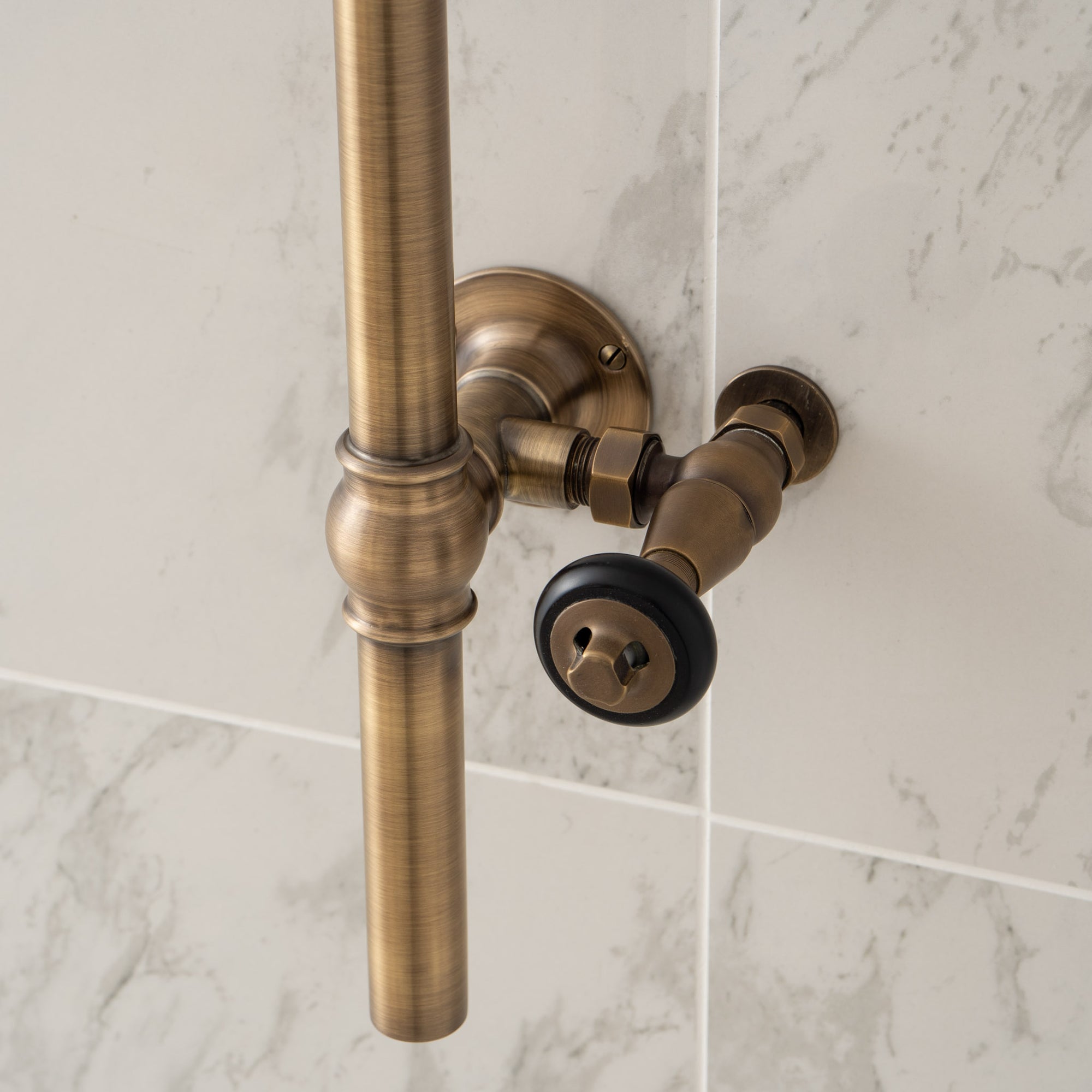
Aged Brass and Antique Brass introduce greater depth, while Polished Nickel provides a cooler classical appearance.
Bronze, Copper and Gold finishes can create stronger or more decorative material palettes.
Rutland London offers an extensive selection of Brassware Finishes for bathroom taps, showers and wider fittings.
Polished (Unlacquered) Brass Taps
Polished (Unlacquered) Brass is one of the most distinctive finishes for a traditional bathroom.
When newly finished, it appears bright and reflective.
Because the surface is unlacquered, however, it is a living finish and will naturally develop patina through handling, moisture and exposure to its environment.
This gradual evolution gives the fitting individual character over time.
Polished (Unlacquered) Brass works particularly well with pale marble, green marble, painted timber and traditional white ceramic.
Aged Brass & Antique Brass Taps
Aged Brass and Antique Brass provide greater depth from the beginning of the installation.
They can work beautifully within period properties, country houses and more layered traditional interiors.
However, these finishes can also provide warmth and contrast within contemporary architecture.
A traditionally proportioned tap in Aged Brass against simple marble can create a sophisticated transitional appearance rather than an overtly period look.
Nickel Bathroom Taps
Nickel offers a cooler alternative to Brass.
Polished Nickel works particularly well with white and grey marble, painted cabinetry and traditional ceramic sanitaryware.
Brushed (Satin) Nickel provides a quieter and more understated appearance.
Explore Nickel Bathroom Taps & Showers for coordinated basin, bath and shower fittings.
Bronze Bathroom Taps
Bronze can create greater architectural definition, particularly against pale marble and white ceramic.
Darker Bronze finishes can also coordinate with shower enclosure frames, lighting and architectural hardware elsewhere within the bathroom.
The strength of the finish means it should be considered as part of the entire material palette rather than selected in isolation.
Matching Taps With a Marble Vanity
Natural marble provides an ideal backdrop for traditional bathroom taps.
The relationship between the stone and metalwork should be considered before the marble is fabricated.
Three-hole taps require precise drilling positions.
Wall-mounted taps require careful coordination with the upstand and plumbing behind the wall.
A mono mixer requires less surface area but may create a more compact visual arrangement.
For projects using bespoke stone, the basin, taps and marble should therefore be specified together.
Traditional Taps & Vanity Suites
A vanity suite combines the basin, marble and surrounding metalwork into one architectural composition.
The taps should therefore complement the scale and detailing of the vanity rather than being selected independently.
A large double vanity can comfortably accommodate substantial three-hole mixers, while a narrower vanity may benefit from simpler basin taps.
Explore Rutland London's Luxury Vanity Suites for marble-topped designs that can be coordinated with traditional bathroom brassware.
Water Pressure & Traditional Bathroom Taps
Water pressure should always be considered before choosing bathroom taps and showers.
The visual style of a fitting does not determine its suitability for every plumbing system.
Bath fillers generally require greater flow than basin taps, while large shower roses may require adequate pressure and flow to perform as intended.
The project's plumber should review the property's water system and the technical requirements of the selected products before installation.
Quarter-Turn Ceramic Cartridges
Many Rutland London basin and bath taps use high-quality quarter-turn ceramic cartridges, combining traditional handle designs with modern internal engineering. :contentReference[oaicite:1]{index=1}
This provides a smooth operating action and reliable shut-off without requiring the multiple turns associated with older compression-style tap mechanisms.
It is another example of how traditional appearance can be combined with contemporary performance.
Traditional Taps for Period Properties
Traditional taps are a natural choice for Georgian, Victorian, Edwardian and country-house interiors.
The objective, however, should not necessarily be exact historical reproduction.
A high-quality traditional tap can acknowledge the architecture of an older property while incorporating modern ceramic cartridges, thermostatic shower technology and contemporary engineering.
This creates a bathroom that feels sympathetic to the property while remaining practical for modern life.
Traditional Taps in Contemporary Bathrooms
Traditional brassware can be equally effective within new-build and contemporary architecture.
A crosshead tap or Polished (Unlacquered) Brass basin mixer can introduce warmth and character against simple marble, plaster or modern cabinetry.
This contrast prevents the bathroom from feeling overly clinical while avoiding the need to make the entire room traditionally styled.
Traditional bathroom fittings can therefore be used as individual characterful elements within otherwise restrained interiors.
Bespoke Bathroom Taps & Showers
Not every project can be resolved using a standard configuration.
Rutland London's Bespoke Bathroom Taps & Showers allow designers to tailor configurations, component selection and finishes to suit individual project requirements. :contentReference[oaicite:2]{index=2}
This can be particularly useful where unusual bathroom layouts, specific shower configurations or highly coordinated finish schedules are required.
Coordinate Taps With the Wider Bathroom Brassware
The taps should ideally form part of a wider bathroom finish schedule.
The same finish can be repeated across:
- Shower fittings
- Shower enclosure frames
- Vanity stands
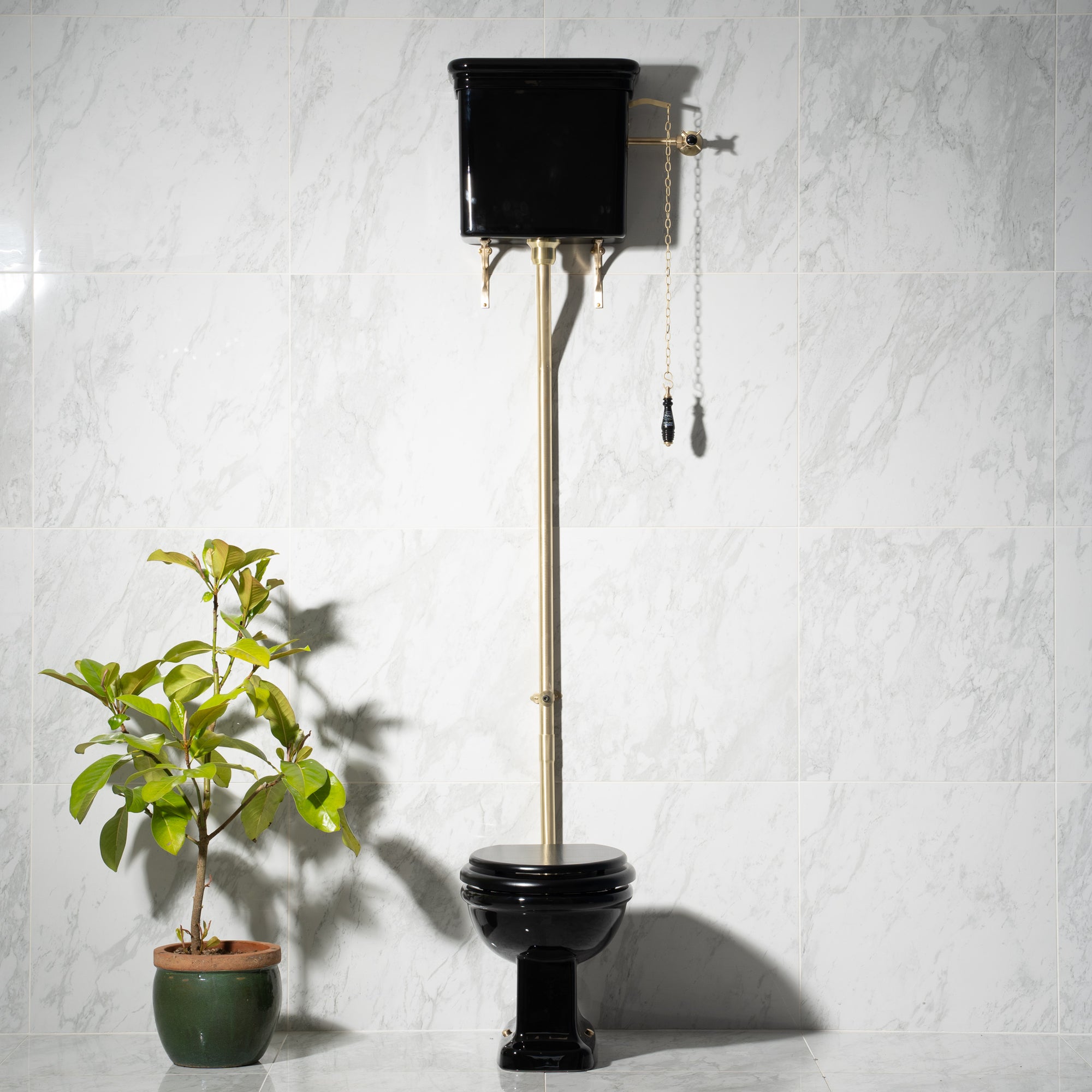
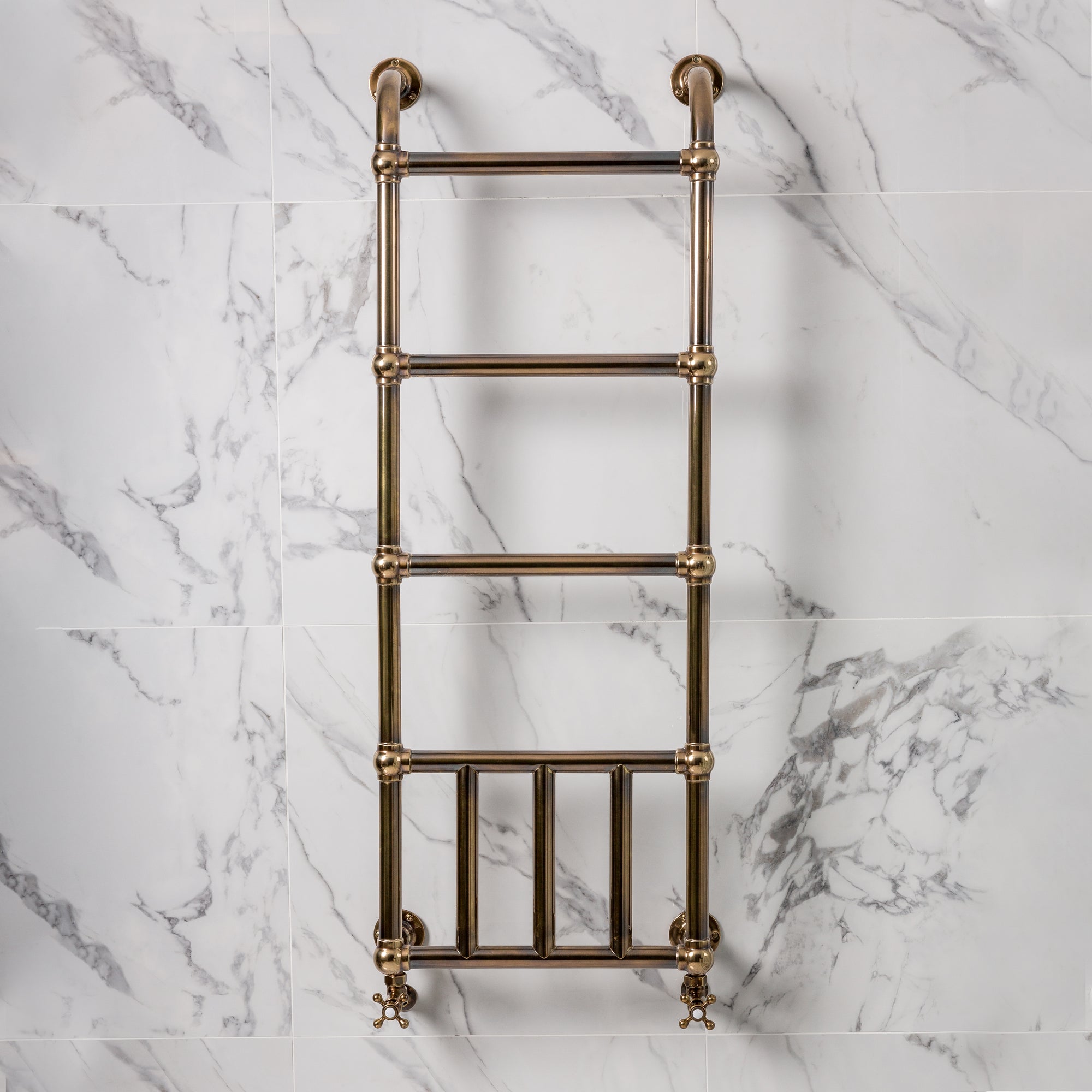
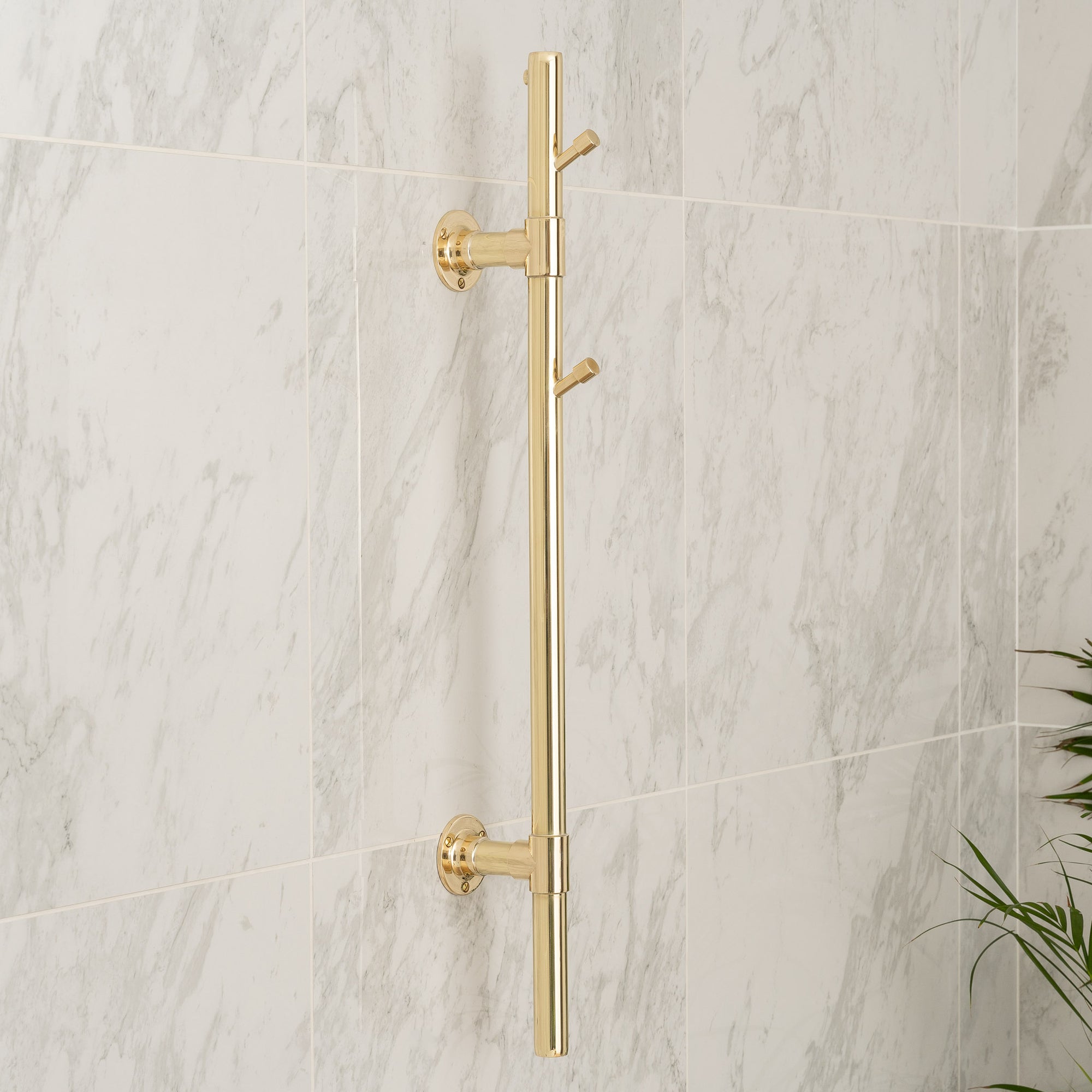
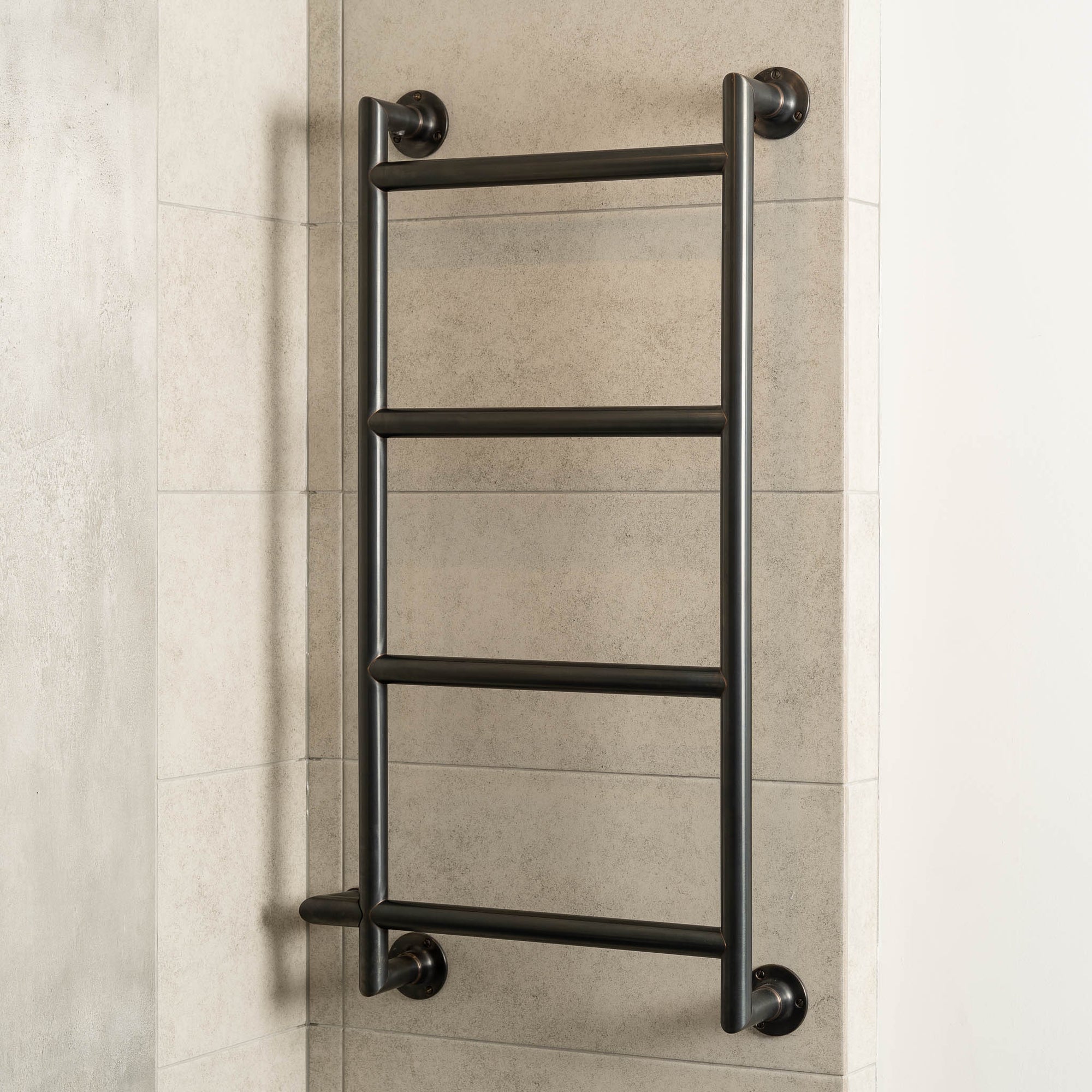
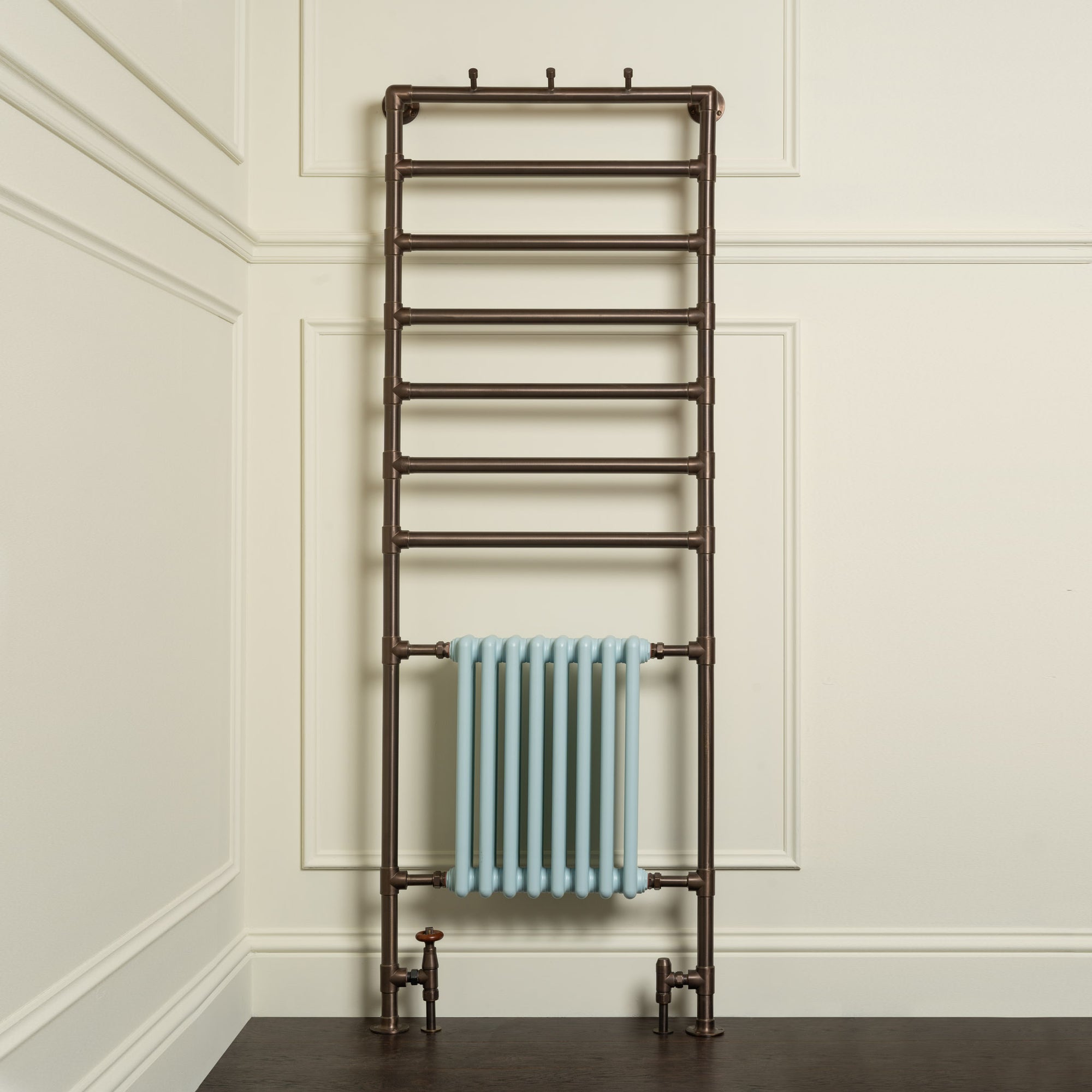
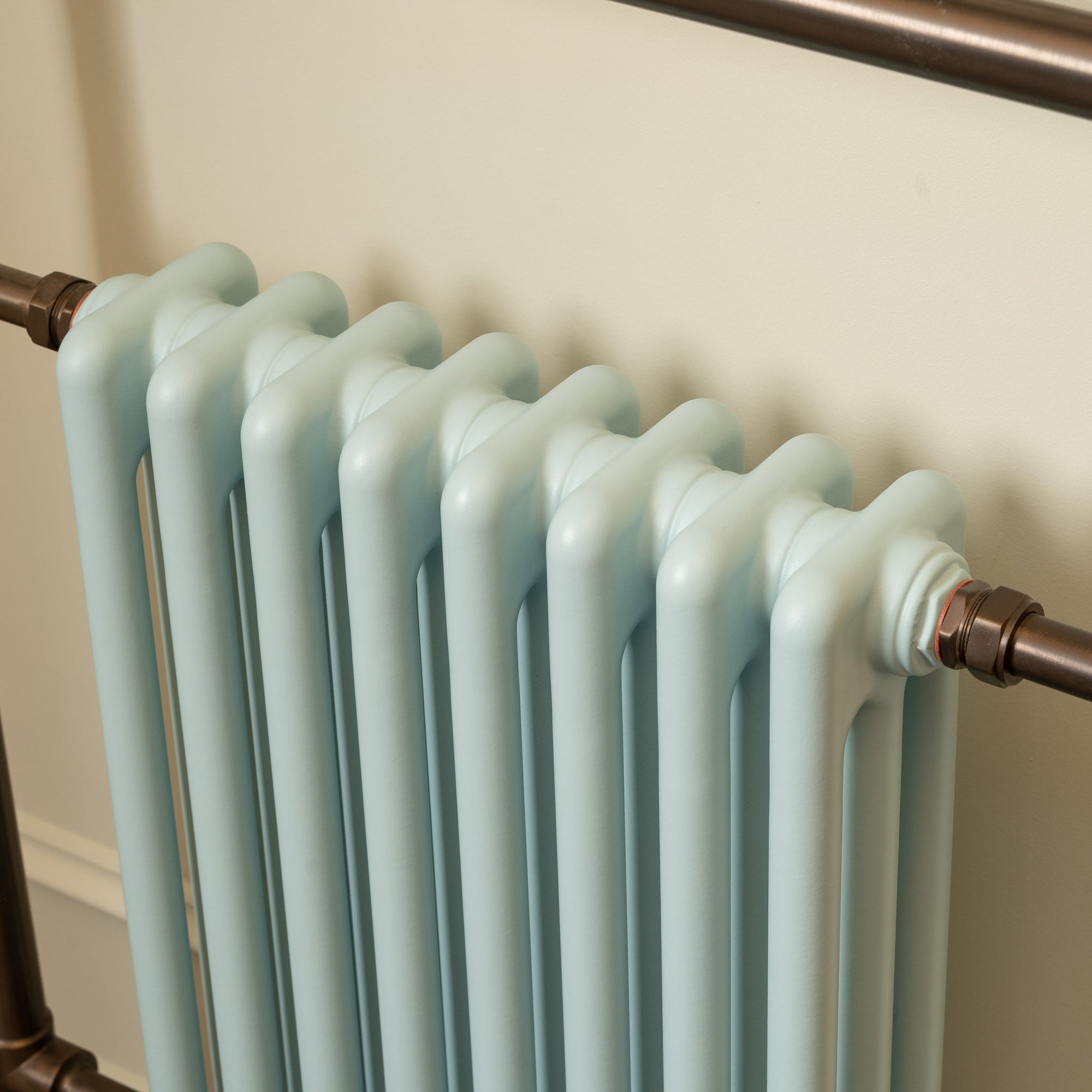
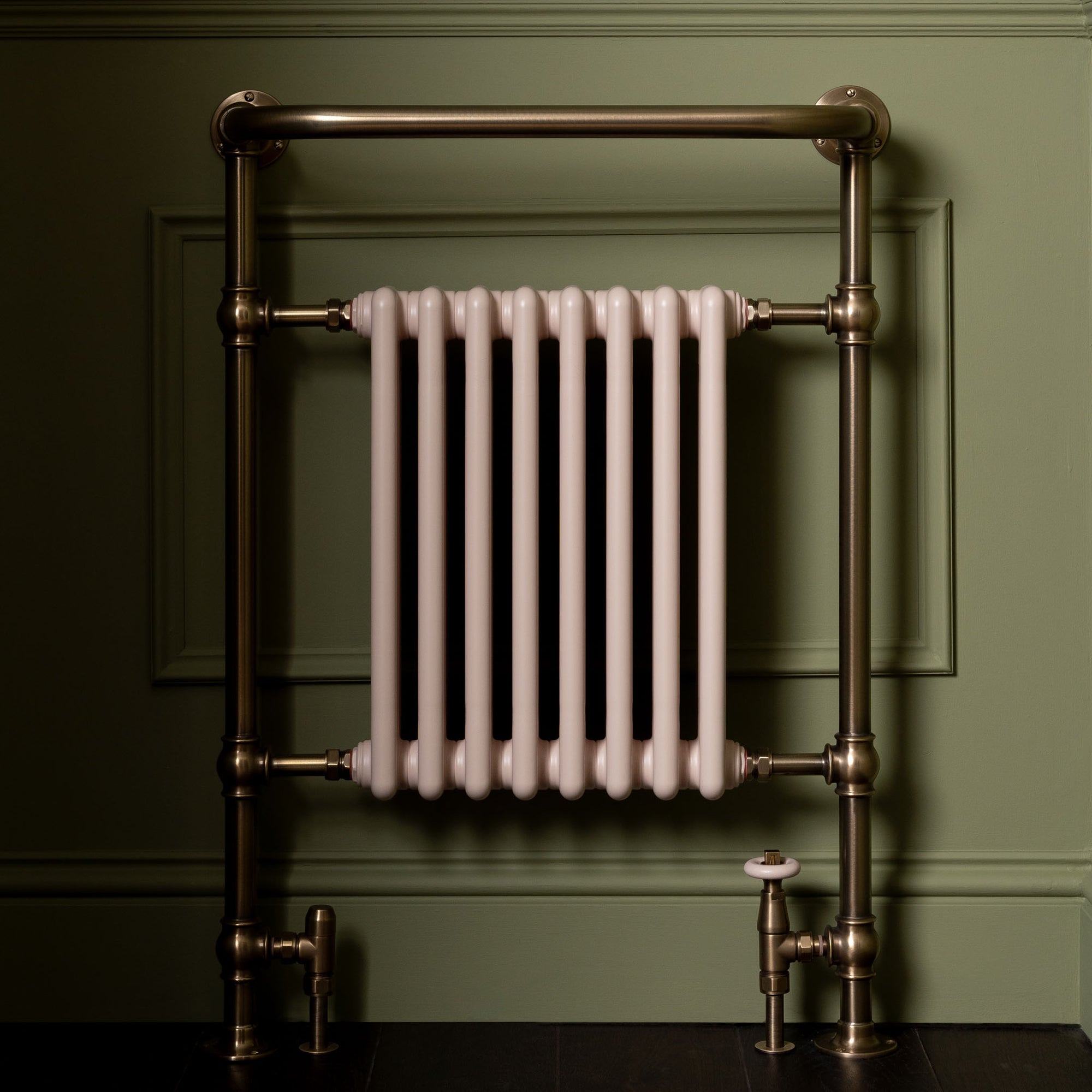
- Heated towel rails
- Bathroom mirrors
- Flush plates and WC levers
- Exposed traps and wastes
- Towel rails and accessories
Rutland London's All Brassware Products collection brings these different elements together across a coordinated family of finishes. :contentReference[oaicite:3]{index=3}
Should All Bathroom Taps Match?
They do not have to, but consistency can help create a more coherent bathroom.
Using the same handle style and finish across the basin, bath and shower is the simplest approach.
Mixed metals can also work where the combination is deliberate.
For example, the principal bathroom brassware might be Polished (Unlacquered) Brass while lighting introduces a secondary Bronze finish.
The important point is that the relationship should feel intentional rather than accidental.
Order Finish Samples Before Finalising the Specification
Metal finishes can appear noticeably different depending on lighting, surrounding stone and photography.
A physical finish sample allows the Brass, Nickel or Bronze to be reviewed alongside marble, timber, paint and tile before the taps are ordered.
This is particularly important for living finishes because natural variation forms part of their intended character.
Explore the Rutland London Brassware Finishes collection when developing the material palette for your bathroom.
Traditional Bathroom Taps Made in England
Rutland London bathroom taps and shower fittings combine traditional English design with modern engineering.
Products across the Brass Bathroom Taps & Showers collection are machined or finished in England from quality Brass components, with basin and bath taps using quarter-turn ceramic cartridges and showers incorporating thermostatic technology across suitable designs. :contentReference[oaicite:4]{index=4}
This approach allows traditional bathroom brassware to retain the material character and proportions associated with English design while providing the performance expected from a contemporary luxury bathroom.

Frequently Asked Questions About Traditional Bathroom Taps
What are traditional bathroom taps?
Traditional bathroom taps generally use classically influenced proportions and handle designs such as crossheads, ceramic levers or metal levers. They can be supplied as basin taps, bath taps, wall-mounted mixers, deck-mounted mixers and complete shower systems.
Are crosshead taps traditional?
Yes. Crosshead handles are one of the most recognisable forms of traditional bathroom brassware and work particularly well with natural marble, ceramic and timber.
Are lever taps traditional?
Yes. Ceramic and metal levers can both be used within traditional bathrooms, particularly where a slightly softer or more transitional aesthetic is desired.
Is a three-hole basin mixer traditional?
Three-hole basin mixers are particularly well suited to traditional and luxury bathrooms because the separate hot and cold controls create an elegant and symmetrical arrangement around the central spout.
Are wall-mounted taps suitable for a traditional bathroom?
Yes. Wall-mounted taps can retain traditional crossheads, levers and finishes while creating a cleaner architectural composition above the basin.
What finish is best for traditional bathroom taps?
Polished (Unlacquered) Brass, Aged Brass, Antique Brass and Polished Nickel are all popular choices. The best finish should respond to the marble, cabinetry, lighting and wider material palette of the bathroom.
Does Polished (Unlacquered) Brass change over time?
Yes. Polished (Unlacquered) Brass is a living finish and naturally develops patina through handling, moisture and exposure to its surrounding environment.
Is Polished Nickel traditional?
Yes. Polished Nickel works particularly well within traditional bathrooms and provides a cooler alternative to Brass, especially alongside pale marble and white sanitaryware.
Should basin and bath taps match?
They do not have to, but using the same handle design and finish can create greater consistency throughout the bathroom.
Should shower fittings match the taps?
Matching or deliberately coordinating the shower fittings with the basin and bath taps can create a more coherent bathroom, particularly where all the fittings are visible from the same viewpoint.
Do traditional taps work with modern plumbing?
Traditional styling does not mean outdated internal engineering. Many modern traditional taps use ceramic cartridges and contemporary components. The property's water pressure, flow and plumbing arrangement should still be reviewed against the technical requirements of the individual product.
Can traditional bathroom taps work in a modern home?
Absolutely. Traditional taps can introduce material warmth and craftsmanship into contemporary architecture, particularly when combined with simple marble, plaster and restrained cabinetry.
Can Rutland London supply bespoke bathroom taps?
Yes. Rutland London's Bespoke Bathroom Taps & Showers provide additional flexibility in configuration, component selection and finish for individual projects.
Explore Traditional Bathroom Taps & Showers
Rutland London designs luxury bathroom brassware for traditional, transitional and contemporary interiors, with basin taps, bath taps, shower fittings and complete systems available across an extensive selection of finishes.
- Luxury Bathroom Taps & Showers
- Brass Bathroom Taps & Showers
- Nickel Bathroom Taps & Showers
- Bespoke Bathroom Taps & Showers
- Baths & Bath Tapware
- Wall Mounted Basin Taps
- Wall Mounted Bath Taps
- Luxury Vanity Suites
- Brassware Finishes
- All Brassware Products
- How to Choose the Perfect Brassware Finish
- How to Design a Timeless Traditional English Bathroom
Choose Traditional Bathroom Taps That Will Endure
The best traditional bathroom taps should feel appropriate to the architecture of the room without relying on short-lived decorative trends.
Start with proportion and configuration.
Decide whether the basin requires a mono mixer, three-hole arrangement, pillar taps or wall-mounted fittings. Consider how the bath and shower should relate to the same design language. Then select a finish that complements the marble, timber, paint and other permanent materials within the room.
By coordinating the basin taps, bath taps, shower fittings and wider brassware from the beginning, a traditional bathroom can feel considered and timeless rather than simply styled to look old.
Explore Rutland London's Luxury Bathroom Taps & Showers to discover traditional and contemporary brassware designed and finished in England.