




































A traditional bathroom should feel timeless rather than old-fashioned.
Natural marble, beautifully proportioned sanitaryware, handcrafted brassware, timber, traditional taps and architectural details can create a bathroom that feels established from the moment it is installed, while still providing the comfort and performance expected from a modern interior.
The most successful traditional bathrooms rarely attempt to recreate one particular historical period. Instead, they take enduring elements of English bathroom design and combine them with contemporary engineering, carefully selected materials and a restrained approach to decoration.
At Rutland London, we design and manufacture luxury bathroom products for traditional and contemporary interiors, with many of our collections handcrafted or finished to order in England.
From traditional bathroom taps and showers to vanity suites, shower enclosures, heated towel rails, baths and WC suites, this guide explores how to create a traditional English bathroom designed to remain beautiful for decades.
What Defines a Traditional English Bathroom?
Traditional English bathroom design is difficult to define through one individual product or style.
Instead, its character comes from the relationship between proportion, materials, craftsmanship and detail.
A traditional bathroom might include a freestanding bath, marble vanity, exposed shower fittings, hardwood toilet seat and floor-mounted heated towel rail. Another might use a concealed WC, wall-mounted taps and a more minimal shower enclosure while retaining traditional materials and finishes.
What connects these interiors is a preference for materials that possess character and products that feel permanent rather than temporary.
Natural stone, Brass, Bronze, Nickel, timber, ceramic and cast iron are all materials with a long history within English interiors and continue to work beautifully in bathrooms today.
How to Make a Traditional Bathroom Feel Timeless
The difference between a traditional bathroom that feels timeless and one that feels dated often comes down to restraint.
It can be tempting to combine every recognisably traditional element within one room: elaborate sanitaryware, heavily patterned tiles, decorative taps, ornate lighting and period furniture.
Usually, a more considered approach produces a stronger result.
Start with good proportions and high-quality permanent materials. Allow marble, timber and metalwork to provide character, then introduce decorative detailing selectively.
This creates an interior influenced by traditional English design without turning the bathroom into a reproduction of a Victorian or Edwardian room.
Choose Natural Materials That Improve With Age
One of the defining characteristics of a beautiful traditional bathroom is the use of natural materials.
Marble contains variation that cannot be perfectly reproduced. Timber develops character. Living metal finishes evolve and develop patina.
Rather than attempting to keep every surface completely uniform, traditional interiors can celebrate these variations.
This is particularly important when choosing bathroom brassware.
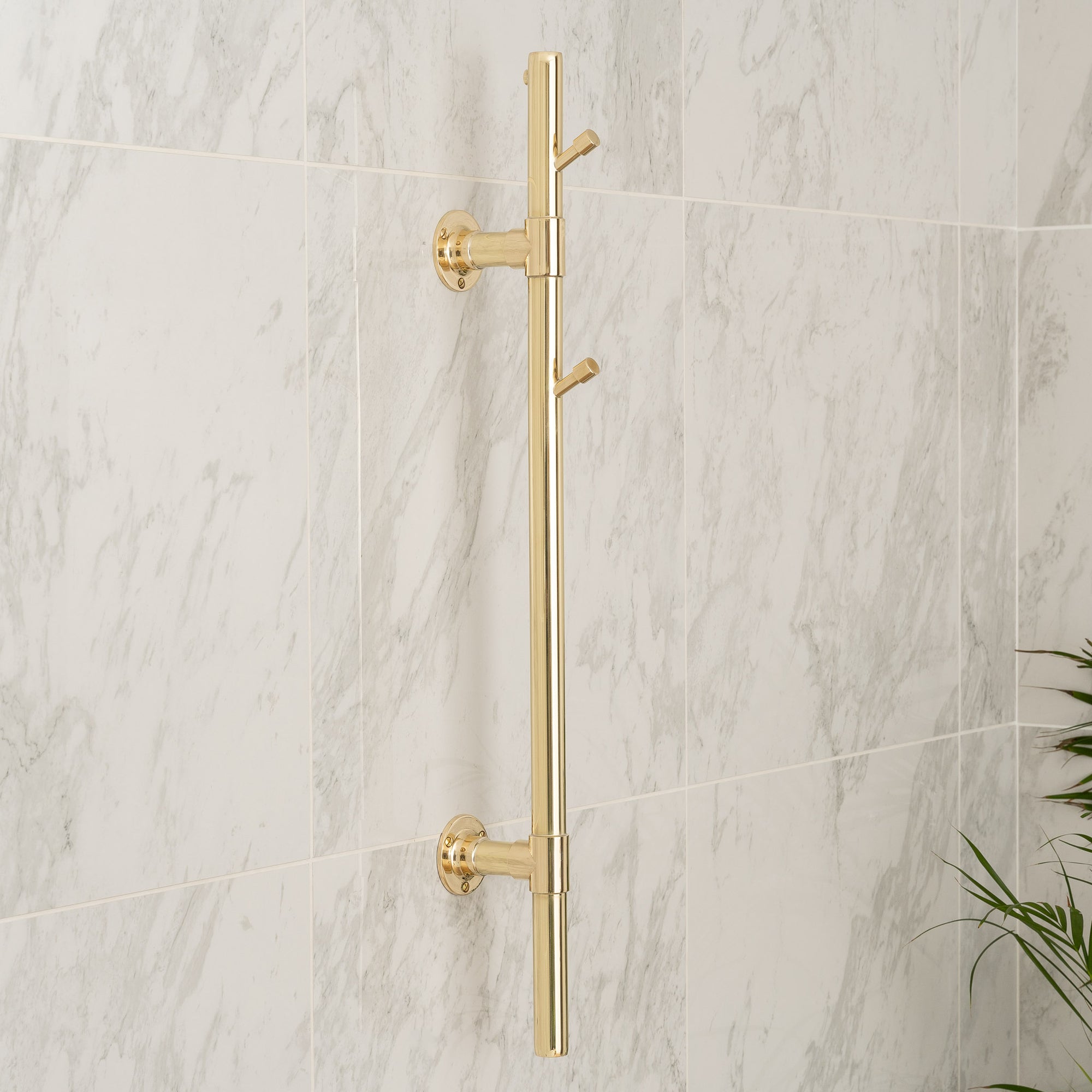
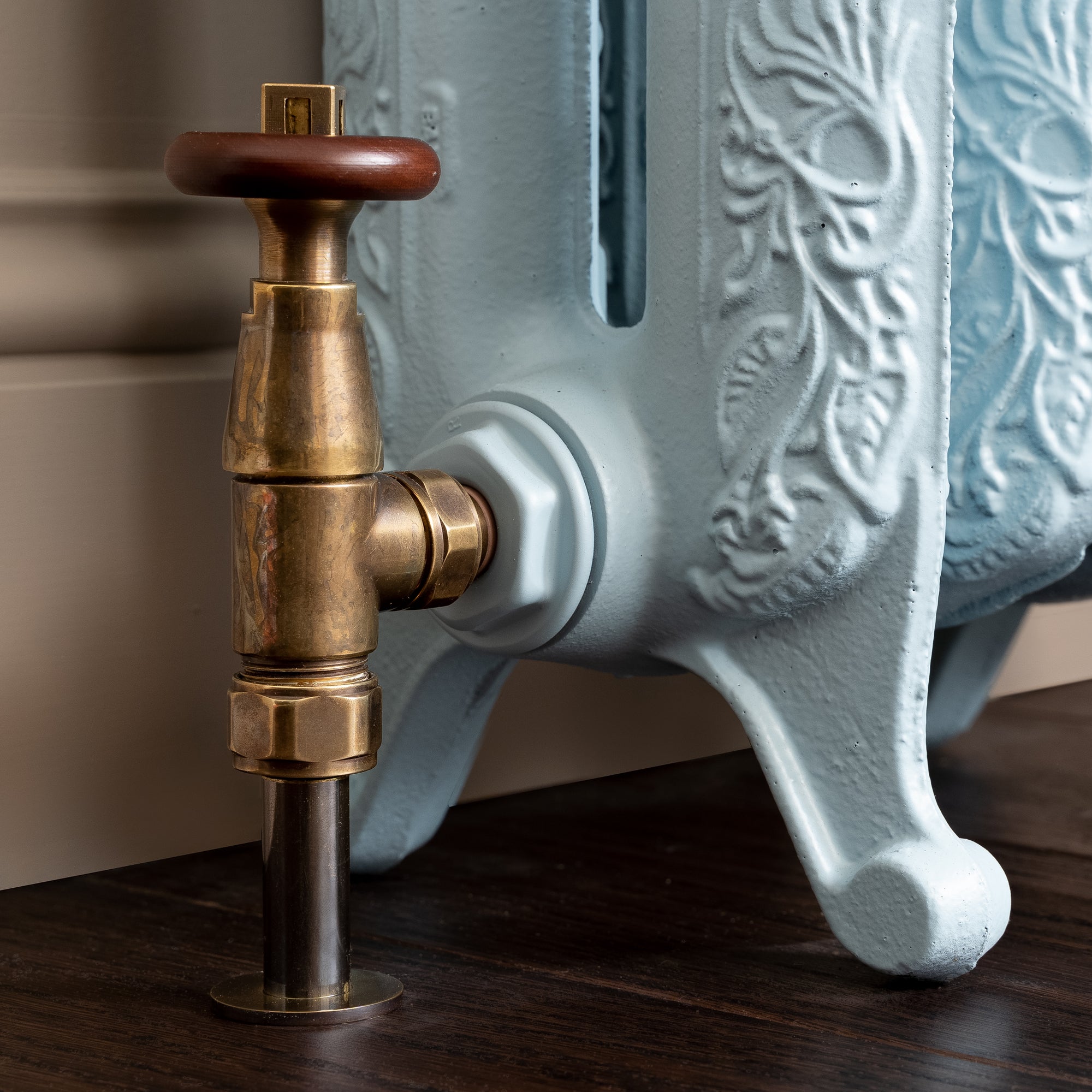
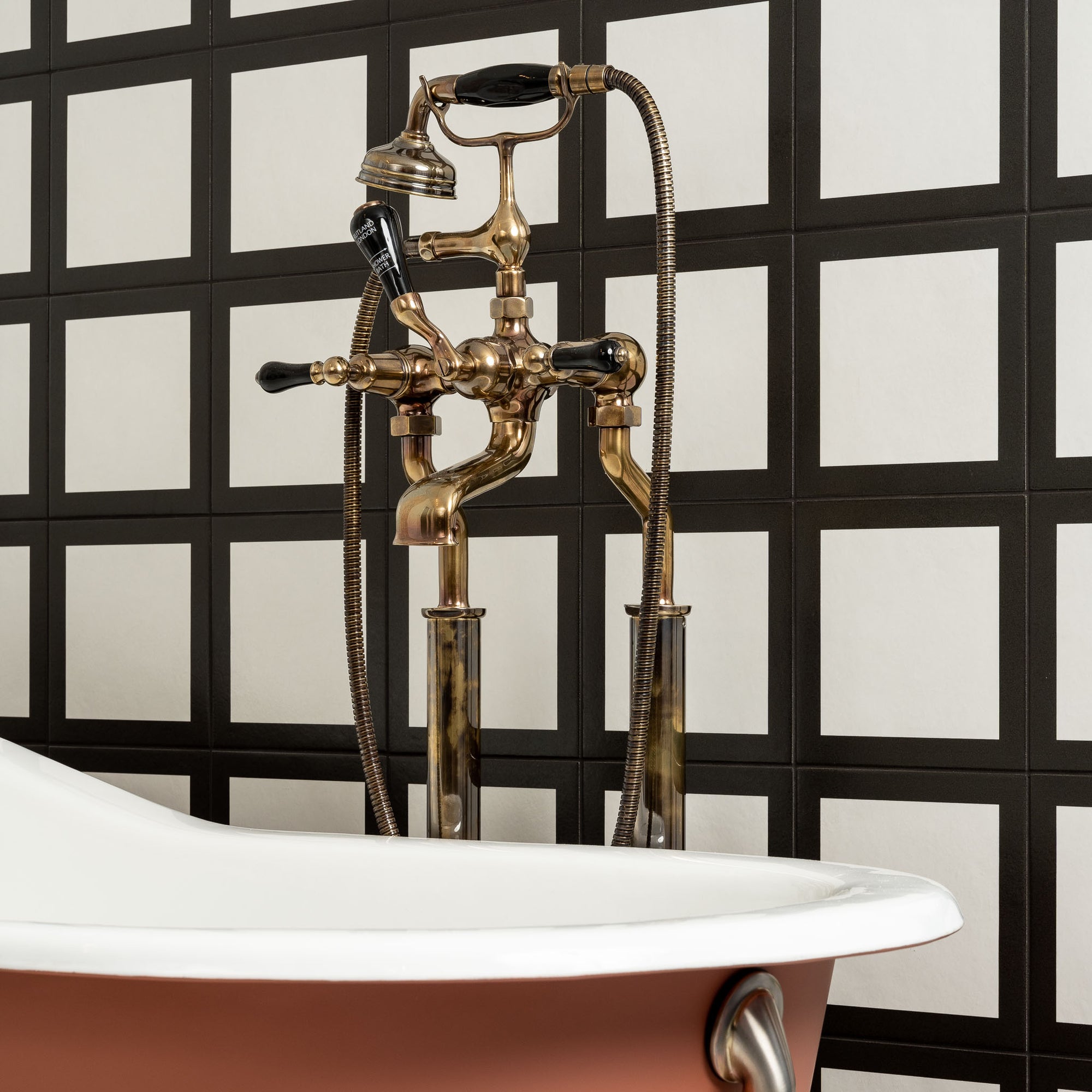
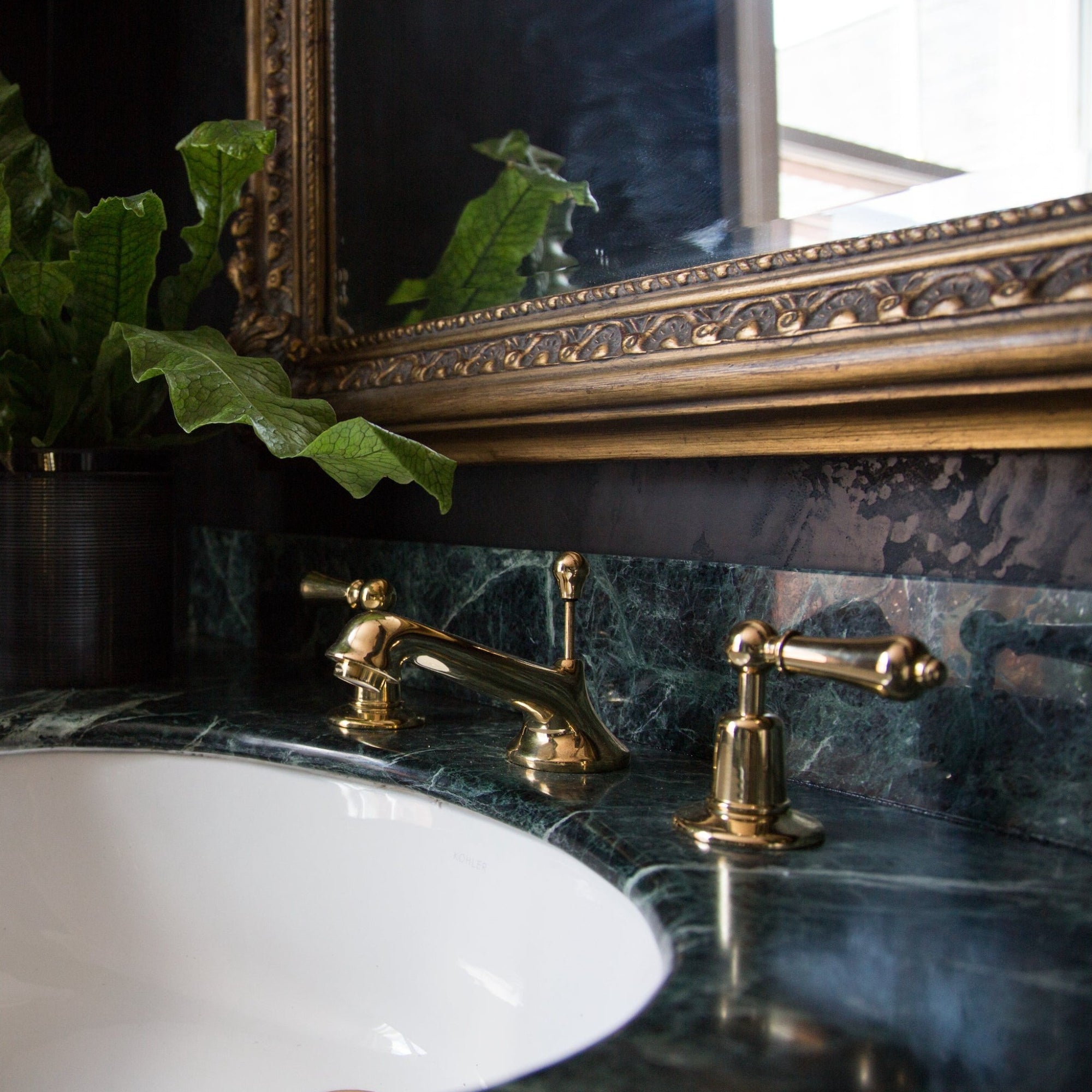
Finishes such as Polished (Unlacquered) Brass can change naturally through handling, moisture and exposure to their environment. The resulting patina gives fittings greater individuality as the bathroom ages.
For a detailed introduction to selecting metal finishes, read our guide to choosing the perfect Brassware finish for a luxury bathroom.
Traditional Bathroom Taps
Taps are among the most recognisable features of a traditional bathroom.
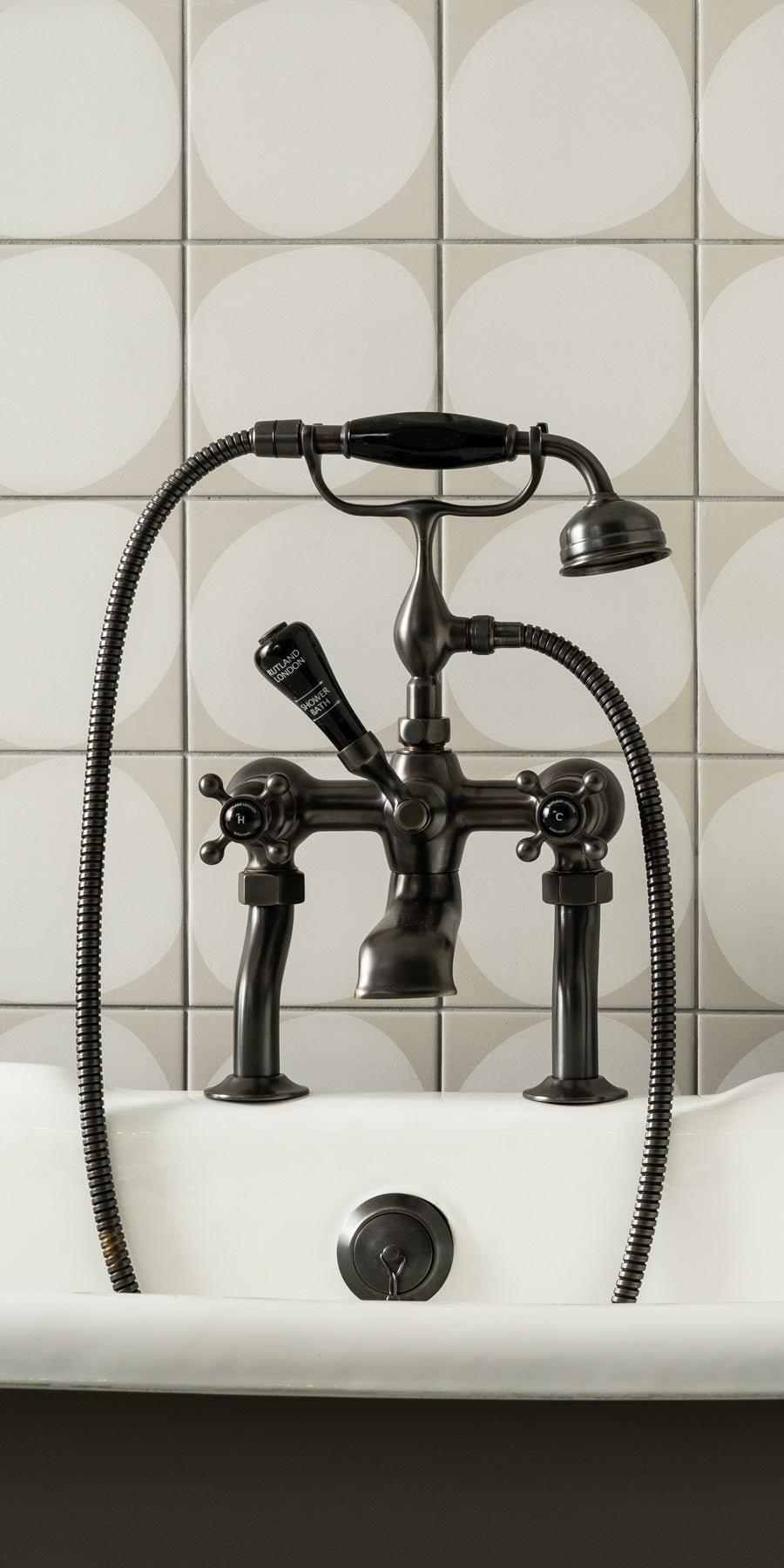
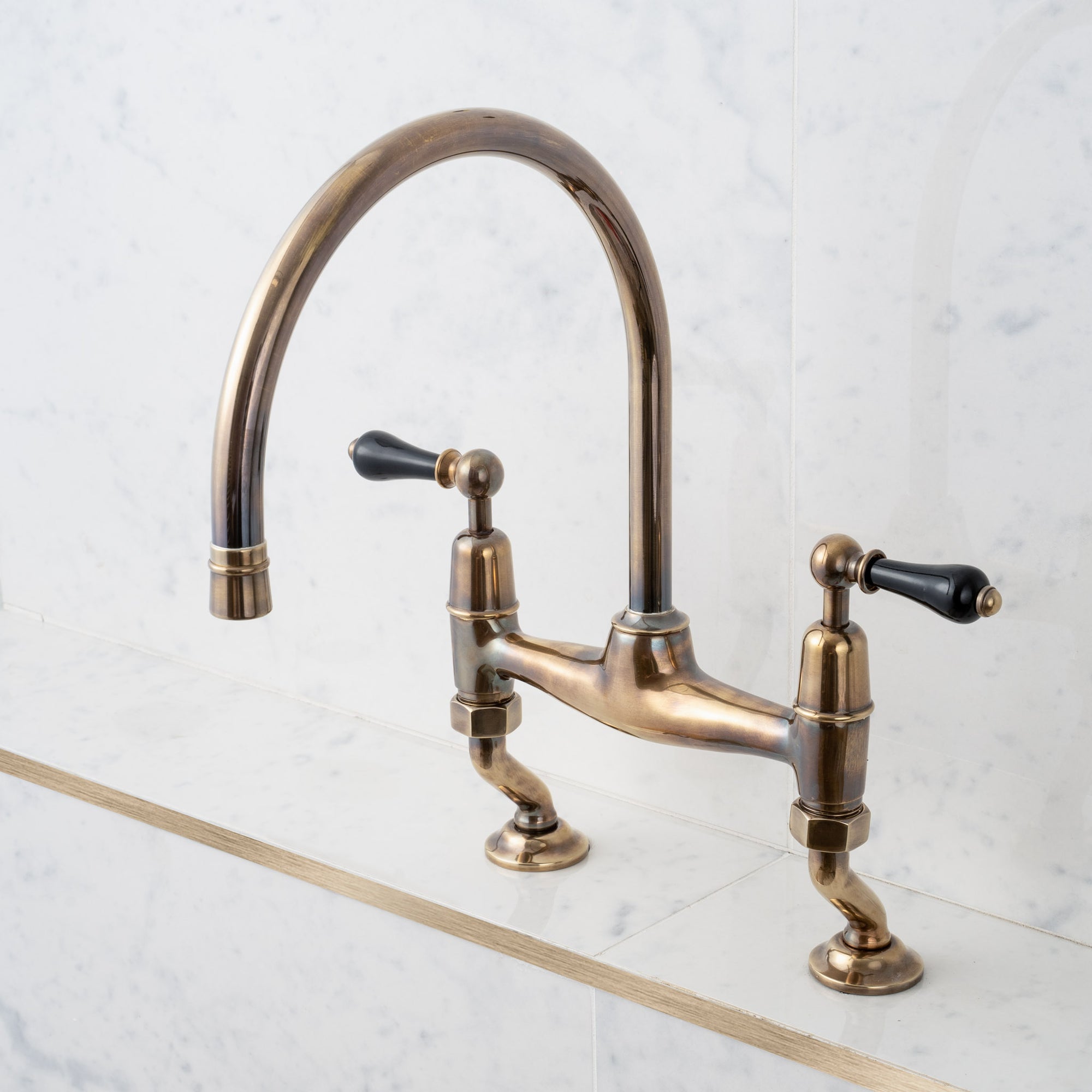
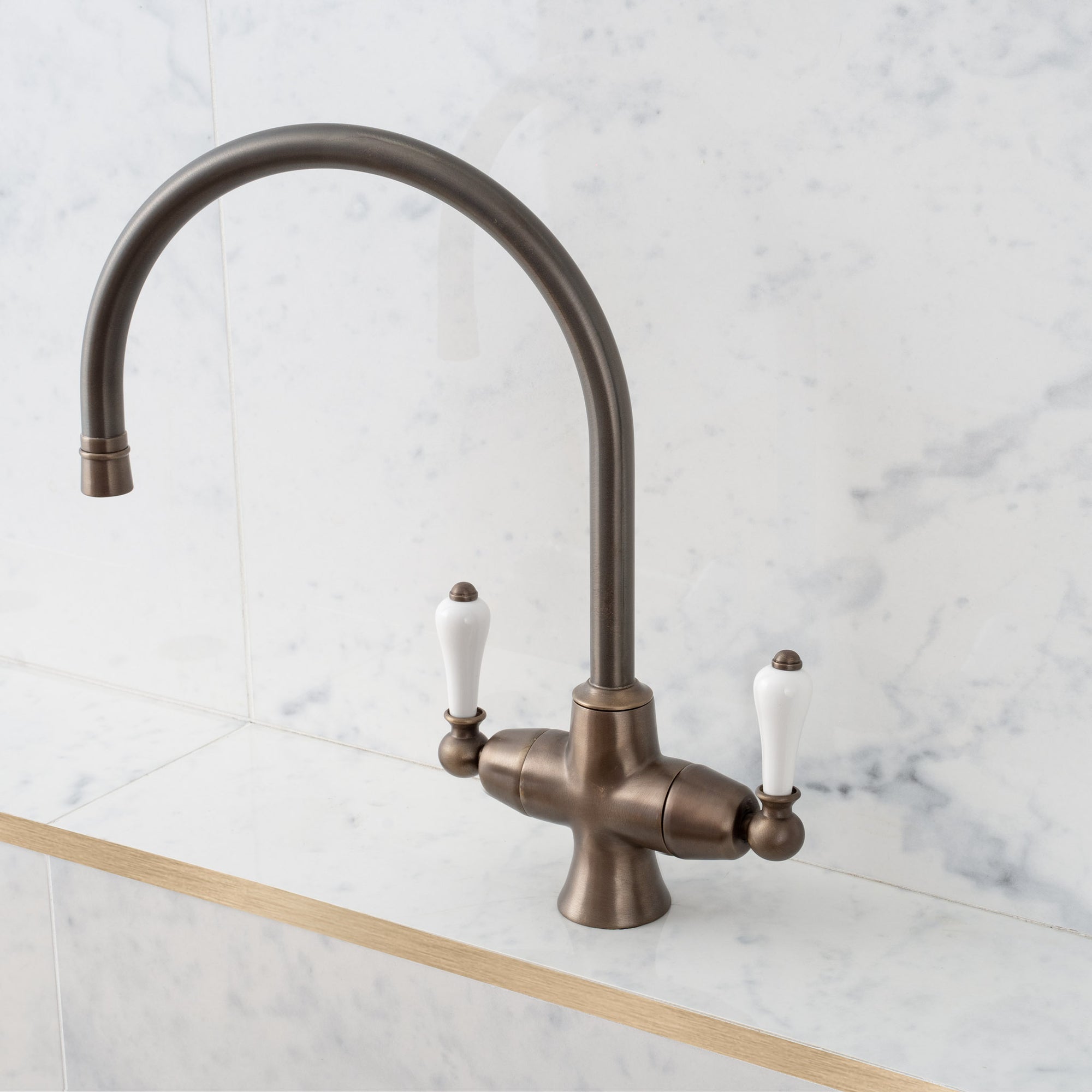
Crosshead handles, ceramic levers, metal levers and carefully proportioned spouts can all introduce classical character without dominating the room.
The key is quality of proportion and material.
Traditional taps should feel substantial and considered, particularly when positioned against natural marble or a furniture-inspired vanity.
Rutland London's Luxury Bathroom Taps & Showers include basin taps, bath fillers, bath and shower mixers and shower systems suitable for both traditional and transitional interiors.
Deck-Mounted or Wall-Mounted Taps?
Both can work beautifully within a traditional bathroom.
Deck-mounted taps provide perhaps the most immediately recognisable traditional appearance and work particularly well with marble vanity tops and classical basins.
Wall-mounted taps can create a slightly cleaner composition while still retaining traditional handle and spout detailing.
The decision should therefore be based on the architecture of the vanity and the desired visual balance rather than an assumption that traditional bathrooms must always use one particular configuration.
Polished (Unlacquered) Brass in a Traditional Bathroom
Few finishes are as closely associated with traditional bathroom design as Polished (Unlacquered) Brass.
When newly finished, it is bright and reflective, introducing warmth against marble, ceramic and painted cabinetry.
Because it is unlacquered, however, the finish is not intended to remain visually static.
It gradually develops patina as it interacts with its environment.
This evolution can make Polished (Unlacquered) Brass particularly appropriate for traditional interiors because the fittings acquire character rather than remaining permanently identical to the day they were installed.
Brass can be introduced through Brass Bathroom Taps & Showers and then repeated elsewhere throughout the room.
Aged Brass & Antique Brass
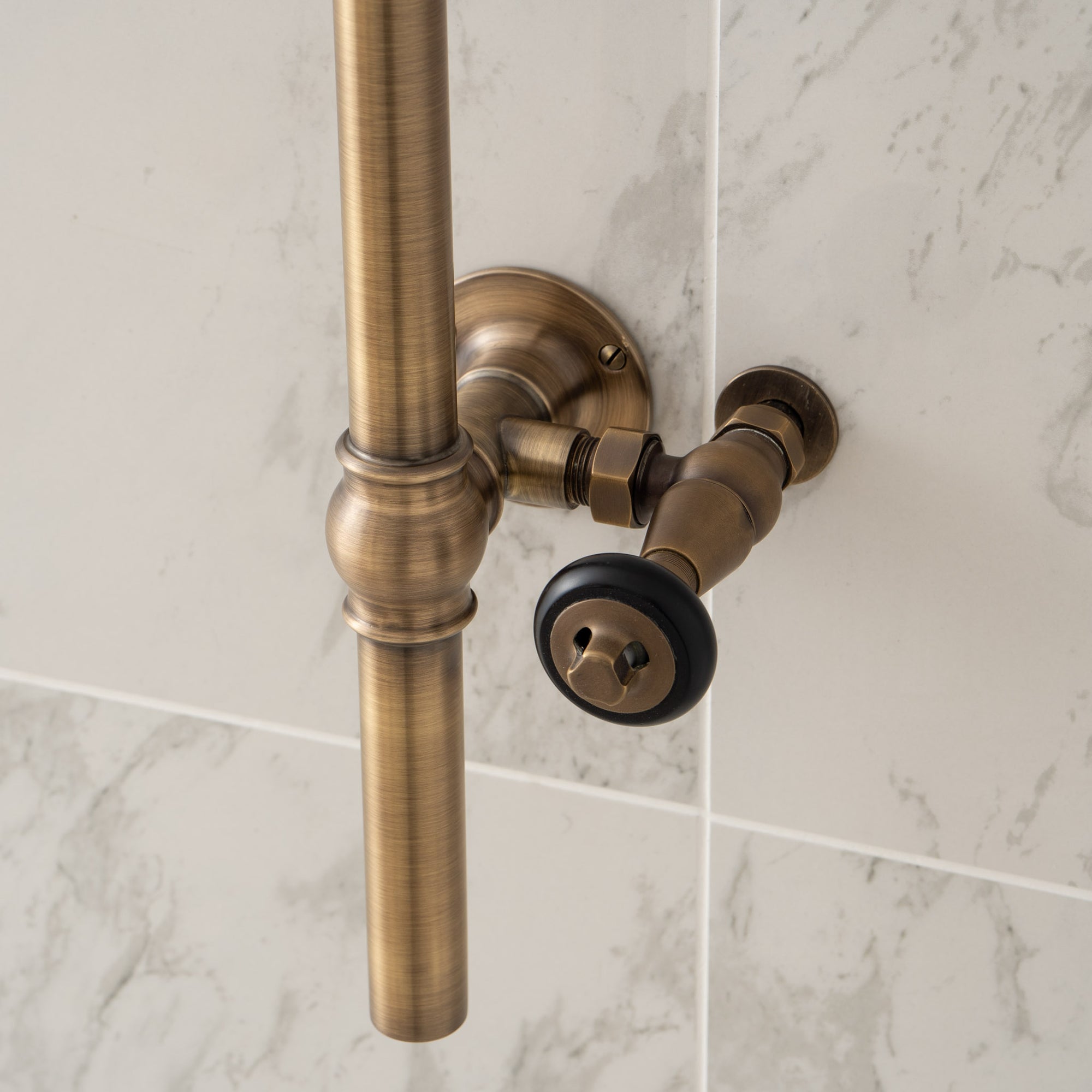
For interiors where a more established appearance is desired immediately, Aged Brass and Antique Brass provide alternatives to newly polished Brass.
Both can work beautifully with traditional timber cabinetry, richly veined marble, patterned fabrics and architectural detailing.
Their greater tonal depth can also help newly manufactured fittings sit naturally within older properties.
However, neither finish needs to be restricted to a period home.
Aged Brass against restrained contemporary stonework can create an exceptionally sophisticated contrast between traditional material character and cleaner architecture.
Nickel in a Traditional Bathroom
Traditional bathrooms do not have to use Brass.
Polished Nickel is one of the most versatile alternatives, particularly when combined with pale marble, white sanitaryware and painted timber cabinetry.
Its cooler appearance can produce a lighter and more restrained scheme while retaining the reflectivity and character associated with a traditional polished metal.
Brushed (Satin) Nickel offers a quieter alternative where a less reflective surface is preferred.
Explore Nickel Bathroom Taps & Showers for basin, bath and shower fittings that can be coordinated throughout the room.
Traditional Bathroom Vanities
The vanity is often the visual centre of a traditional bathroom.
Rather than treating it simply as somewhere to position a basin, consider it as a piece of furniture within the room.
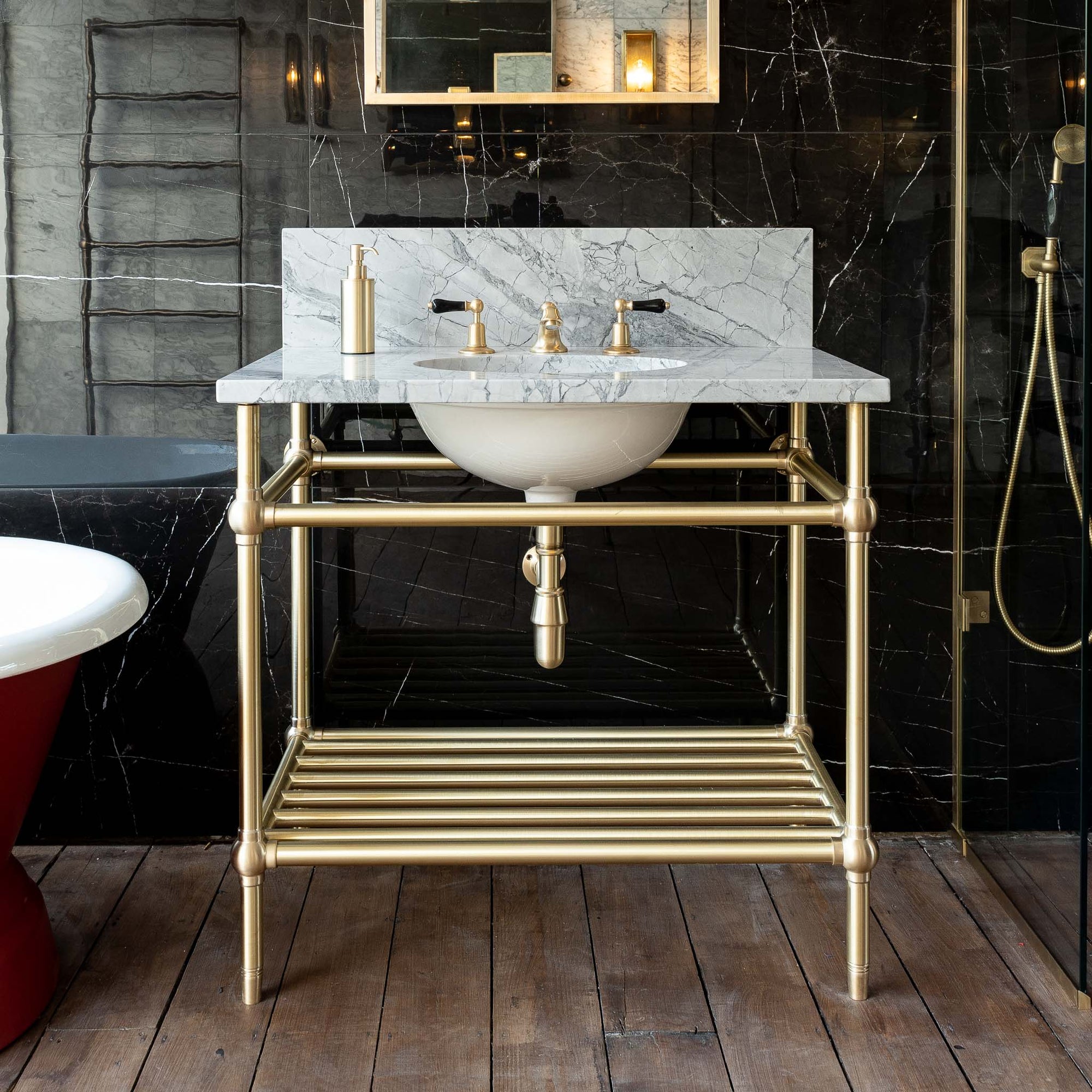
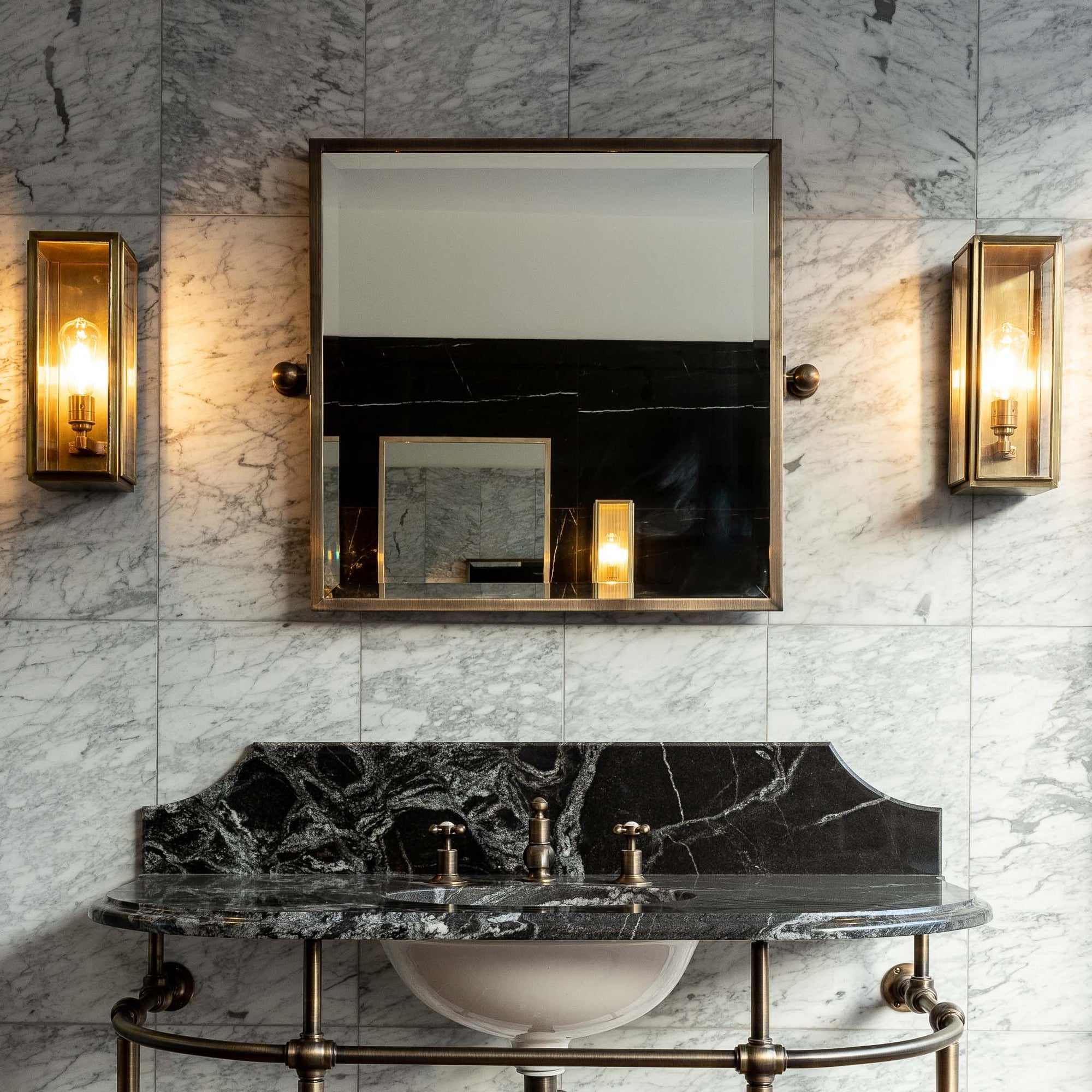
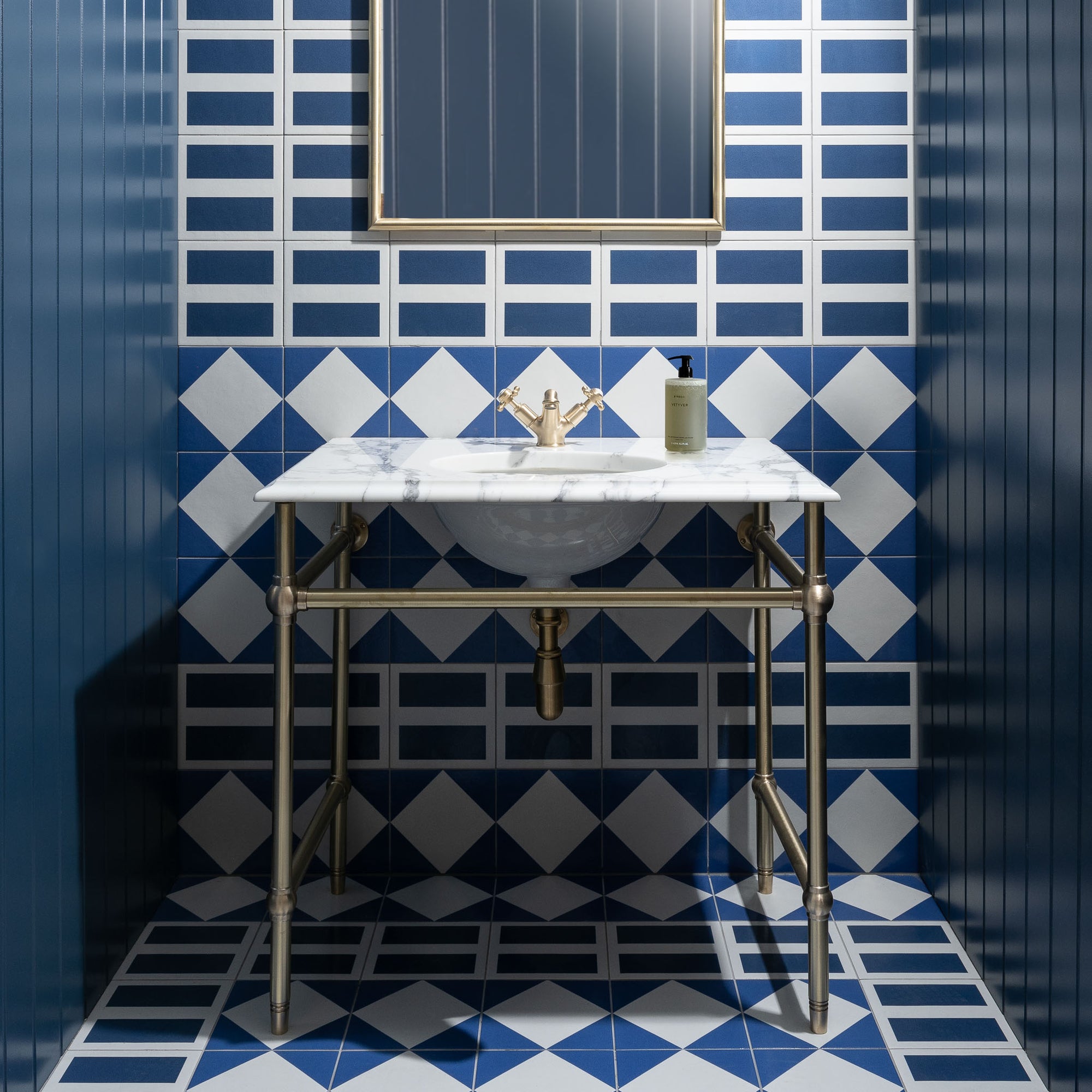
A marble-topped vanity suite can introduce natural stone, metalwork and traditional proportions within a single composition.
Double vanity suites are particularly effective within larger primary bathrooms, while narrower single vanities can bring the same character to smaller rooms and guest bathrooms.
The metalwork of a brass vanity stand also provides an opportunity to repeat the chosen bathroom finish on a larger scale.
Polished (Unlacquered) Brass creates warmth, Nickel offers a cooler appearance and darker Bronze finishes can create greater architectural definition.
Choosing Marble for a Traditional Vanity
Marble is particularly well suited to traditional bathroom design because no two pieces are exactly alike.
White and grey marbles provide a restrained classical appearance and work beautifully with both Brass and Nickel.
Green marble can create a richer focal point and pairs particularly well with warm Brass and Bronze finishes.
More dramatically veined stones can transform the vanity into the principal feature of the room.
The important consideration is balance. If the marble is highly expressive, the surrounding finishes and cabinetry can often be quieter.

Freestanding Baths in Traditional Bathrooms
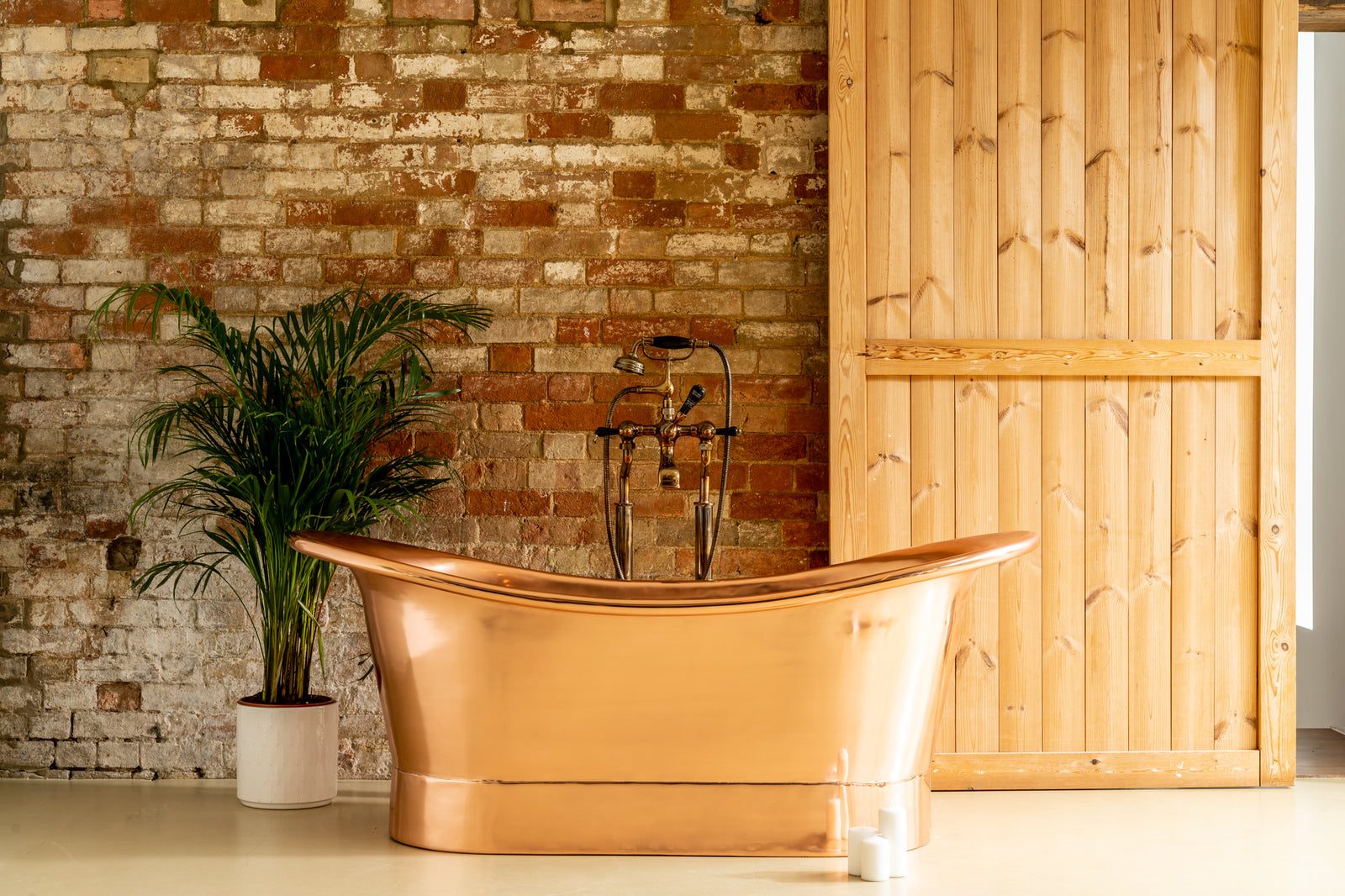
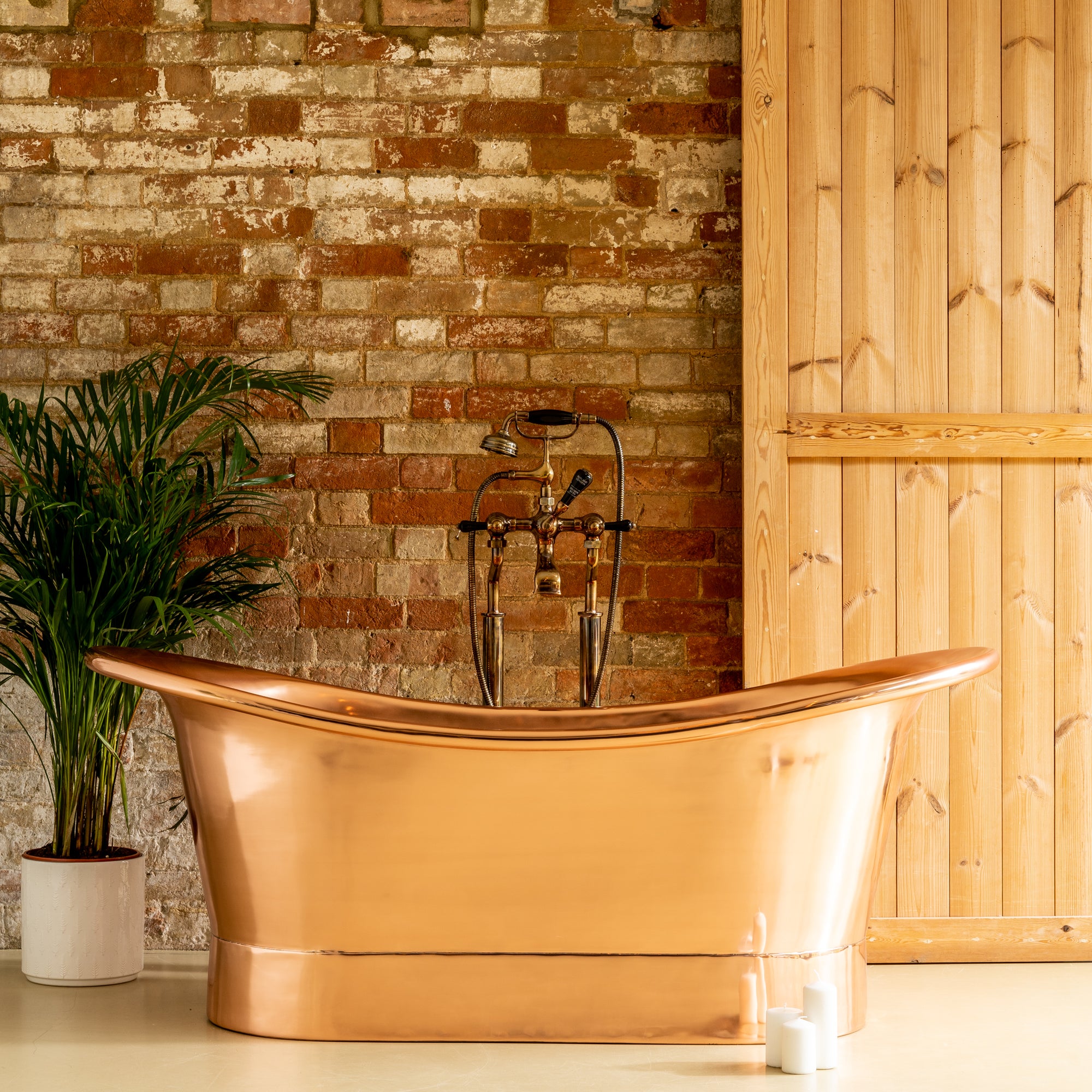
A freestanding bath can provide an obvious focal point within a traditional bathroom, particularly where the architecture allows it to be viewed from the entrance to the room.
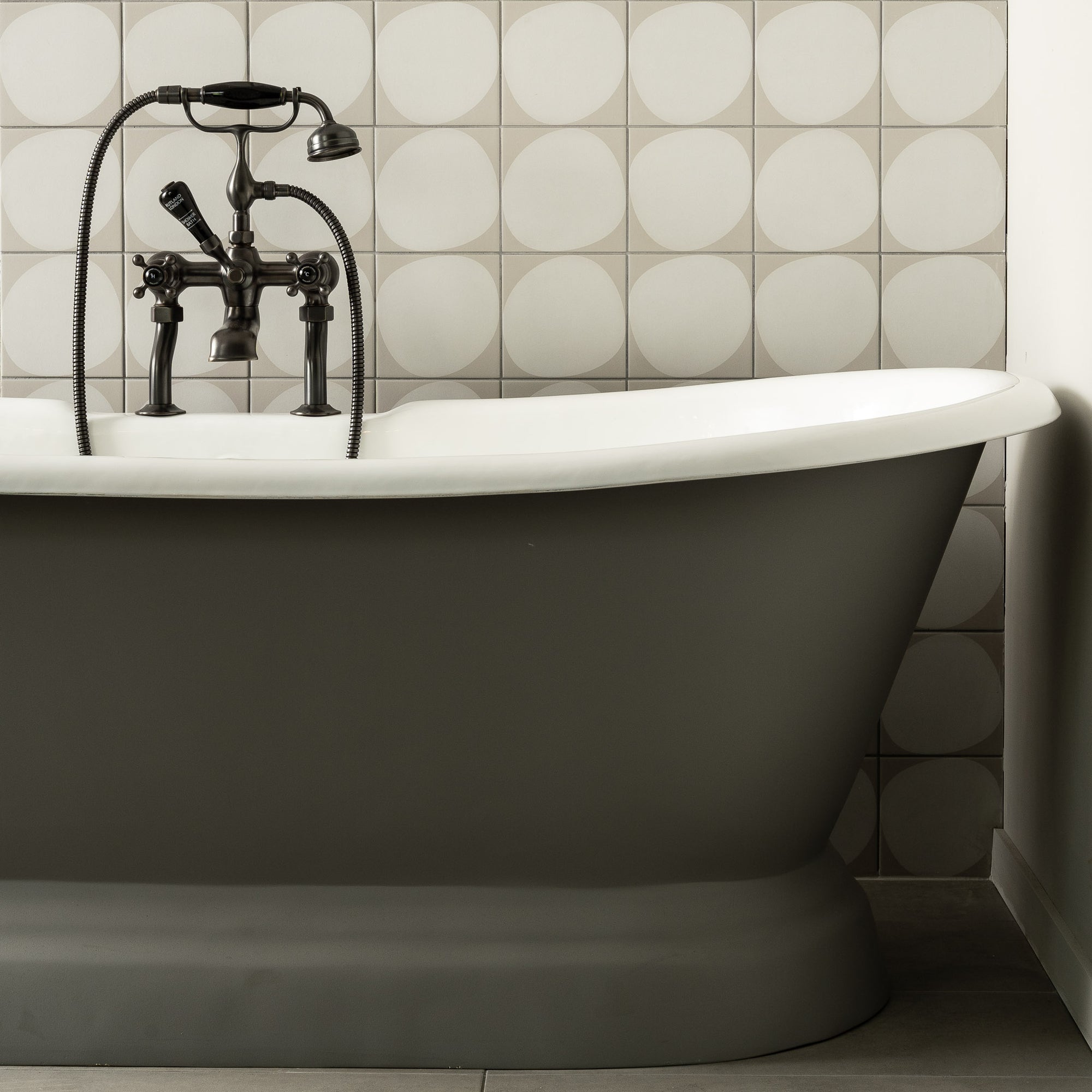
Cast iron has a particularly strong association with traditional English bathroom design and provides a sense of permanence that suits period and classical interiors.
Rutland London's Luxury Baths include handmade designs intended to complement traditional and luxury interiors.
Positioning is as important as the bath itself.
Where space permits, allowing breathing room around a freestanding bath can make it feel like an architectural feature rather than simply another sanitary fitting.
Traditional Shower Design
A traditional shower does not need to sacrifice modern performance.
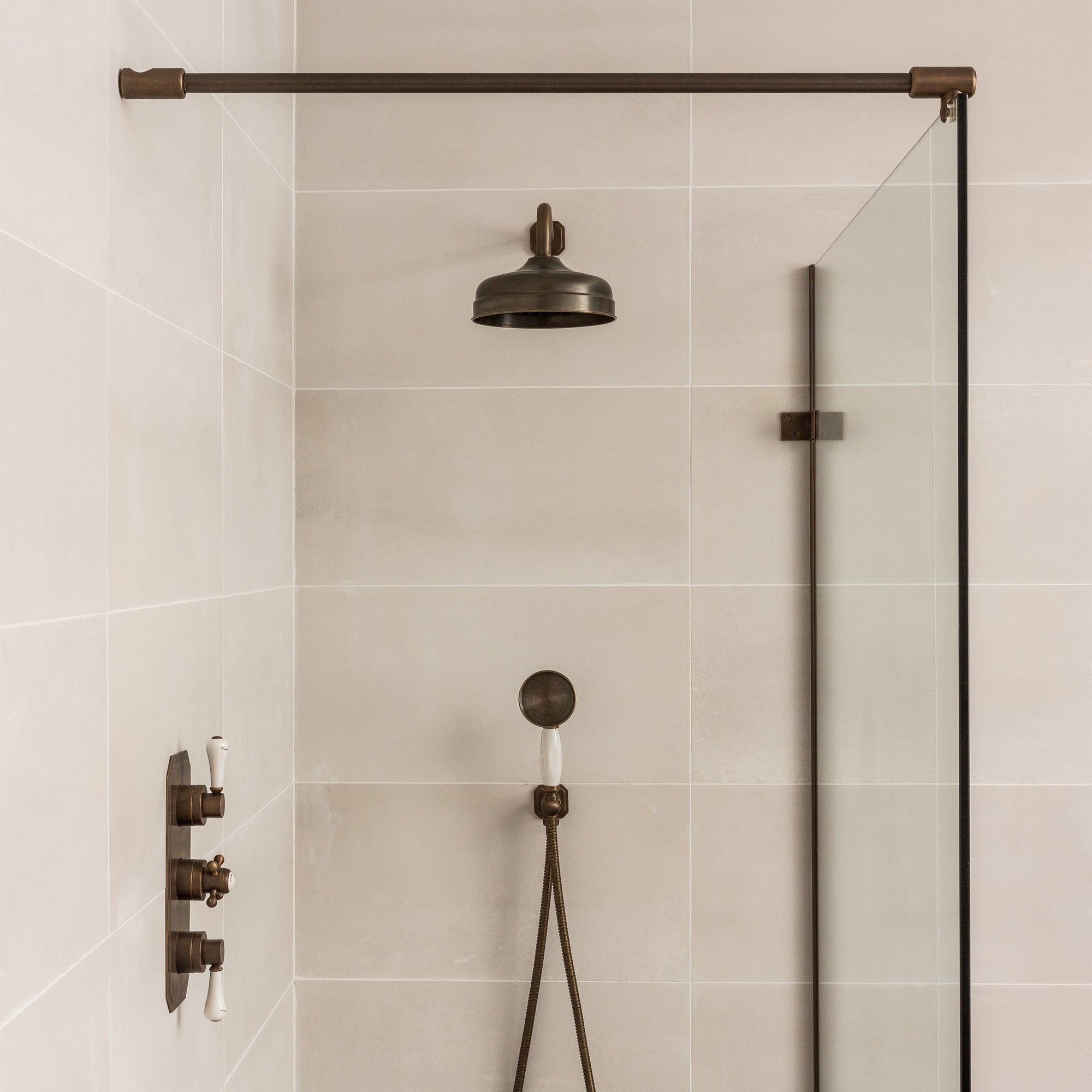
Thermostatic valves, generous overhead shower roses and hand showers can provide contemporary functionality while traditional handle designs and finishes establish the visual character.
Exposed shower systems can make the brassware an intentional feature, while concealed valves offer a cleaner approach where the surrounding marble or tile should remain dominant.
The wider Luxury Bathroom Taps & Showers collection allows basin, bath and shower fittings to be coordinated in a consistent finish.
Traditional Shower Enclosures
The shower enclosure has a major influence on the architecture of a bathroom.
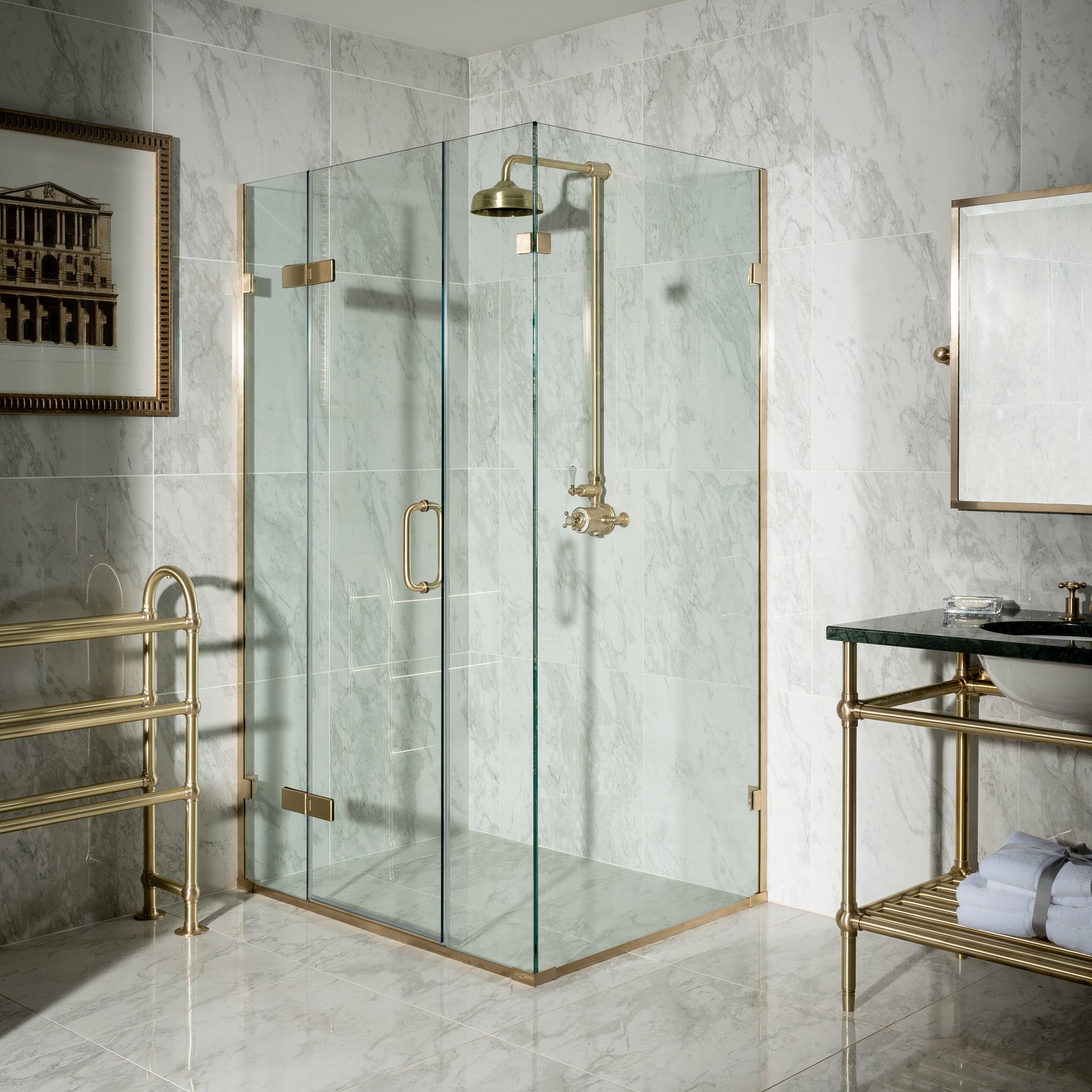
In traditional interiors, a framed or semi-framed enclosure can introduce metalwork on a much larger scale than taps or shower controls.
This provides an opportunity to repeat the chosen brassware finish around the showering area.
A Brass frame can introduce warmth against pale marble. Nickel can create a lighter classical appearance, while Bronze can provide stronger contrast and definition.
Rutland London's Luxury Shower Enclosures include walk-in shower screens, framed and frameless enclosures, recessed shower doors and bath screens for both traditional and contemporary bathrooms.
Where standard dimensions do not suit the architecture, Bespoke Bathroom Design can allow the size, finish and configuration of selected products to respond more closely to the room.
Traditional Heated Towel Rails
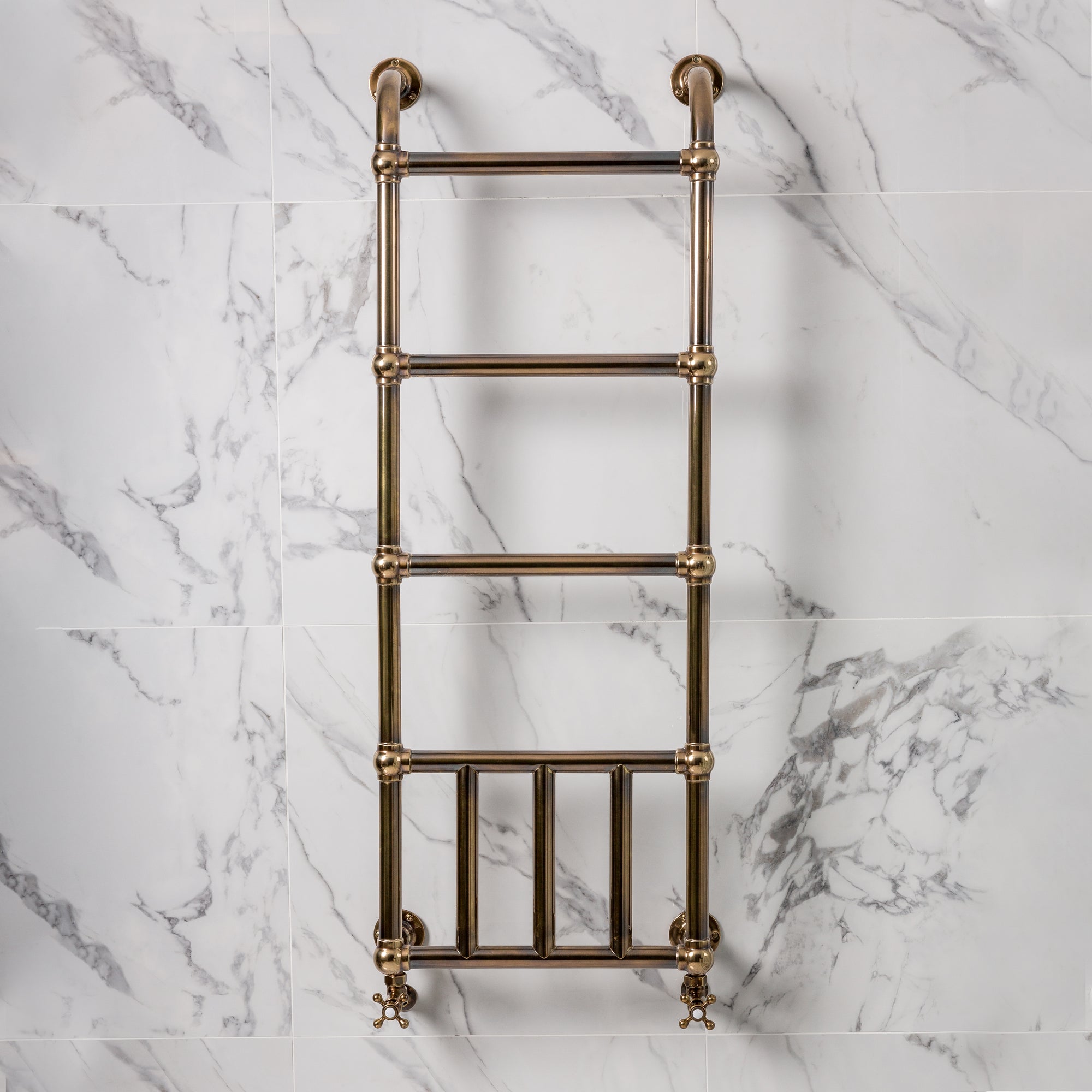
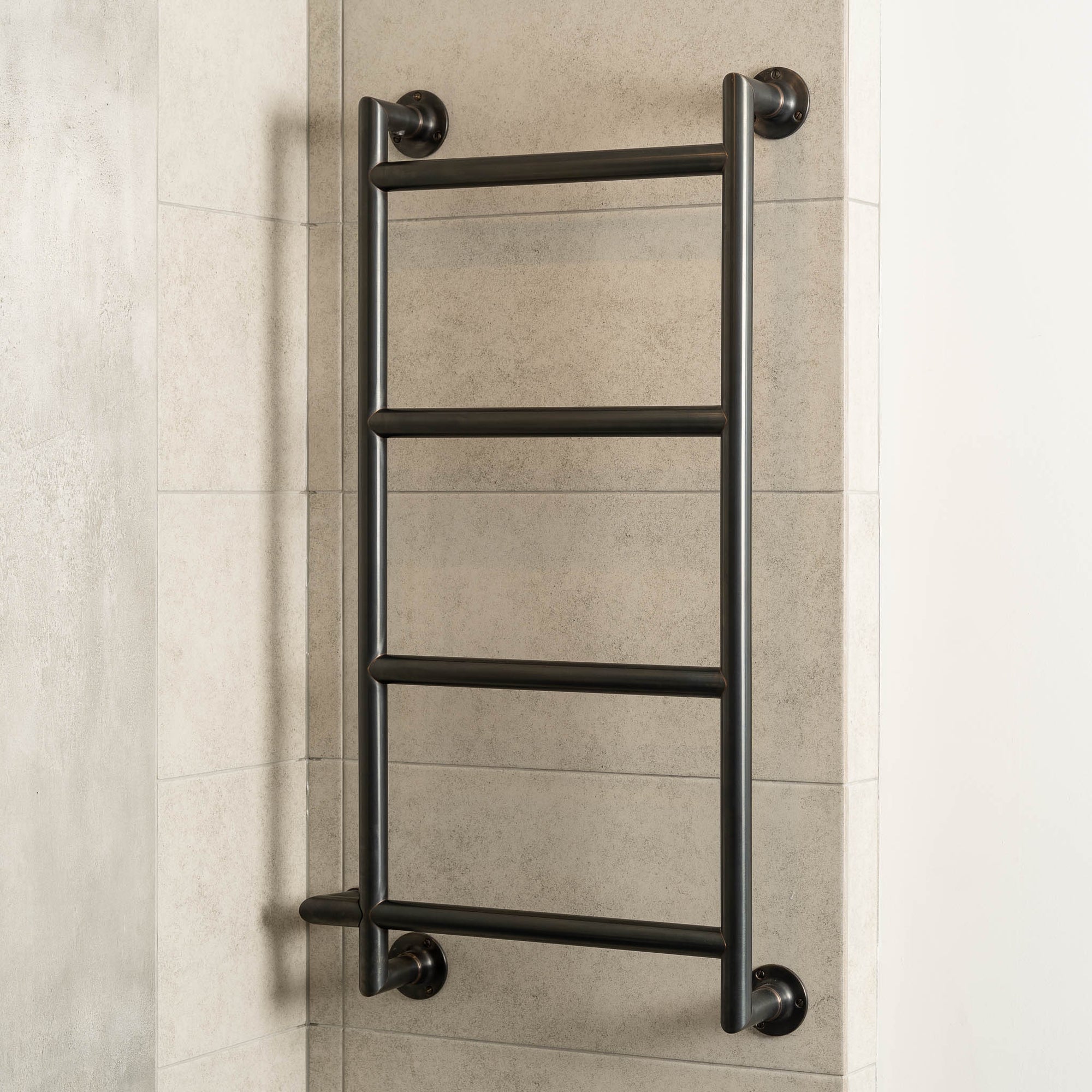
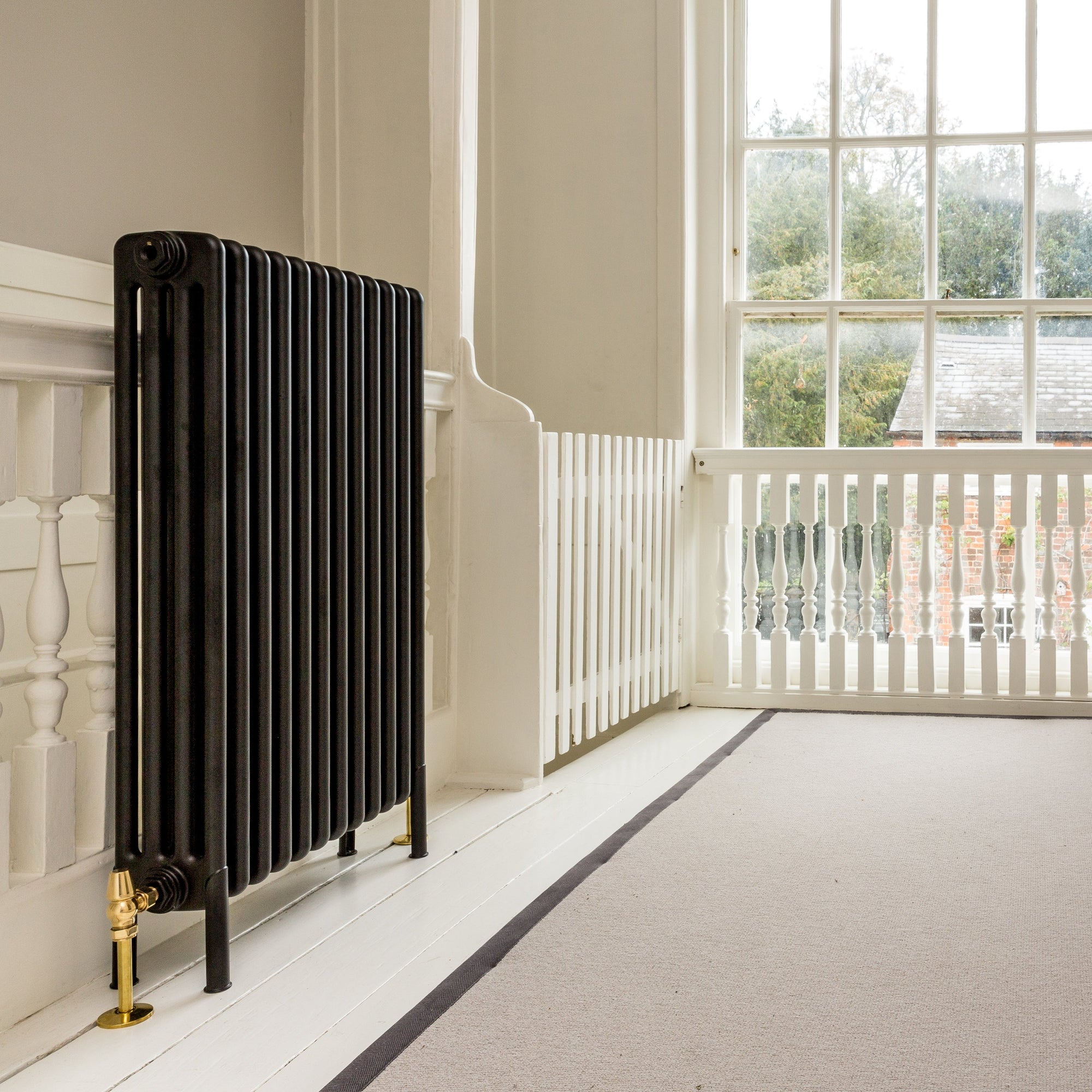
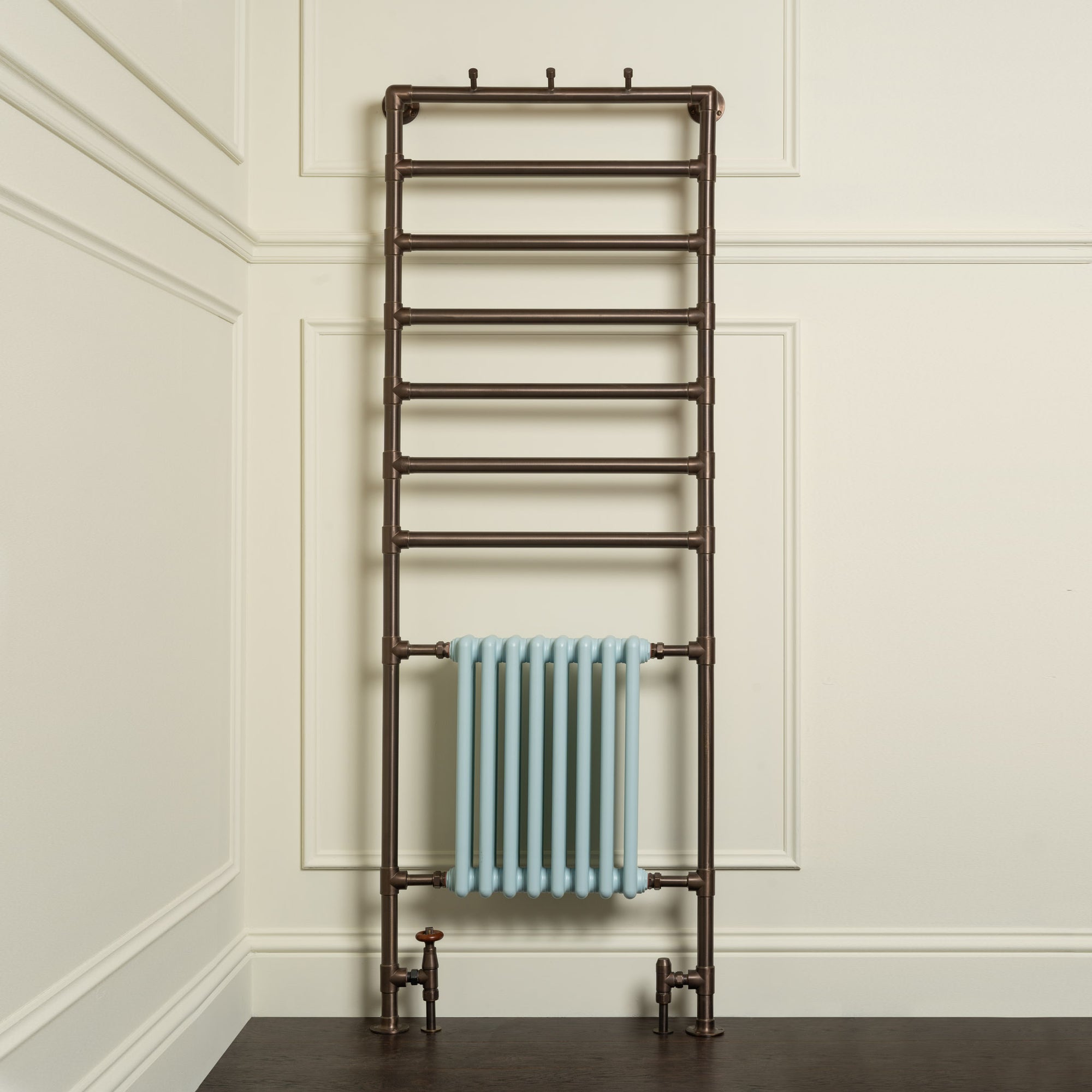
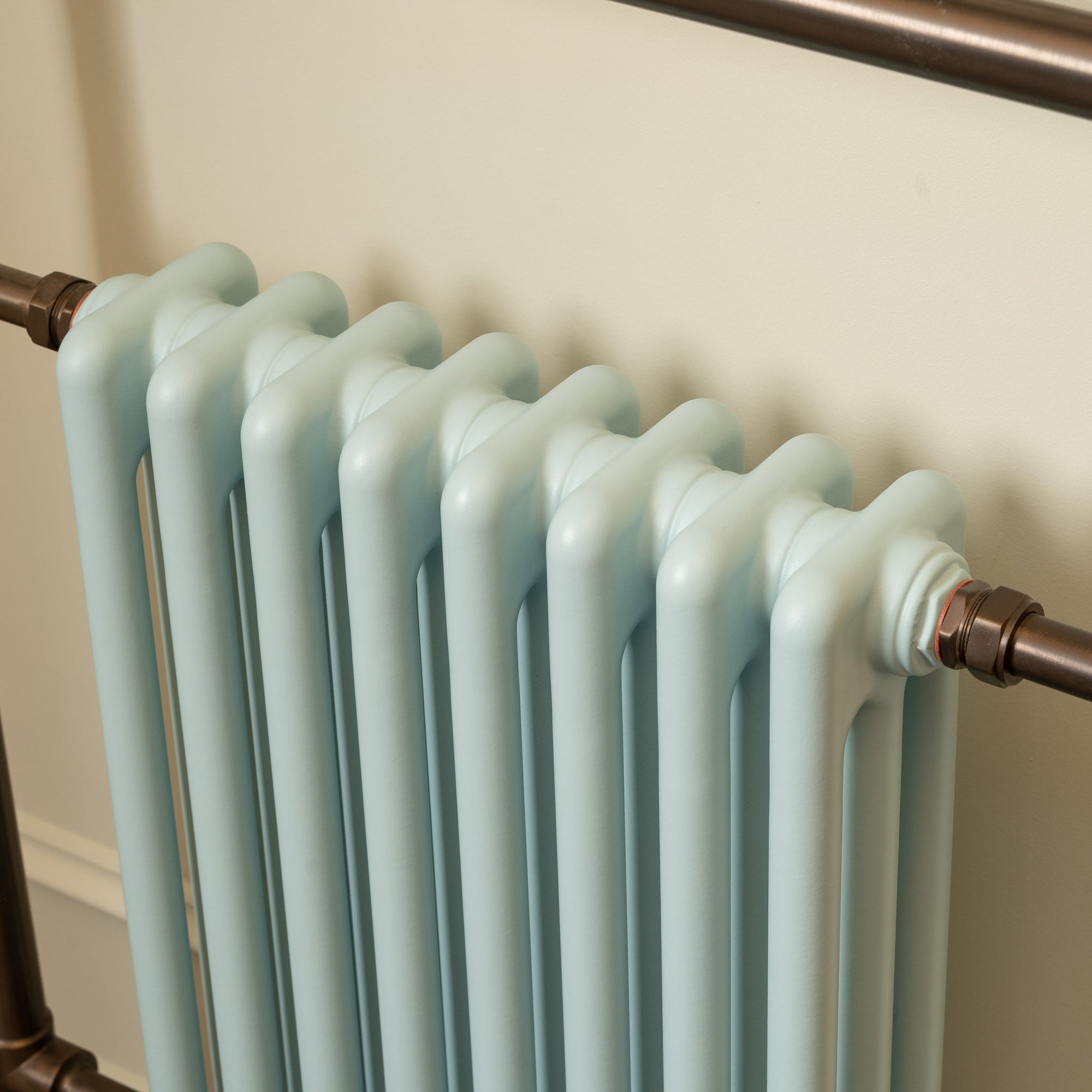
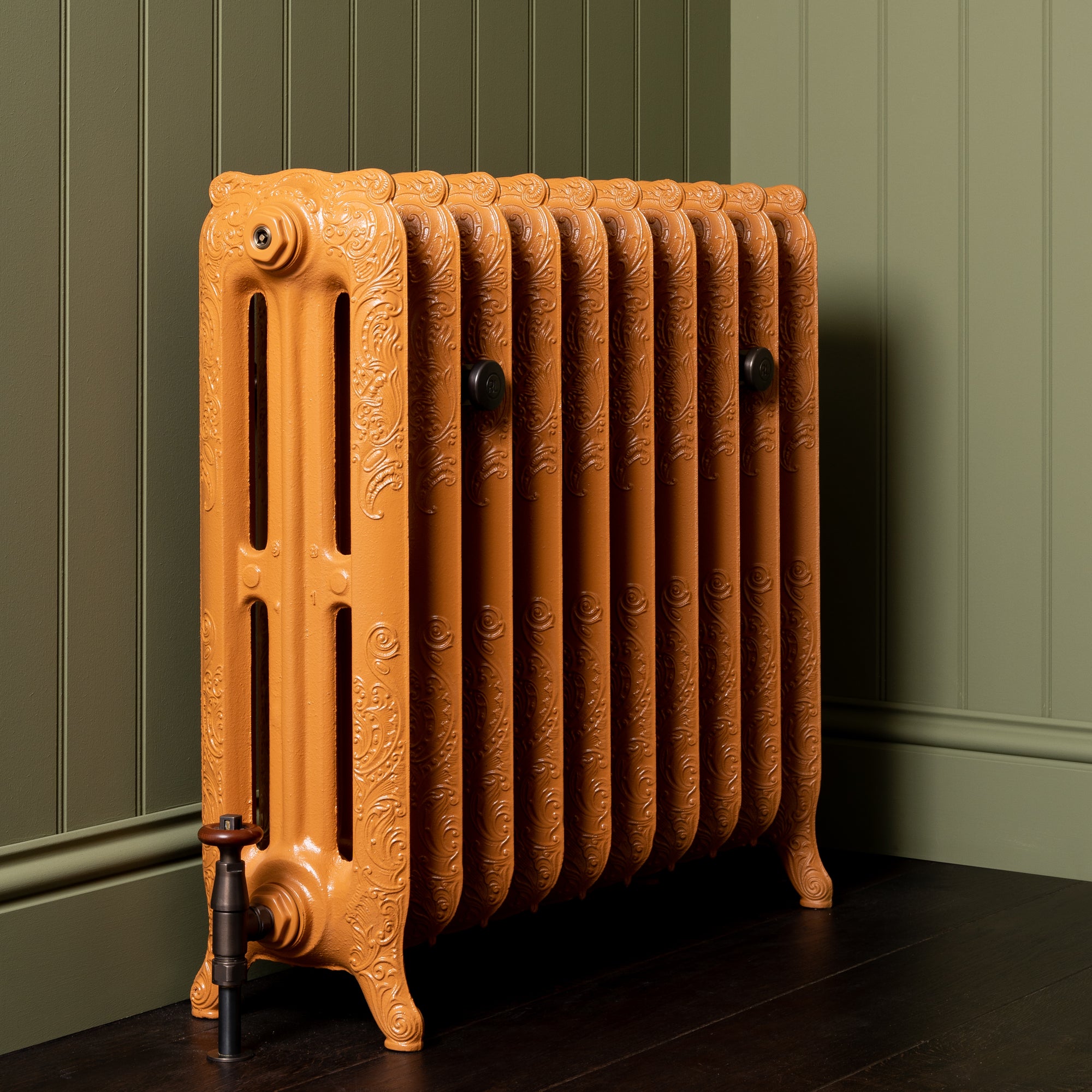
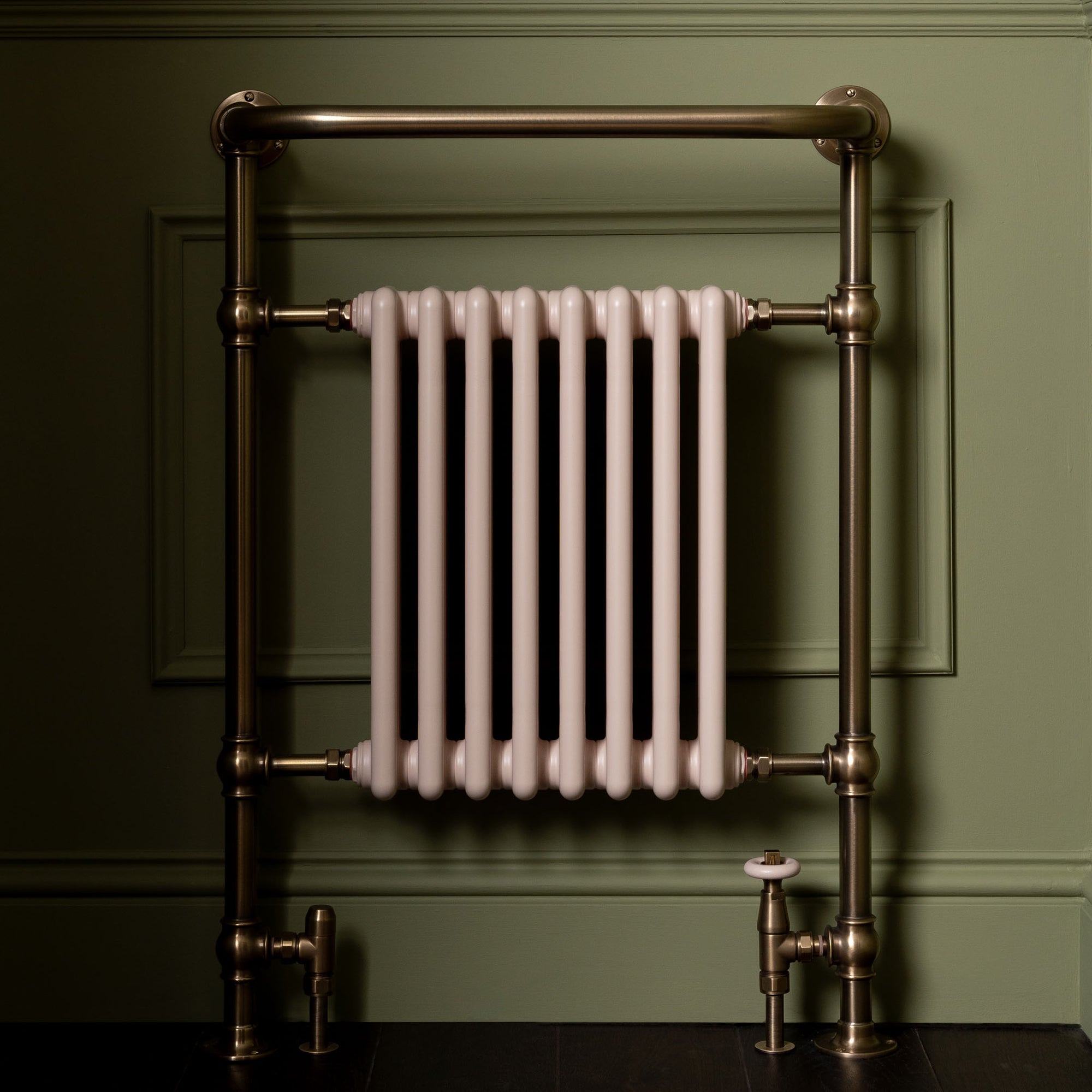
Few products combine function and traditional bathroom character as effectively as a beautifully made heated towel rail.
Floor-mounted designs in particular can become an architectural feature within the room rather than something that is intended to disappear into the wall.
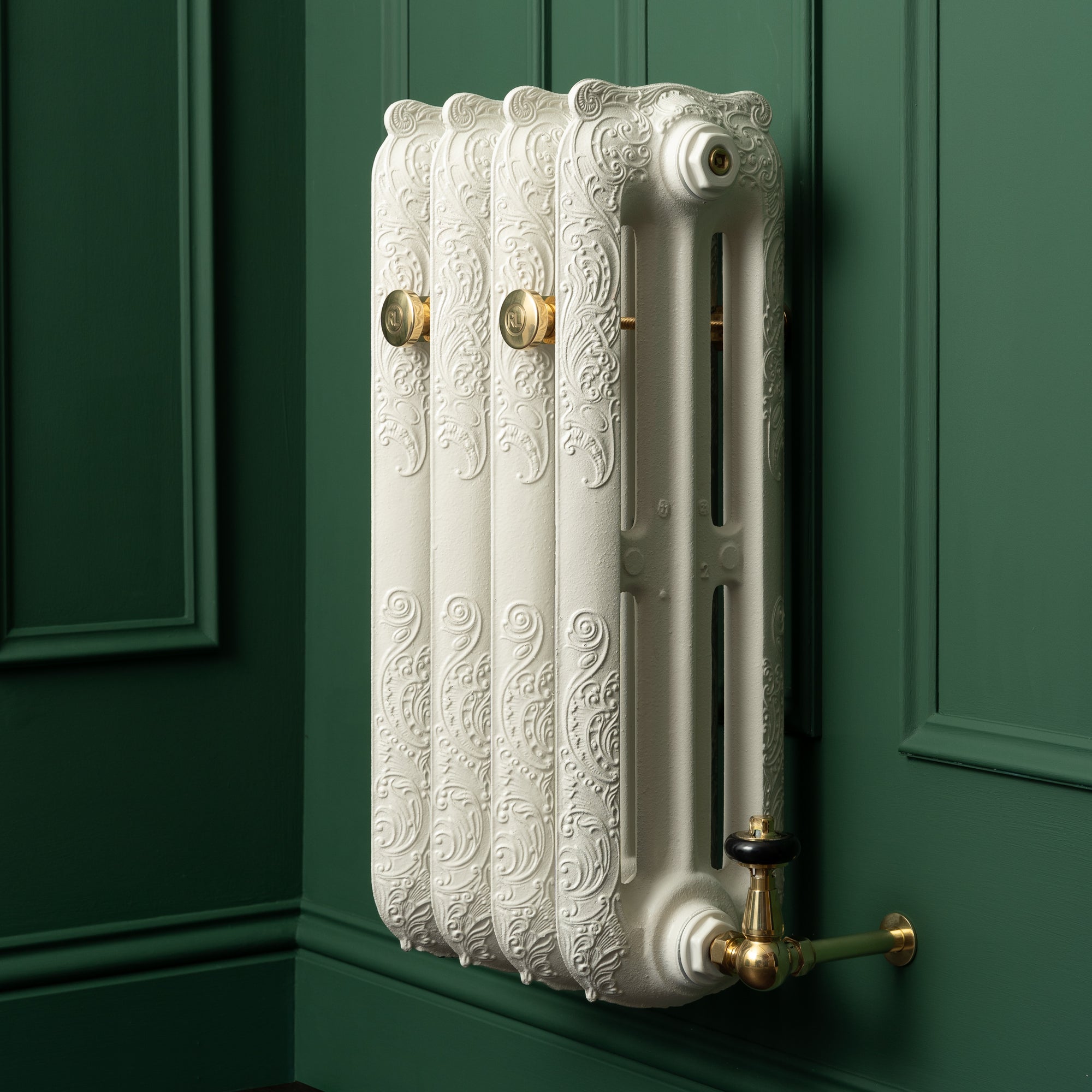
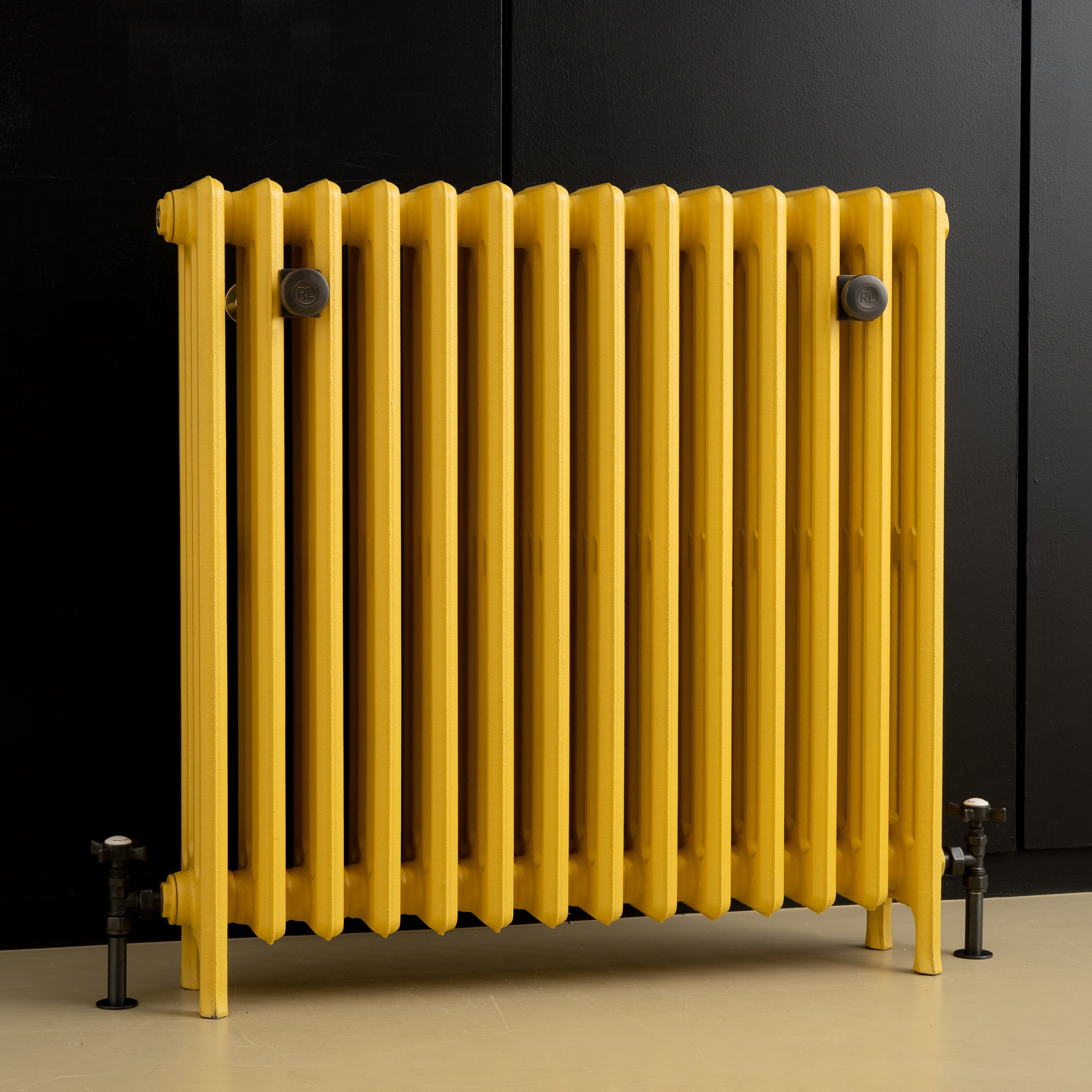
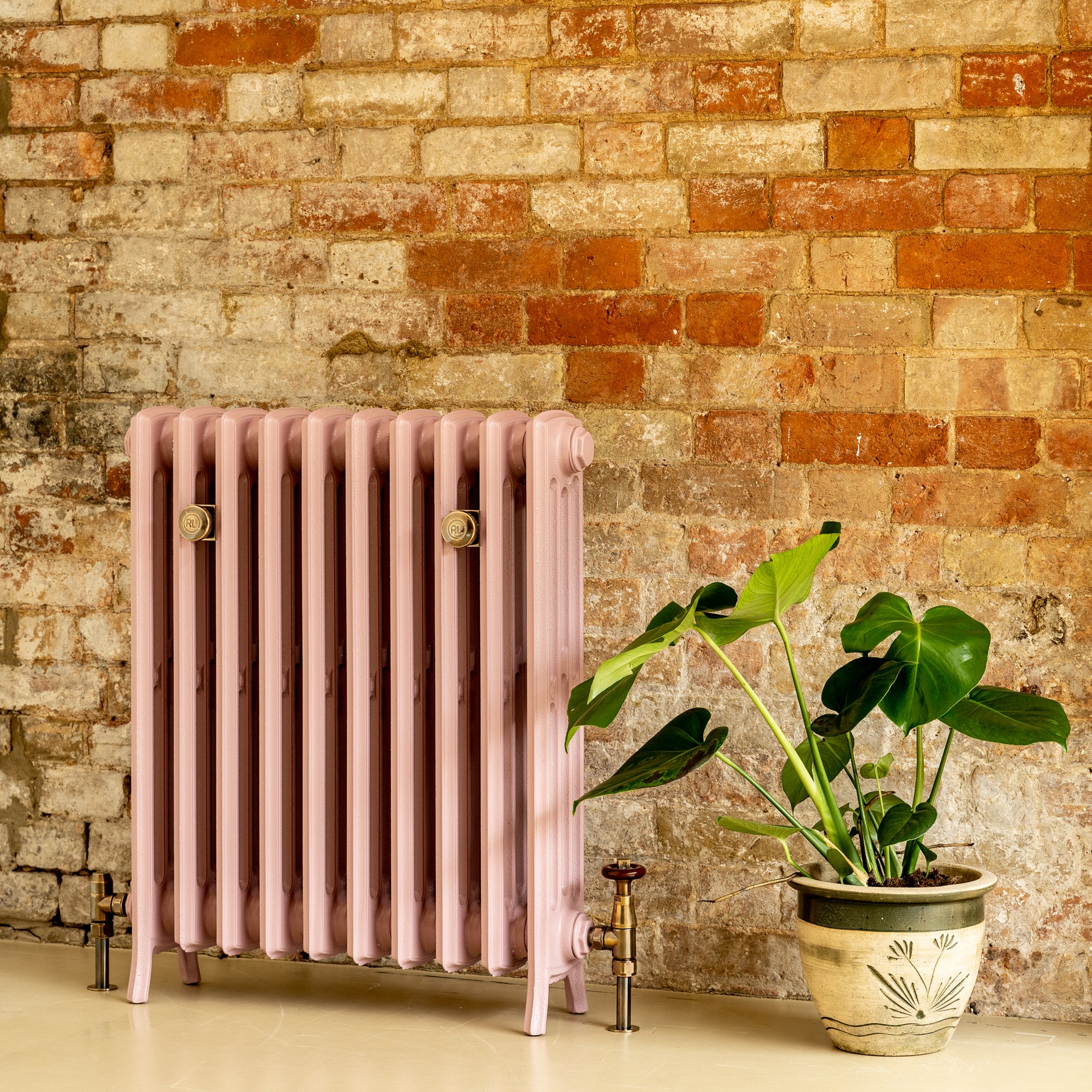
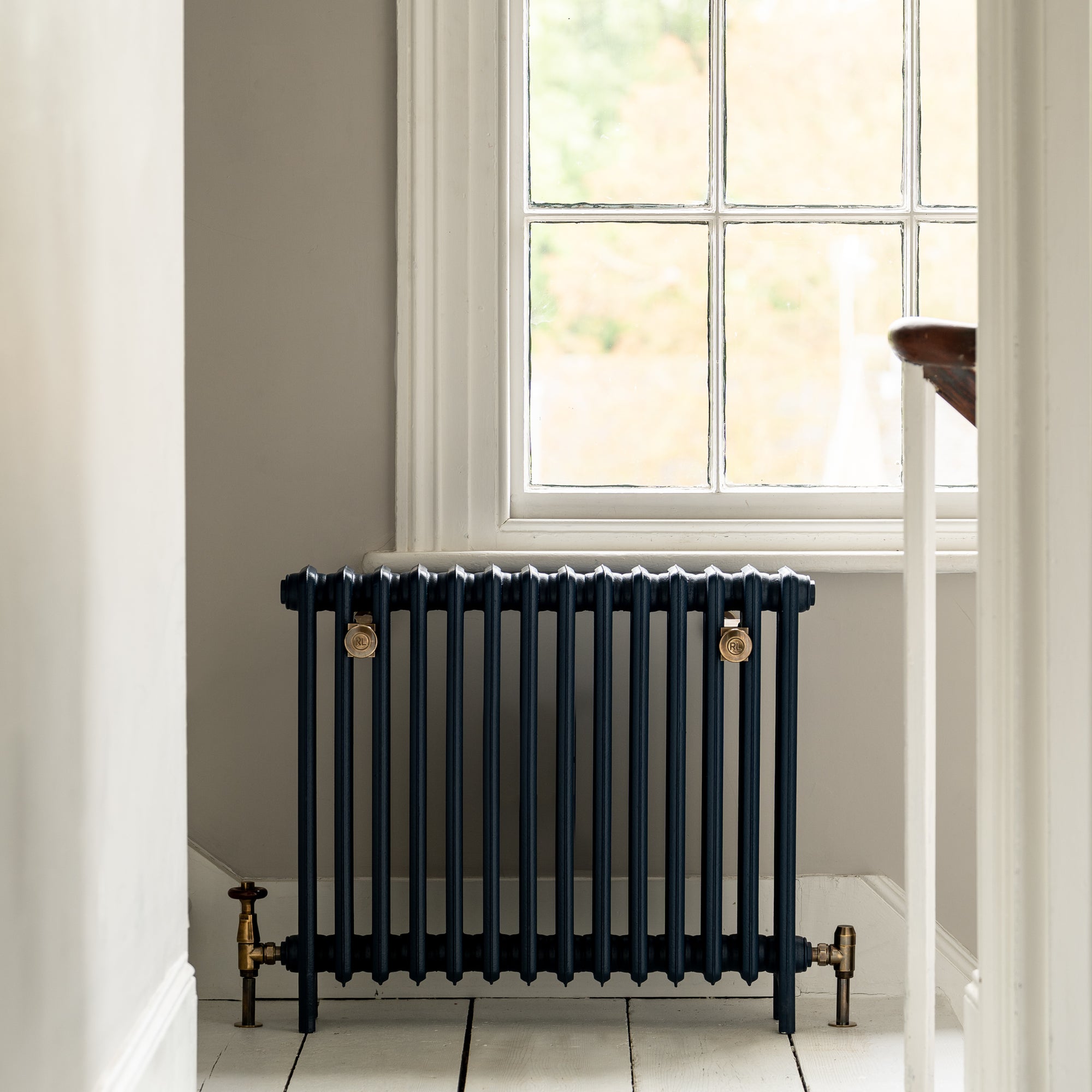
Rutland London's Traditional Heated Towel Rails are handmade to order in England and can be specified in an extensive selection of Brass, Bronze, Nickel, Copper and Gold finishes.
Depending on the individual design, different heating configurations are available, allowing the appropriate solution to be selected for the property and bathroom.
Finish coordination is particularly valuable here because a heated towel rail can contain considerably more visible metalwork than a set of taps.
Matching it with the taps, shower fittings and vanity can therefore have a significant effect on the overall coherence of the room.
Traditional WC Suites
The WC should be considered as carefully as the vanity or bath.
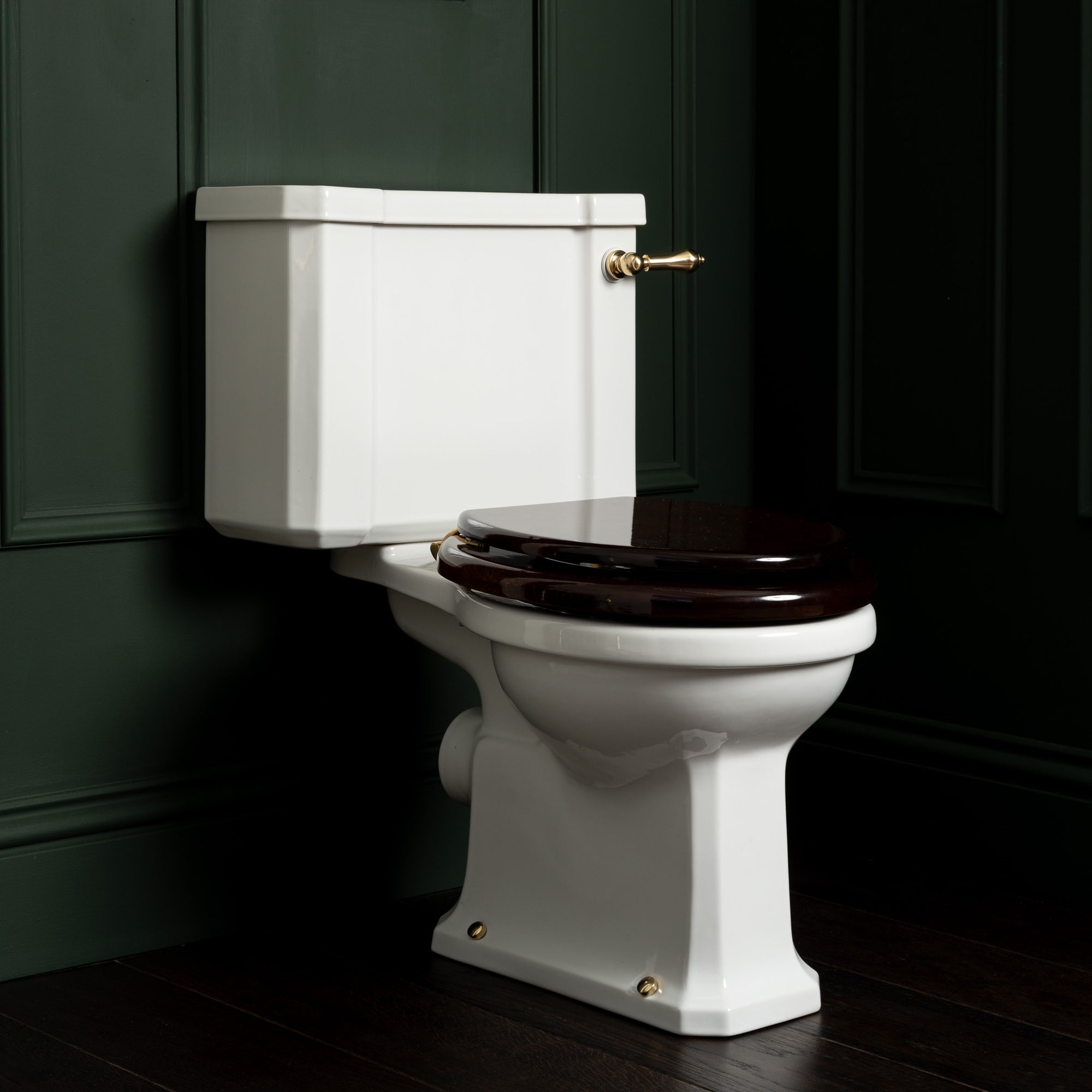
Traditional sanitaryware can provide character through proportion and detailing without becoming excessively decorative.
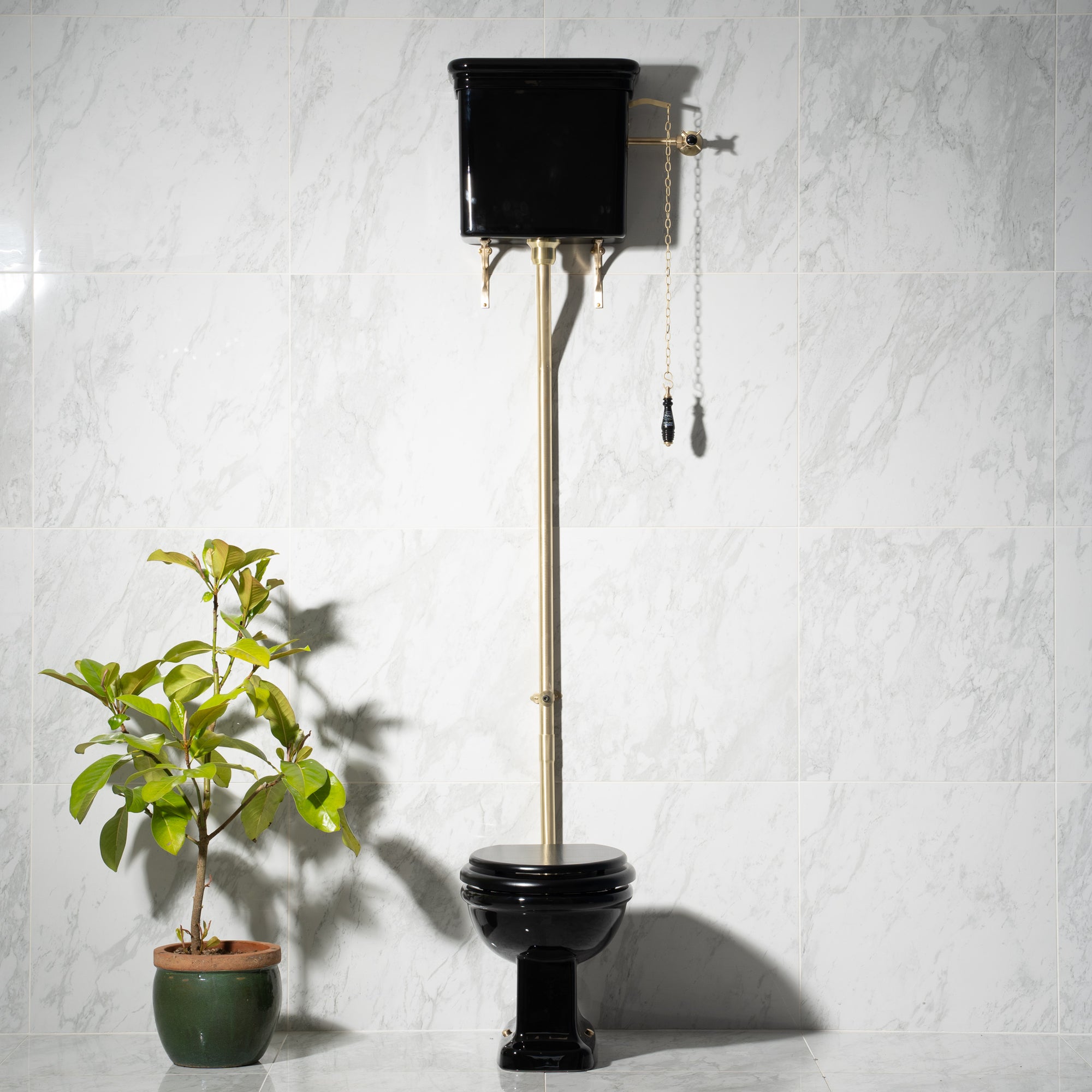
High-level and low-level cistern arrangements can make the WC a stronger architectural feature, while back-to-wall and concealed designs can provide a more restrained interpretation of traditional bathroom style.
Rutland London's wider Luxury Bathroom collection includes WC suites intended to coordinate with the wider bathroom specification.
Hardwood Toilet Seats
A hardwood toilet seat is a relatively small detail, but it can dramatically alter the appearance of a traditional WC.
Oak, Walnut and Mahogany introduce natural warmth and provide a material connection with timber cabinetry and furniture elsewhere within the room.
Darker ebonised finishes can create stronger contrast against white ceramic, while the choice between Gloss and Matt finishes allows the timber to respond to the wider character of the bathroom.
Within a traditional interior, these details prevent the WC from feeling disconnected from the surrounding furniture and materials.
Traditional Bathroom Mirrors
A mirror is another opportunity to repeat the metal finish within the room.
Because it usually sits immediately above the vanity and basin taps, its relationship with the surrounding brassware is particularly visible.
A metal-framed mirror in a coordinating finish can connect the vanity with the rest of the bathroom without introducing unnecessary decoration.
Scale is important.
A larger mirror can make a traditional bathroom feel lighter and more generous, while a smaller decorative design can provide a stronger furniture-like character.
Traditional Bathroom Accessories
Accessories are often selected towards the end of a bathroom project, but they can have a surprising impact on the finished room.
Toilet roll holders, towel rails, robe hooks, soap dispensers and toilet brushes introduce further visible metalwork.
Choosing these pieces in a coordinated finish helps prevent unrelated metals being introduced after the principal bathroom specification has been completed.
Rutland London's Traditional Bathroom Accessories can be coordinated with taps, showers and other bathroom fittings across an extensive selection of finishes.
Lighting a Traditional Bathroom
Lighting should complement the architecture rather than overwhelm it.
Wall lights positioned around a mirror can create flattering illumination at the vanity, while ceiling and architectural lighting can provide the practical light required elsewhere within the room.
Warm lighting can be particularly effective with Brass, Bronze, timber and warmer natural stones.
The finish of visible light fittings should also be considered alongside the bathroom brassware.
They do not necessarily need to match exactly, but the relationship should feel intentional.
Traditional Bathroom Colours
There is no requirement for a traditional bathroom to be white.
Soft neutrals remain timeless, but richer colours can work beautifully alongside marble, timber and warm metal finishes.
Deep green, burgundy, blue and warm earthy tones can all provide character, particularly when used on painted cabinetry or walls rather than every surface within the room.
Paint also provides a useful counterpoint to marble.
Where natural stone can feel formal and permanent, painted surfaces introduce softness and can make a traditional bathroom feel more residential.
How to Use Pattern Without Making a Bathroom Feel Dated
Pattern can be extremely effective in a traditional bathroom, but it benefits from restraint.
A patterned floor, decorative wallpaper or strongly veined marble may each provide sufficient movement on its own.
Using all three aggressively within the same room can make the interior feel visually crowded.
Instead, establish one or two principal materials and allow the remaining surfaces to support them.
This creates a bathroom with character without tying the design too closely to a short-lived decorative trend.
Traditional Bathroom Ideas for Smaller Spaces
Traditional bathroom design is not limited to large country houses or generous primary bathrooms.
A smaller bathroom can use the same principles on a more restrained scale.
A beautifully proportioned single vanity, wall-mounted taps, a compact heated towel rail and carefully chosen metal finish can establish character without consuming unnecessary space.
A bath screen rather than a large enclosure can allow a bath to perform two functions, while a wall-hung or concealed WC can reduce visual clutter.
The objective should be to select fewer, better-considered elements rather than attempting to fit every traditional bathroom feature into a limited footprint.
Traditional Bathrooms in Period Properties
Period properties provide an obvious setting for traditional bathroom design, but the age of the building should not dictate every design decision.
A Georgian townhouse, Victorian terrace or country house may contain original architectural features worth respecting, but the bathroom still needs to function for contemporary life.
New fittings can therefore reference the proportions, materials and craftsmanship of the building without attempting to imitate every historic detail.
This approach creates a bathroom that feels appropriate to its surroundings while remaining clearly designed for modern use.
Traditional Bathrooms in Contemporary Homes
Traditional bathroom fittings can be equally effective in new-build and contemporary properties.
In fact, the contrast can be particularly successful.
Natural marble, unlacquered Brass, a furniture-like vanity and a traditional heated towel rail can introduce warmth and material character into otherwise clean contemporary architecture.
The surrounding room can remain restrained, allowing the quality and detailing of individual products to provide the traditional influence.
This is one of the most effective ways to create a timeless bathroom without making the interior feel overtly period.
Should All the Metal Finishes Match?
Not necessarily.
Using one consistent finish across the principal bathroom brassware is a simple way to create cohesion, but mixed metals can also work beautifully.
The key is to create a clear hierarchy.
For example, Polished (Unlacquered) Brass might be used across the taps, shower and heated towel rail while a darker Bronze appears on lighting or architectural hardware.
Alternatively, Nickel bathroom fittings might be paired with Brass decorative details elsewhere within the room.
If a secondary finish is repeated deliberately, the combination tends to feel considered rather than accidental.
Design the Bathroom as a Complete Interior
One of the most important principles of traditional bathroom design is to avoid selecting every product independently.
The vanity affects the taps.
The taps affect the brassware finish.
The finish affects the shower enclosure and heated towel rail.
The marble influences the cabinetry, paint colours and lighting.
Considering these relationships from the beginning creates a much more coherent room.
Rutland London's Luxury Bathroom Products bring together taps, showers, vanity suites, WC suites, baths, shower enclosures, mirrors, lighting and heated towel rails to allow these elements to be considered as part of one complete interior.
Why English Craftsmanship Matters
Traditional bathroom design is ultimately about more than appearance.
The products themselves should possess the quality and material integrity required to remain part of the property for many years.
Rutland London is an English manufacturer of luxury bathroom and heating products, with many collections handcrafted, machined or finished in England.
Traditional manufacturing techniques are combined with modern engineering to create products intended for contemporary bathrooms while retaining the material character associated with enduring English design.
For projects requiring something outside standard dimensions or configurations, our Bespoke Design service can also support selected custom requirements.

Frequently Asked Questions About Traditional Bathrooms
What makes a bathroom look traditional?
A traditional bathroom typically combines timeless proportions with natural materials and classically influenced fittings. Marble, timber, Brass, Nickel, traditional taps, freestanding baths, vanity furniture, framed shower enclosures and heated towel rails can all contribute to the look.
How do you make a traditional bathroom look luxurious?
Focus on material quality rather than excessive decoration. Natural marble, handcrafted brassware, hardwood, beautifully proportioned sanitaryware and considered lighting will generally create a more sophisticated result than simply adding more decorative details.
What is an English-style bathroom?
An English-style bathroom often combines traditional forms with natural materials and practical contemporary engineering. Rather than reproducing one historical period exactly, the most successful interiors use timeless elements such as marble, timber, traditional brassware, freestanding baths and heated towel rails in a balanced way.
What is the best finish for a traditional bathroom?
Polished (Unlacquered) Brass, Aged Brass, Antique Brass and Polished Nickel can all work beautifully. The correct choice depends on the marble, cabinetry, colours and wider architecture of the room.
Is Polished (Unlacquered) Brass suitable for a traditional bathroom?
Yes. Polished (Unlacquered) Brass is particularly well suited to traditional bathrooms because its warm appearance and natural development of patina complement materials such as marble and timber.
Is Nickel traditional?
Yes. Polished Nickel can create an elegant traditional bathroom, particularly when paired with white sanitaryware, pale marble and painted cabinetry. It provides a cooler alternative to Brass.
Can a traditional bathroom have a walk-in shower?
Yes. Traditional design does not require outdated functionality. A walk-in shower can be combined with traditional shower fittings, natural stone and a carefully selected enclosure finish to create a bathroom that feels timeless while functioning as a modern space.
Can traditional bathroom fittings work in a modern house?
Absolutely. Traditional fittings can introduce warmth, craftsmanship and material character into contemporary architecture. Keeping the surrounding finishes relatively restrained can create a particularly effective contrast.
Should a heated towel rail match the taps?
It does not have to, but coordinating the finish can create greater continuity because a heated towel rail often introduces a significant amount of visible metalwork. Explore our Traditional Heated Towel Rails for designs intended to complement luxury traditional bathrooms.
Should the shower enclosure match the bathroom taps?
Matching or deliberately coordinating the finishes can create a more coherent room, particularly with framed shower enclosures where the metalwork is highly visible.
Can I mix traditional and contemporary bathroom fittings?
Yes. Some of the most successful bathrooms combine traditional materials and detailing with cleaner contemporary architecture. The key is to maintain consistency in proportion, material quality and finish.
Are traditional bathrooms still in style?
Well-designed traditional bathrooms are not dependent on a single decorative trend. Natural materials, quality craftsmanship and balanced proportions have enduring appeal, which is why traditional bathroom elements continue to work in both period and contemporary properties.
Creating a Timeless Traditional Bathroom
A traditional bathroom should not feel as though it has been designed for a particular moment.
The objective is to create an interior that will continue to feel appropriate as it ages.
Natural marble, timber, ceramic and living metal finishes bring material character. Well-proportioned taps, showers, vanity suites, baths and WC fittings establish the architecture of the room. Heated towel rails, mirrors, lighting and accessories complete the scheme.
By choosing these elements as part of one complete interior rather than as unrelated products, it is possible to create a bathroom that feels unmistakably traditional without becoming old-fashioned.
Explore Traditional Bathroom Design at Rutland London
Rutland London designs and manufactures luxury bathroom and heating products for private homes, interior designers, architects and hospitality projects throughout the United Kingdom and internationally.
Explore our collections to begin developing a traditional bathroom specification:
- Luxury Bathroom Products
- Luxury Bathroom Taps & Showers
- Brass Bathroom Taps & Showers
- Nickel Bathroom Taps & Showers
- Luxury Shower Enclosures
- Traditional Heated Towel Rails
- Luxury Baths
- Traditional Bathroom Accessories
- Bespoke Bathroom Design
- How to Choose the Perfect Brassware Finish
Design a Traditional Bathroom Made for Modern Life
The enduring appeal of traditional English bathroom design lies in its ability to combine beauty with practicality.
A bathroom can contain a marble vanity, Polished (Unlacquered) Brass taps, a traditional heated towel rail and a cast iron bath while still incorporating modern shower performance, contemporary heating and the practical requirements of everyday life.
That balance between traditional character and contemporary usability is what allows an English bathroom to feel timeless rather than nostalgic.
Explore the Rutland London Luxury Bathroom collection to discover bathroom products handcrafted and finished in England for enduring interiors.