










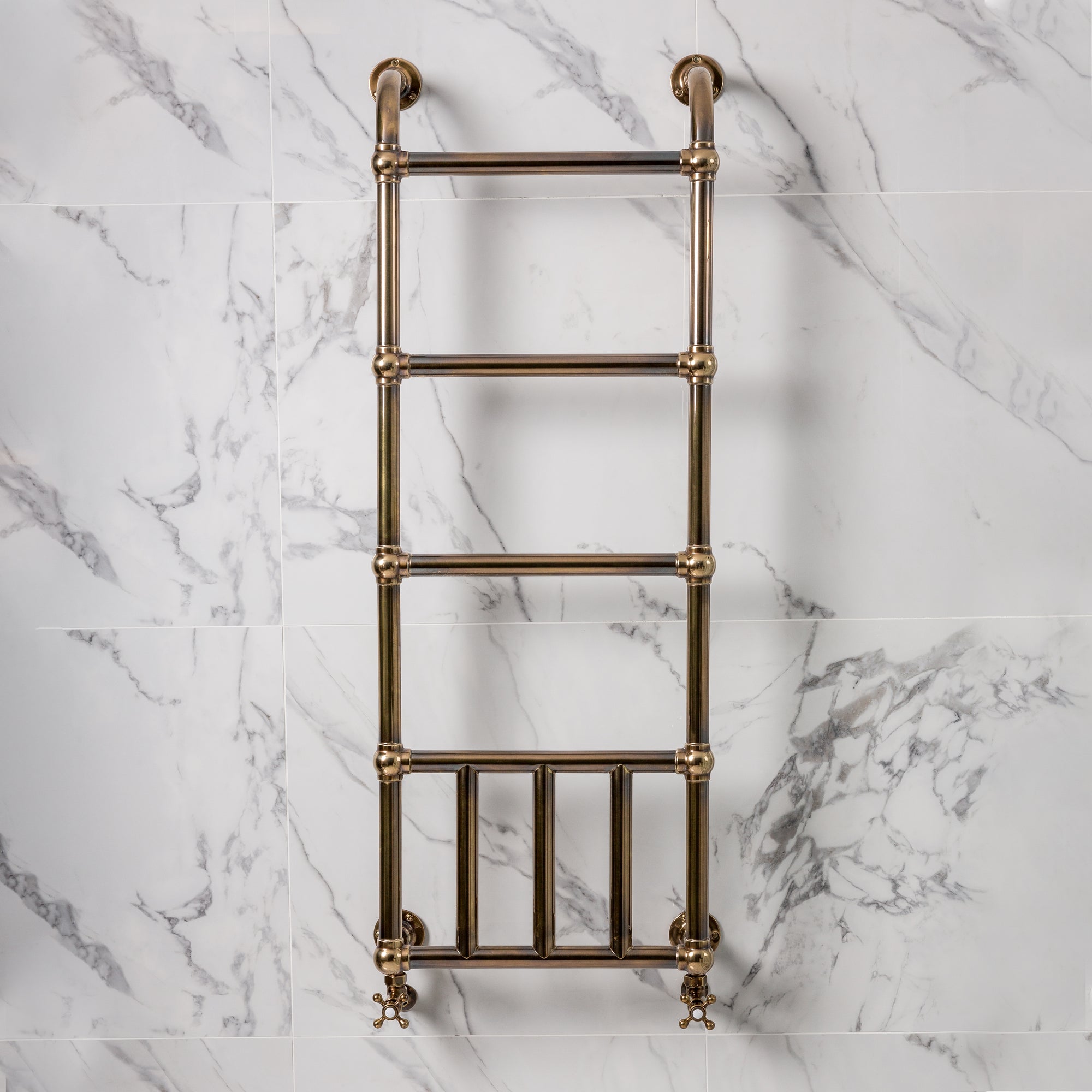






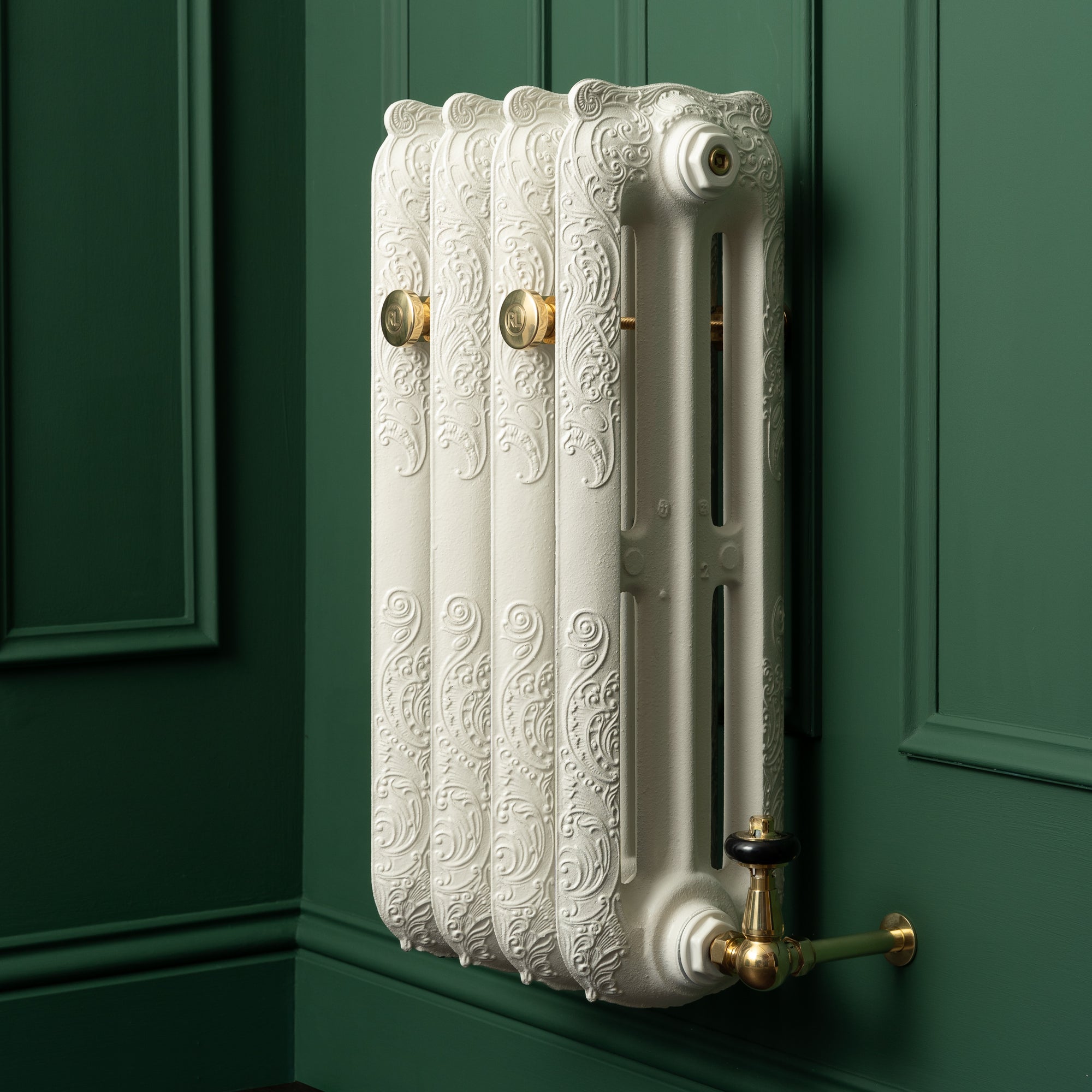

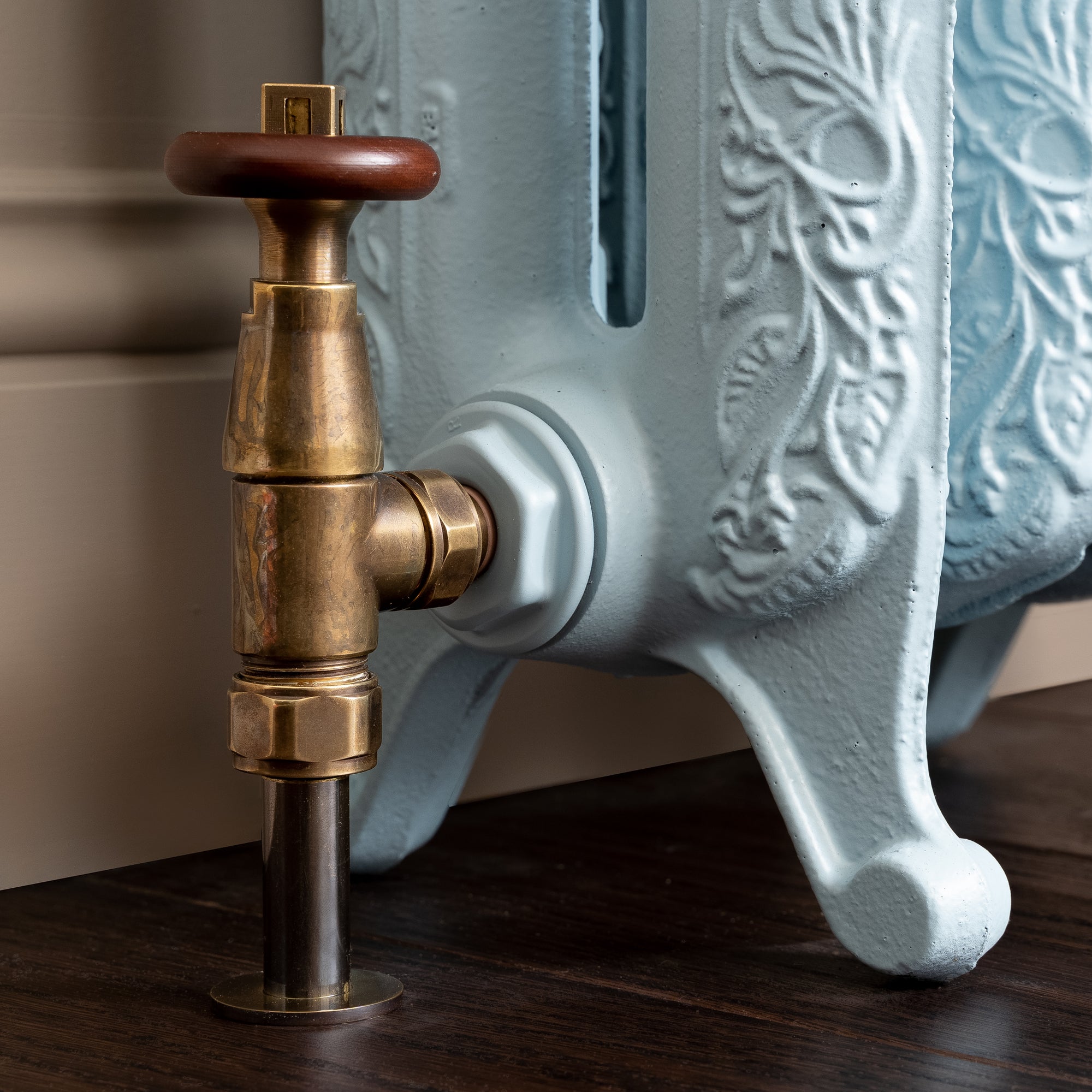


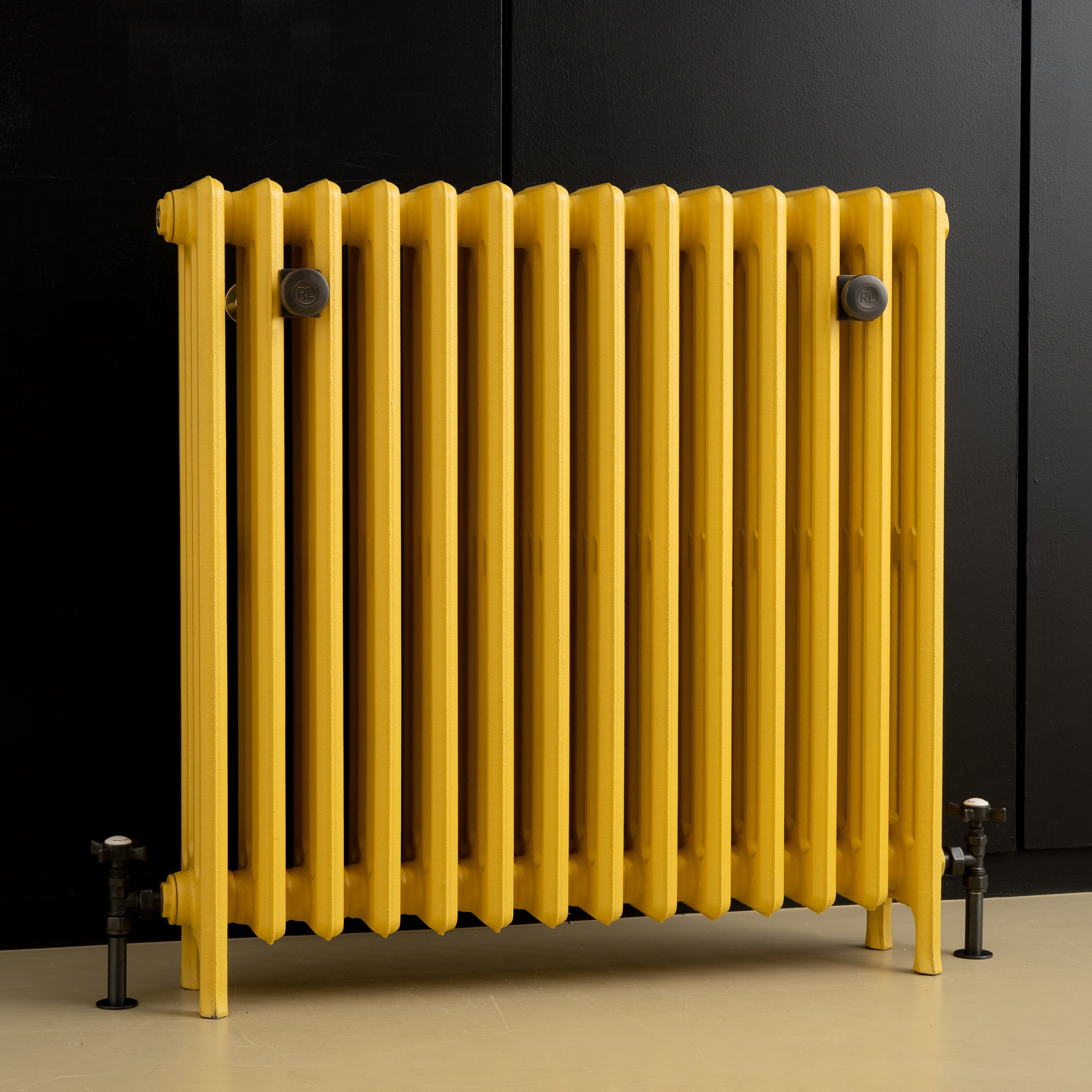





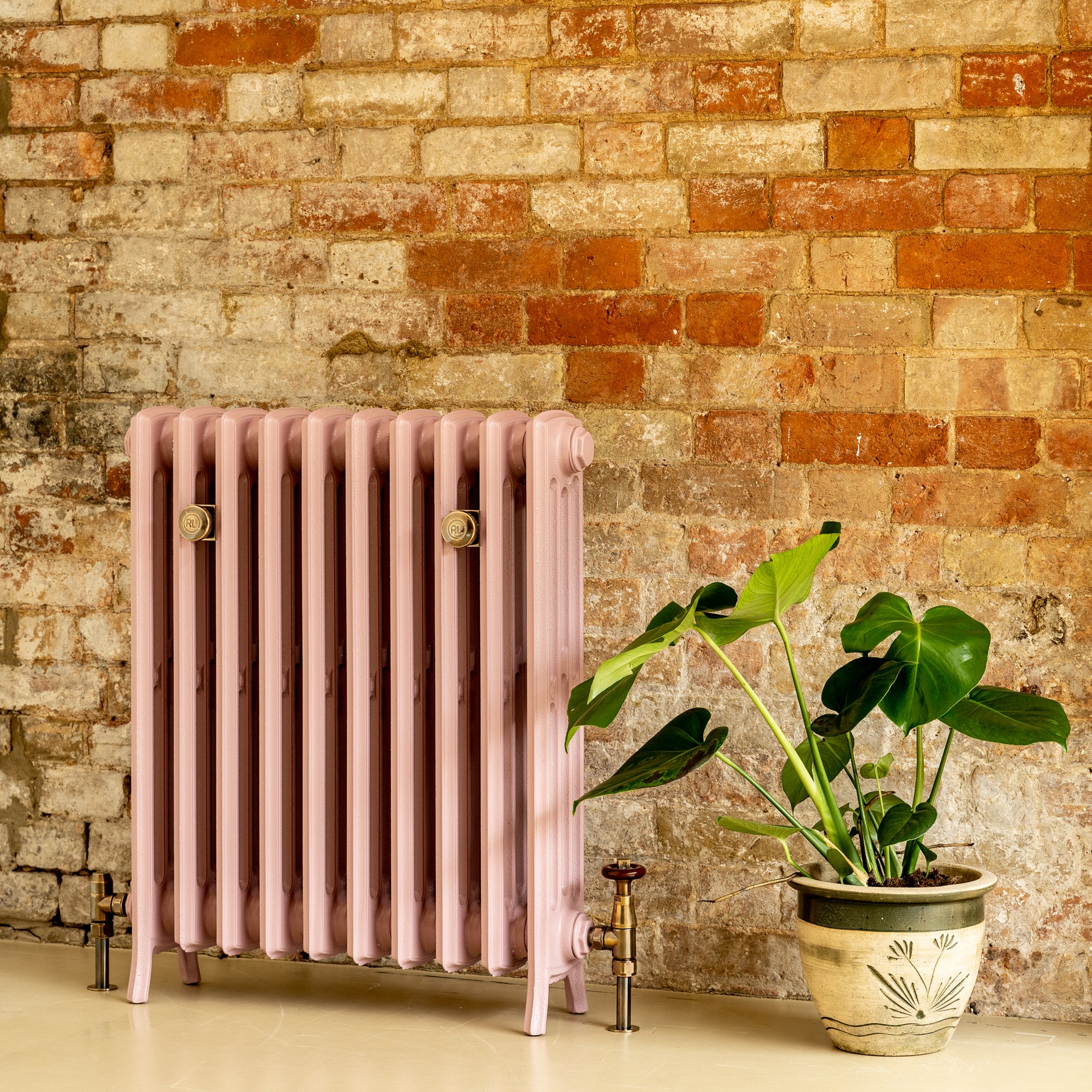

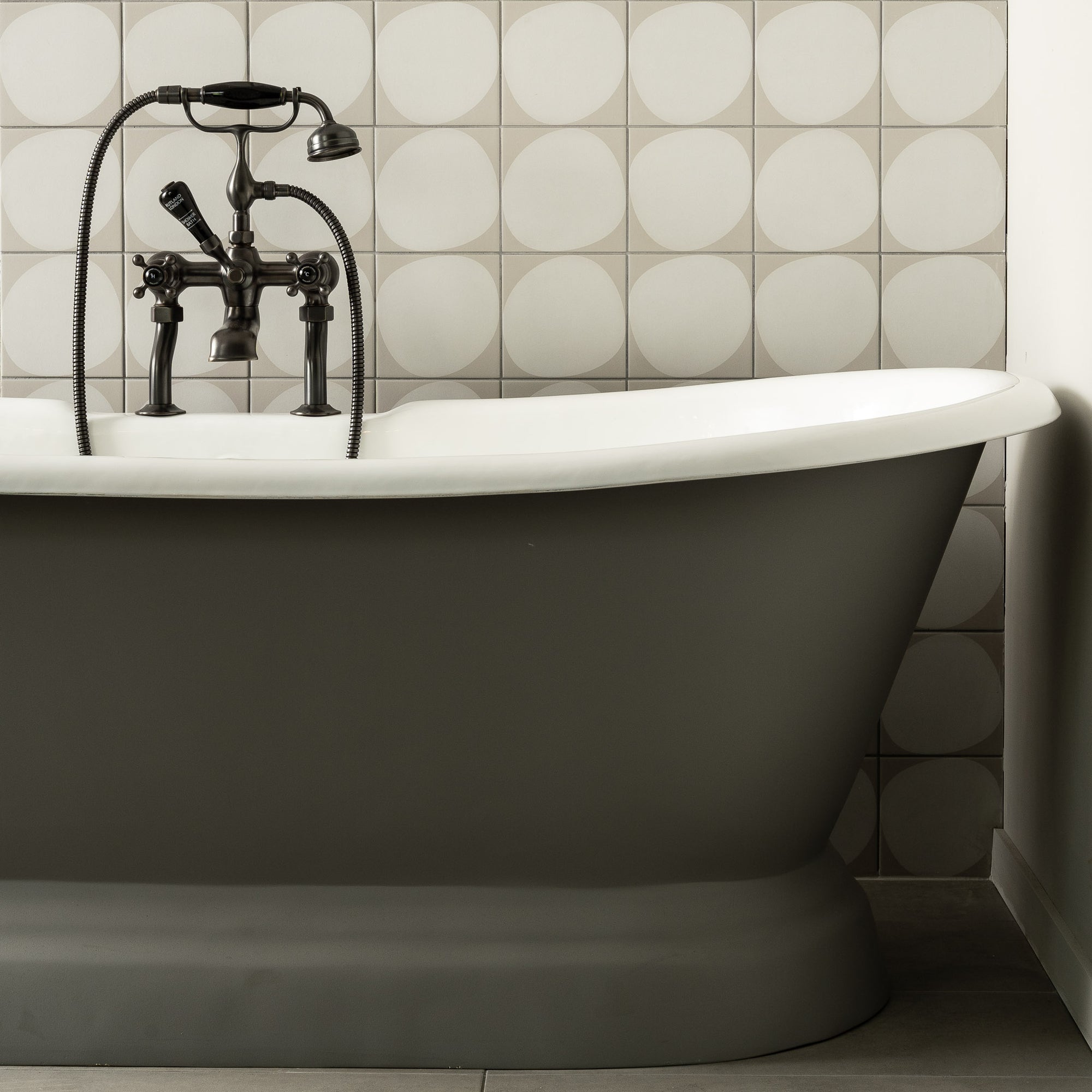

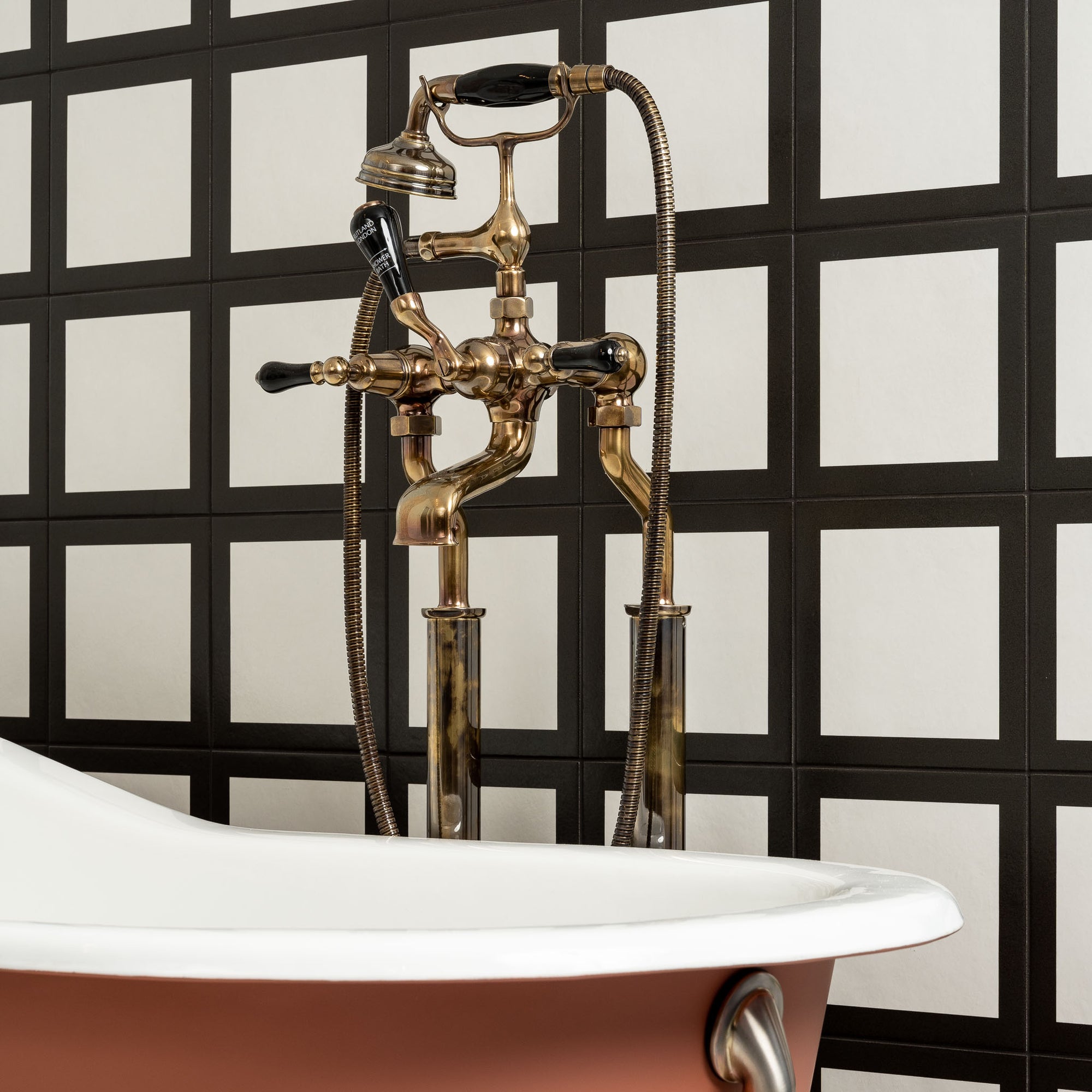

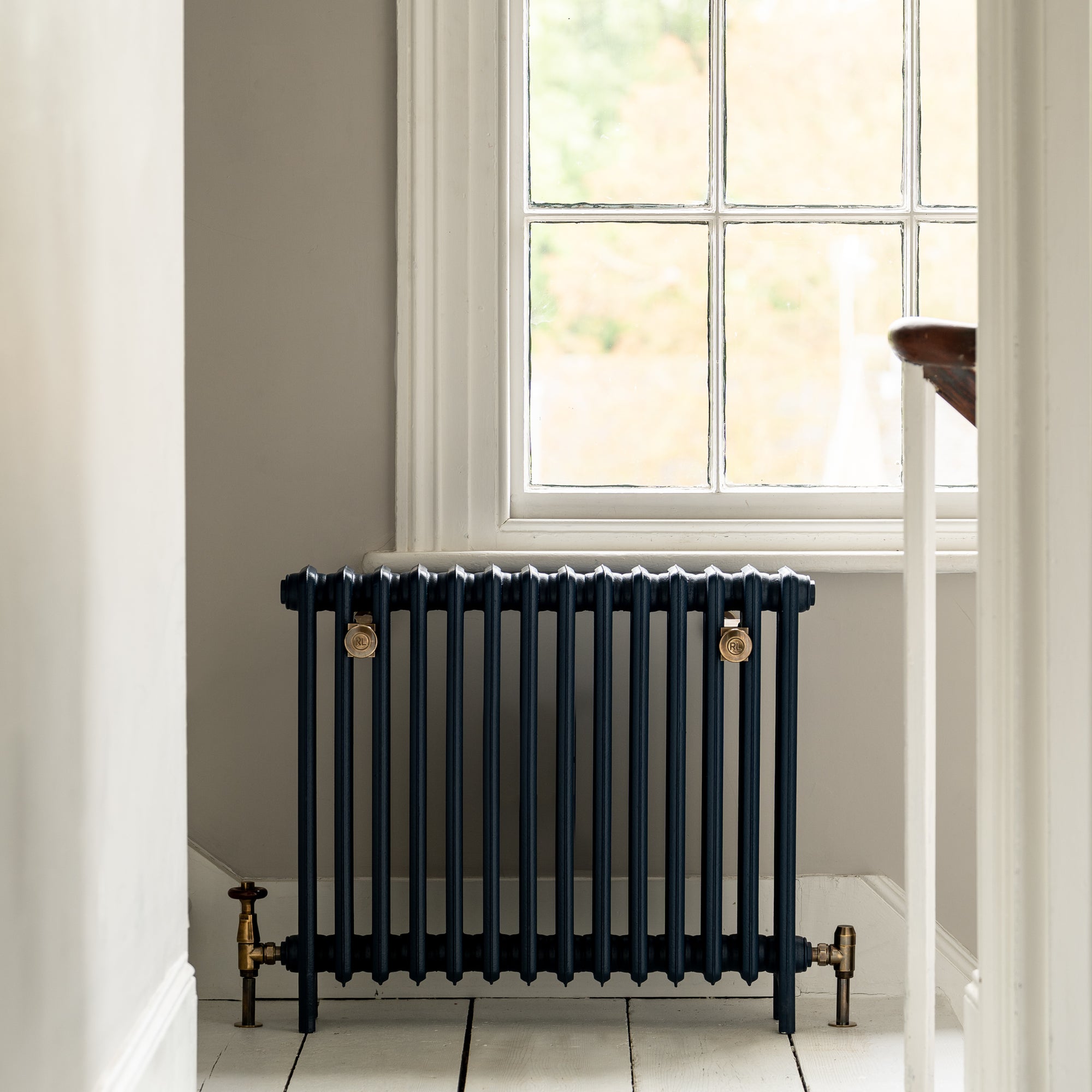



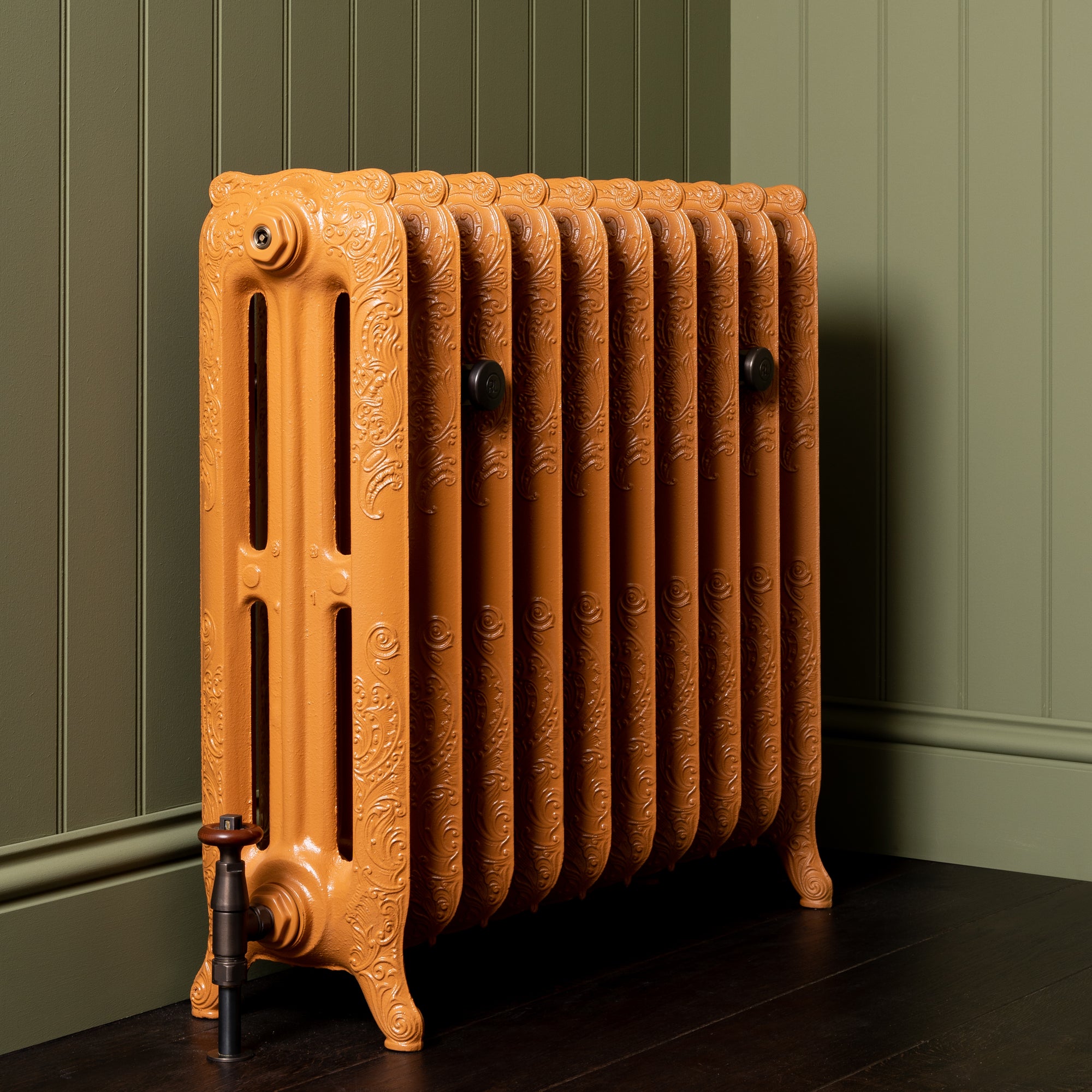




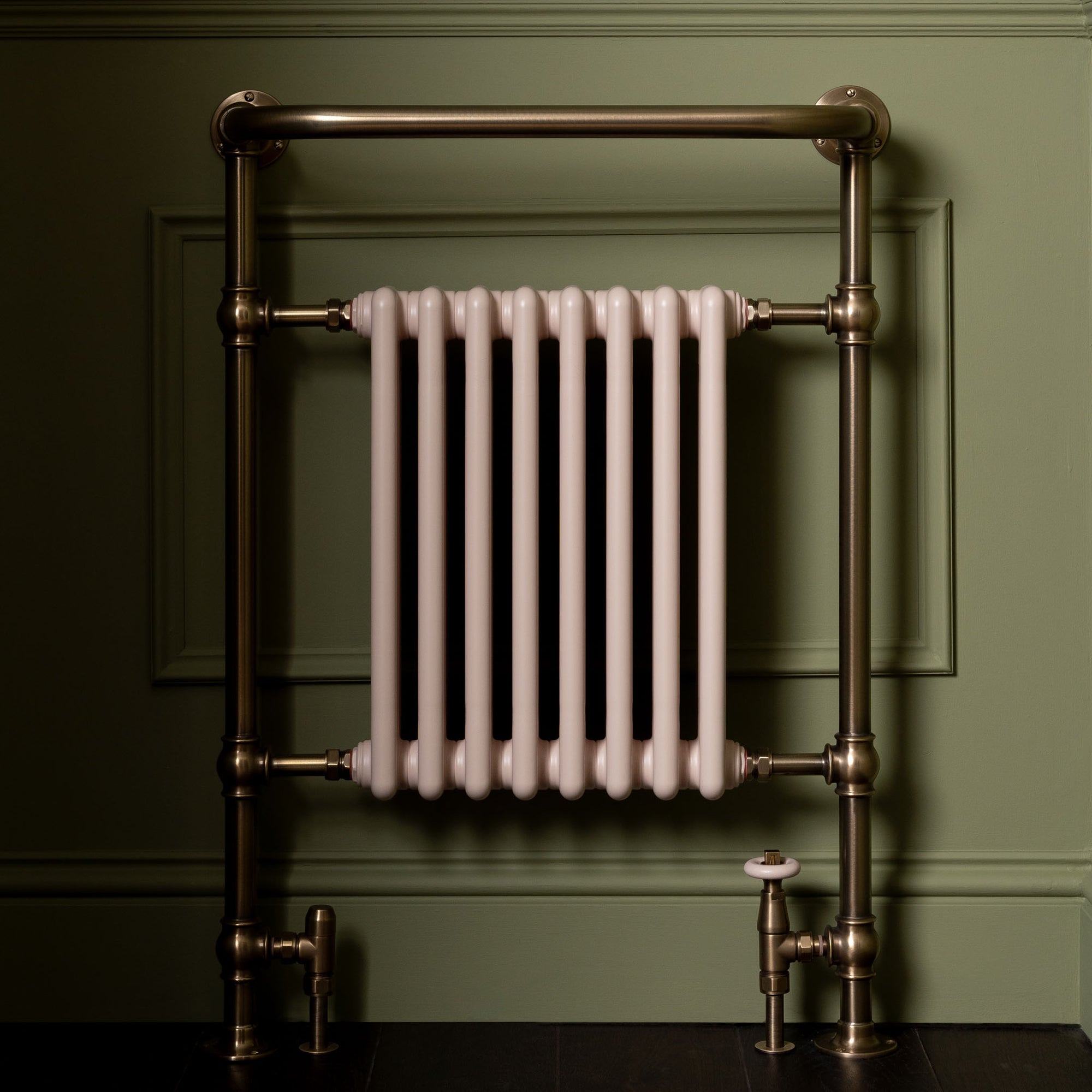



Choosing the right heated towel rail is not simply a question of style, size or finish.
One of the most important decisions is how the towel rail itself will be heated.
For UK bathrooms, the three principal options are central heating, electric only and dual fuel. Each configuration has its own advantages, and the correct choice depends on how the bathroom is used, the heating system within the property and whether year-round operation is required.
At Rutland London, our Luxury Heated Towel Rails are handmade to order in Hampshire, England from DZR brass with hand silver-soldered joints. Across the collection, models are available in central heating, electric only and dual fuel configurations, with bespoke sizes and an extensive selection of Brass, Bronze, Nickel, Copper and Gold finishes.
This guide explains the differences between the three heating options, when each one makes sense, what to consider during installation and how to choose the right configuration for your bathroom.
What Are the Main Types of Heated Towel Rail?
Most heated towel rails fall into one of three categories:
- Central heating heated towel rails – connected to the property's wet heating system.
- Electric heated towel rails – heated independently using an electrical element.
- Dual fuel heated towel rails – connected to the central heating system but also fitted with an electrical element so they can operate independently.
The basic distinction is straightforward, but choosing correctly depends on more than the heating source alone.
Bathroom usage, seasonality, room heating requirements, underfloor heating, existing pipework and the type of towel rail being specified should all be considered.
Central Heating Heated Towel Rails
A central heating heated towel rail connects to the property's wet heating circuit in much the same way as a conventional radiator.
When the central heating system is running, hot water circulates through the towel rail and warms the metalwork.
For many British homes, this remains the most familiar configuration.
It is particularly appropriate where the bathroom is being renovated as part of a larger plumbing project and the necessary flow and return pipework can be incorporated from the beginning.
Advantages of Central Heating Heated Towel Rails
Central heating can provide a clean and familiar installation, especially in properties where a wet heating circuit already serves the bathroom.
It can also allow the towel rail to contribute to the overall room heating where the heat output is appropriate for the space.
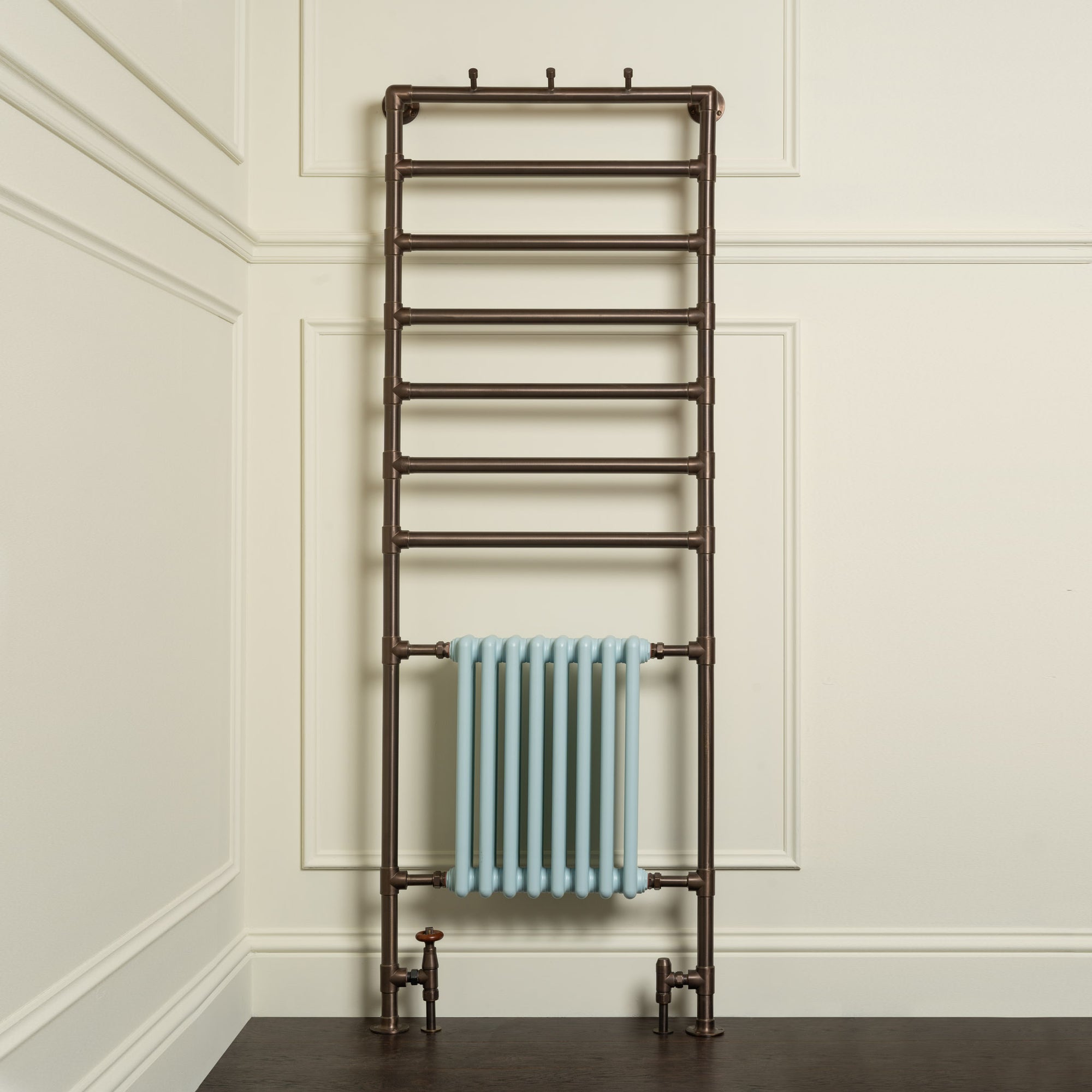
The valves and pipework can become part of the finished design, particularly on a traditional floor-mounted model where the visible plumbing is intentionally coordinated with the towel rail itself.
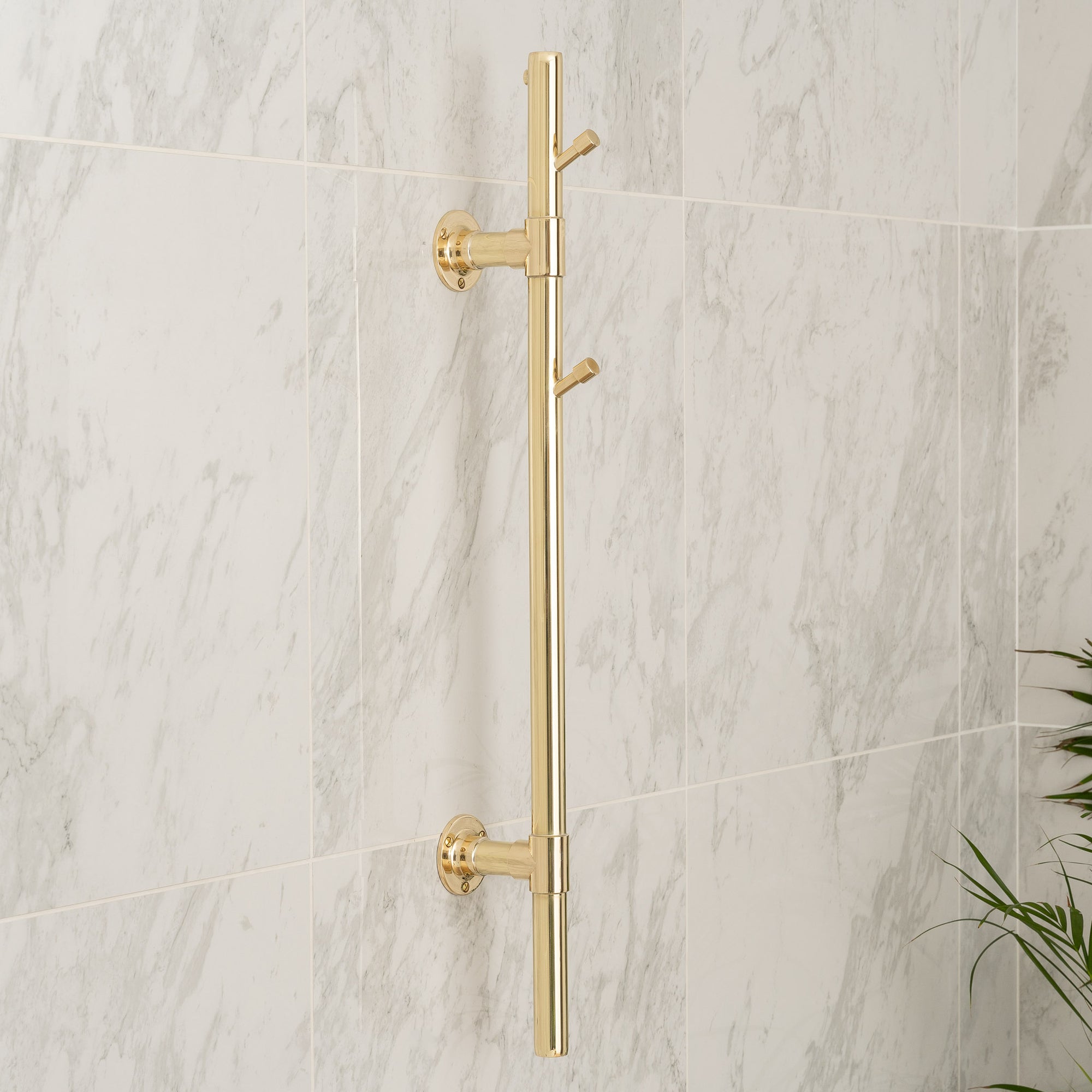
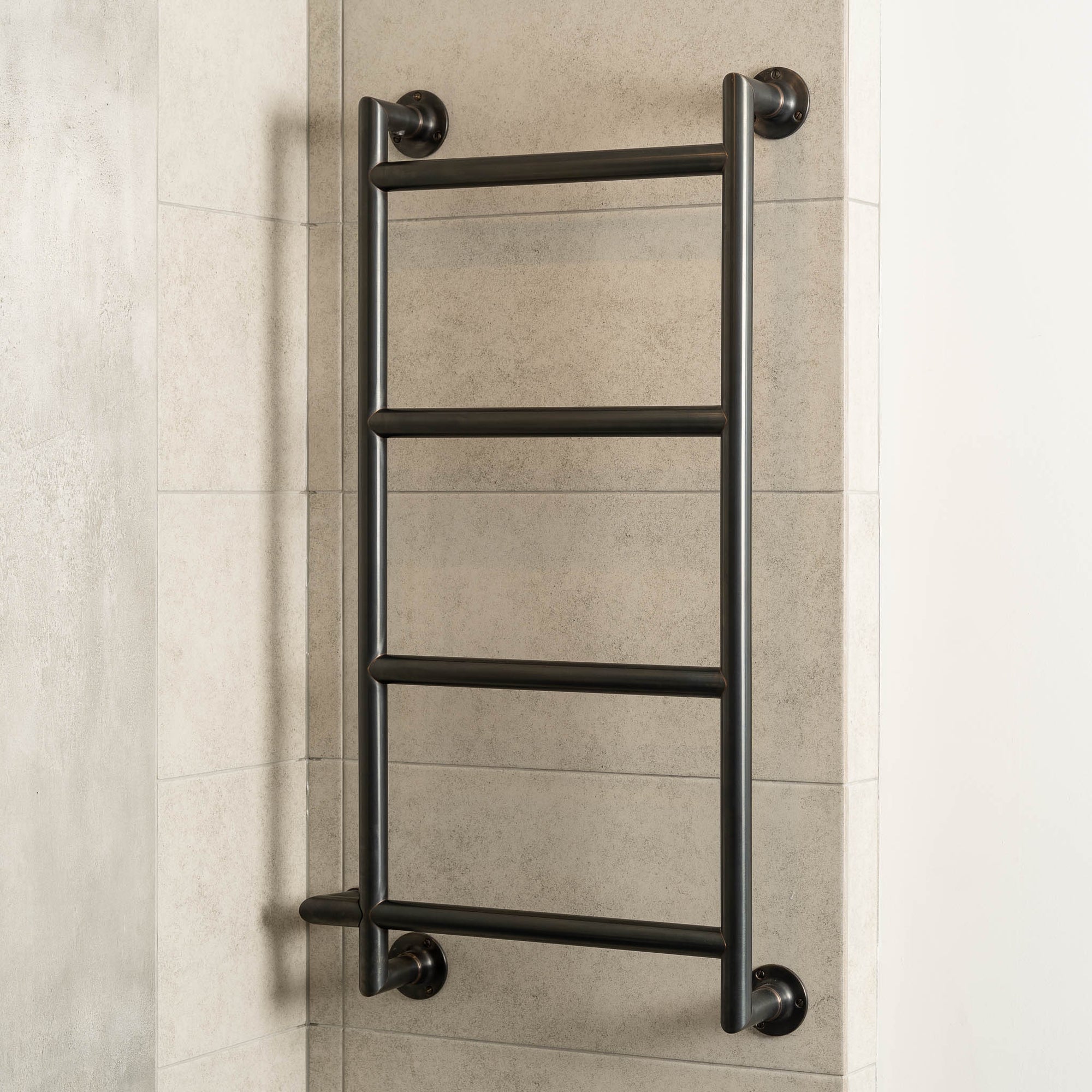
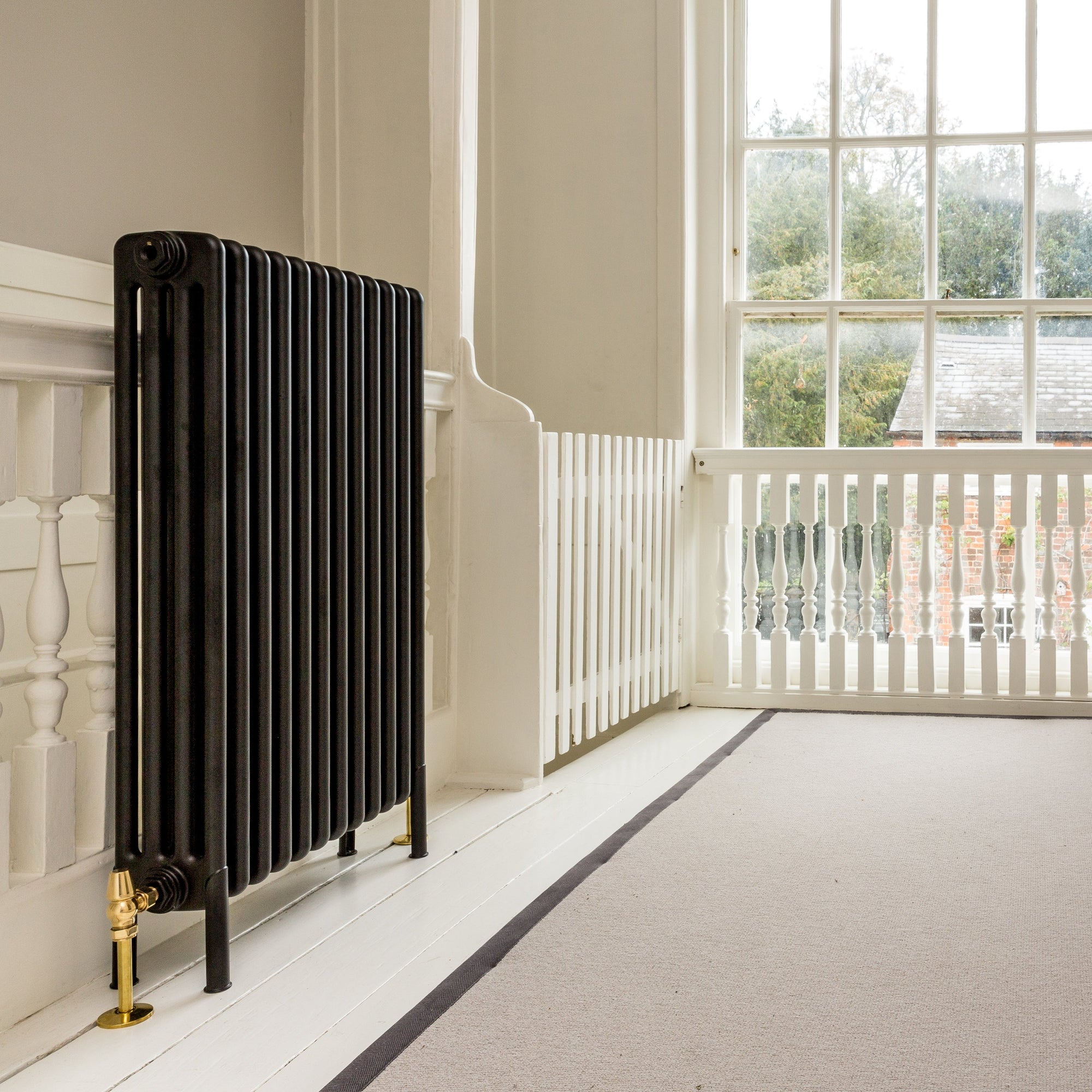
Rutland London manufactures both Wall-Mounted Heated Towel Rails and Floor-Mounted Heated Towel Rails suitable for central heating configurations across the wider collection.
Disadvantages of Central Heating Only
The principal limitation is seasonal operation.
If the central heating system is switched off during warmer months, the towel rail will ordinarily remain cold.
For some bathrooms this is perfectly acceptable.
For others, especially primary bathrooms where warm towels are desirable throughout the year, this can be the reason to consider a dual fuel configuration instead.
Electric Heated Towel Rails
An electric heated towel rail operates independently from the property's central heating system.
Instead of relying on hot water circulating through the rail, an electrical heating element warms the product.
This can be particularly useful where introducing new heating pipework would be difficult or unnecessary.
Electric operation is also well suited to bathrooms where underfloor heating already provides the principal source of room heat and the towel rail is primarily required for warming towels.
When Does an Electric Heated Towel Rail Make Sense?
An electric-only configuration can be particularly useful in:
- Bathroom renovations where existing plumbing is not being altered
- New-build properties using alternative forms of room heating
- Bathrooms with electric or water-based underfloor heating
- Guest bathrooms where independent control is desirable
- Ensuites where a separate heating circuit would be unnecessary
- Projects where year-round towel warming is required
Models such as the Redcliffe Heated Towel Rail, Grosvenor Heated Towel Rail and Arbour Heated Towel Rail can all be specified in electric-only configurations.

What Is a Dual Fuel Heated Towel Rail?
A dual fuel heated towel rail combines both a connection to the wet heating system and an electrical heating element.
During colder months, the rail can operate from the central heating system.
When the main heating is switched off in spring or summer, the electrical element can be used independently.
This makes dual fuel one of the most flexible options available for UK bathrooms.
Why Dual Fuel Is Popular in Britain
The British climate makes dual fuel particularly useful because heating requirements change significantly across the year.
During winter, the towel rail can operate naturally alongside the rest of the heating system.
During warmer months, there is little reason to switch on the heating throughout the property simply to warm bathroom towels.
The electrical element provides an independent alternative.
This makes dual fuel especially attractive for primary bathrooms and family bathrooms used every day.
Electric vs Dual Fuel Heated Towel Rails
The principal difference is whether the towel rail is connected to a wet heating system.
An electric-only rail relies entirely on its electrical heating element.
A dual fuel rail can operate either from the central heating system or electrically.
If a suitable wet circuit is already available and year-round operation is desirable, dual fuel often provides the greatest flexibility.
If no heating pipework exists or the towel rail is intended to function independently from the heating system, electric only may be the cleaner solution.
Central Heating vs Dual Fuel Heated Towel Rails
Both configurations use the property's wet heating system during normal central heating operation.
The difference is what happens when that system is switched off.
A central-heating-only towel rail will no longer heat.
A dual fuel rail can continue operating electrically.
For bathrooms used frequently throughout summer, that additional flexibility can make a meaningful difference to everyday comfort.
Can You Use a Heated Towel Rail in Summer?
Yes — provided the configuration allows it.
An electric-only towel rail can operate independently throughout the year.
A dual fuel towel rail can use its electric element when the central heating is switched off.
A central-heating-only rail will generally depend on the property's heating circuit being active.
This is why clients who place particular value on warm towels throughout the year often choose electric or dual fuel configurations.
Do Heated Towel Rails Need Plumbing?
Not always.
Central heating and dual fuel towel rails require a connection to the heating system.
Electric-only models do not require a wet heating connection and can therefore be useful where plumbing changes are undesirable.
They will still require a suitable electrical connection installed in accordance with the regulations governing electrical equipment in bathrooms.
Can a Heated Towel Rail Work With Underfloor Heating?
Yes.
In many bathrooms, underfloor heating provides the principal source of room heat while the towel rail serves a different purpose: warming and drying towels.
In this situation, an electric heated towel rail can be particularly practical because it does not need to form part of the same heating system as the floor.
Dual fuel may also be appropriate where a wet heating circuit is available elsewhere within the property.
The important point is that the towel rail does not necessarily need to be the primary source of room heat.
Does a Heated Towel Rail Heat the Bathroom?
Potentially, but not every towel rail should be treated as the sole source of room heating.
Heat output varies significantly between models and sizes.
A relatively open brass rail designed primarily for warming towels may provide comparatively modest room heating.
Models incorporating a column or cast iron radiator insert can provide considerably greater output.
Rutland London heated towel rails are independently type tested for safety and performance, with standard central-heating heat outputs declared in accordance with EN 442 for tested configurations.
Individual product pages such as the Chester Heated Towel Rail and Redcliffe Heated Towel Rail provide model-specific output information.
Heated Towel Rails With Radiator Inserts
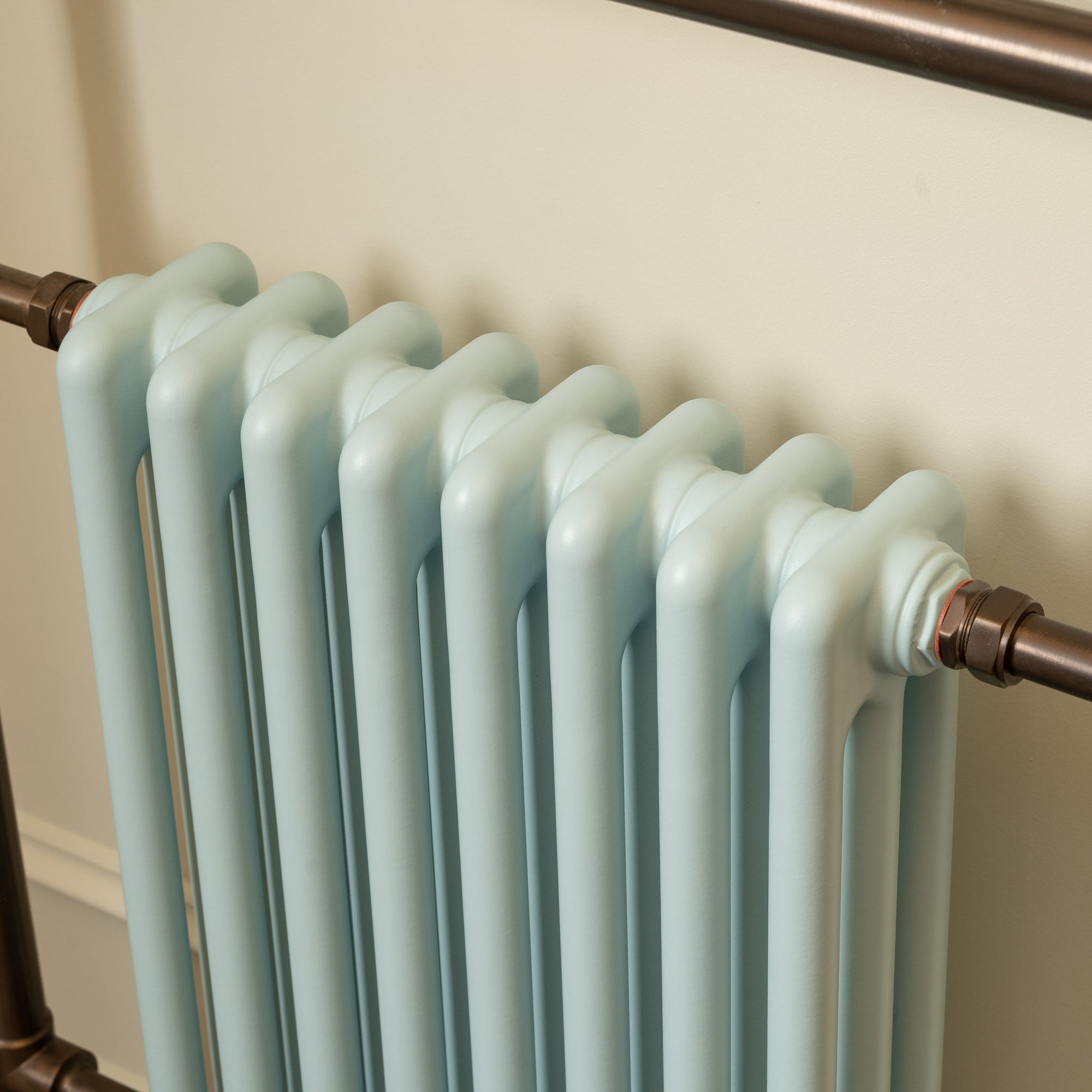
Some traditional heated towel rails incorporate a separate steel column or cast iron radiator within the brass frame.
These designs can provide considerably greater room heating while retaining the practical rails required for towels.
Examples within the Rutland London collection include the Hurlingham Heated Towel Rail and other radiator-insert models available within our Traditional Heated Towel Rail collection.
These products should be treated differently from simpler brass-only towel rails when considering the heating system.
Selected models incorporating steel or cast iron radiator inserts must only be installed on a suitable closed-circuit system and cannot be connected to a domestic hot-water circuit.
Always review the technical requirements of the individual model before specifying the heating configuration.

Can Heated Towel Rails Connect to a Domestic Hot-Water System?
Some Rutland London brass heated towel rails without radiator inserts can be suitable for connection to a domestic hot-water system.
This is possible because of the use of DZR brass and the construction methods employed in the product.
However, this should never be assumed universally across the range.
Models incorporating steel column or cast iron radiator inserts cannot be connected to a domestic hot-water circuit and require a suitable closed-loop heating system.
For this reason, the individual product specification should always be checked before installation.
Which Heating Configuration Is Best for a Renovation?
For renovations where walls and floors are already finished or plumbing changes are intentionally limited, an electric heated towel rail can often provide the simplest route.
There is no requirement to extend a wet heating circuit into the bathroom.
Where existing heating pipework is already present, however, central heating or dual fuel may provide a more natural solution.
The decision should therefore be made alongside the plumber and electrician before final wall and floor finishes are completed.
Which Heating Configuration Is Best for a New Bathroom?
A complete new bathroom offers greater flexibility because the heating, electrical and plumbing requirements can all be incorporated during the design stage.
If the property uses a wet heating system, central heating or dual fuel can be considered.
If underfloor heating will provide the principal room heat, electric operation may be sufficient for the towel rail.
The correct configuration depends on how the room will be used rather than simply which option is easiest to install.
Which Heating Configuration Is Best for a Primary Bathroom?
For a frequently used primary bathroom, year-round flexibility often makes dual fuel particularly attractive.
The rail can operate alongside the central heating during winter and independently via the electrical element when required during warmer months.
Electric-only operation can be equally suitable where underfloor heating already provides the room heat or where a wet circuit is not available.
The key question is whether the client expects warm towels throughout the year.
Which Heating Configuration Is Best for a Guest Bathroom?
Guest bathrooms may benefit from independent control because they are not necessarily used every day.
An electric rail can be switched on only when required without depending on the wider heating system.
Dual fuel can offer similar flexibility where a wet heating circuit is already available.
Choosing the Right Size Heated Towel Rail
The heating configuration is only one part of the specification.
Size should also be considered carefully.
A taller rail can provide additional hanging space without occupying much more wall width.
A wider model may suit large bath sheets or a family bathroom where several towels need to be accommodated at once.
The appropriate size should consider:
- Available wall or floor space
- Number of towels
- Towel size
- Required room heat output
- Position of the bath or shower
- Pipework locations
- Electrical connection position
- Overall visual proportion
For broader specification guidance, read Luxury Heated Towel Rails: How to Choose the Perfect Design for Your Bathroom.
Wall-Mounted or Floor-Mounted?
Both configurations are available with different heating options across the Rutland London collection.
Wall-Mounted Heated Towel Rails are particularly useful where floor space is limited or where a lighter architectural appearance is desired.
Floor-Mounted Heated Towel Rails create a more substantial, furniture-like feature and can work beautifully within larger traditional bathrooms.
The visual design and heating configuration should therefore be considered separately.
Traditional or Contemporary Heated Towel Rail?
Heating configuration does not dictate style.
Both Traditional Heated Towel Rails and Contemporary Heated Towel Rails can be specified across central heating, electric-only and dual fuel configurations depending on the individual model.
This allows the choice of heating system to be made according to practical requirements while the design itself responds to the architecture of the bathroom.

Planning the Electrical Element
For electric and dual fuel towel rails, the electrical element and cable position should be considered before installation.
On selected Rutland London models, the heating element flex emerges from a defined point on the product.
For example, on the Redcliffe Heated Towel Rail, the flex is ordinarily positioned at the base of the right-hand vertical tube, while other models use different arrangements.
Where a different location is required, this should be discussed before production so the product and electrical connection can be coordinated correctly.
Planning Pipework for Central Heating & Dual Fuel
Pipe centres should be established before expensive floor and wall finishes are completed.
This is particularly important where marble, stone or decorative panelling is being used.
Accurate planning allows radiator valves and pipework to align neatly with the towel rail.
If an existing bathroom is being renovated, current pipe centres should be measured early to establish whether a standard towel rail will suit the installation or whether a bespoke size may provide a cleaner result.
Radiator Valves Matter
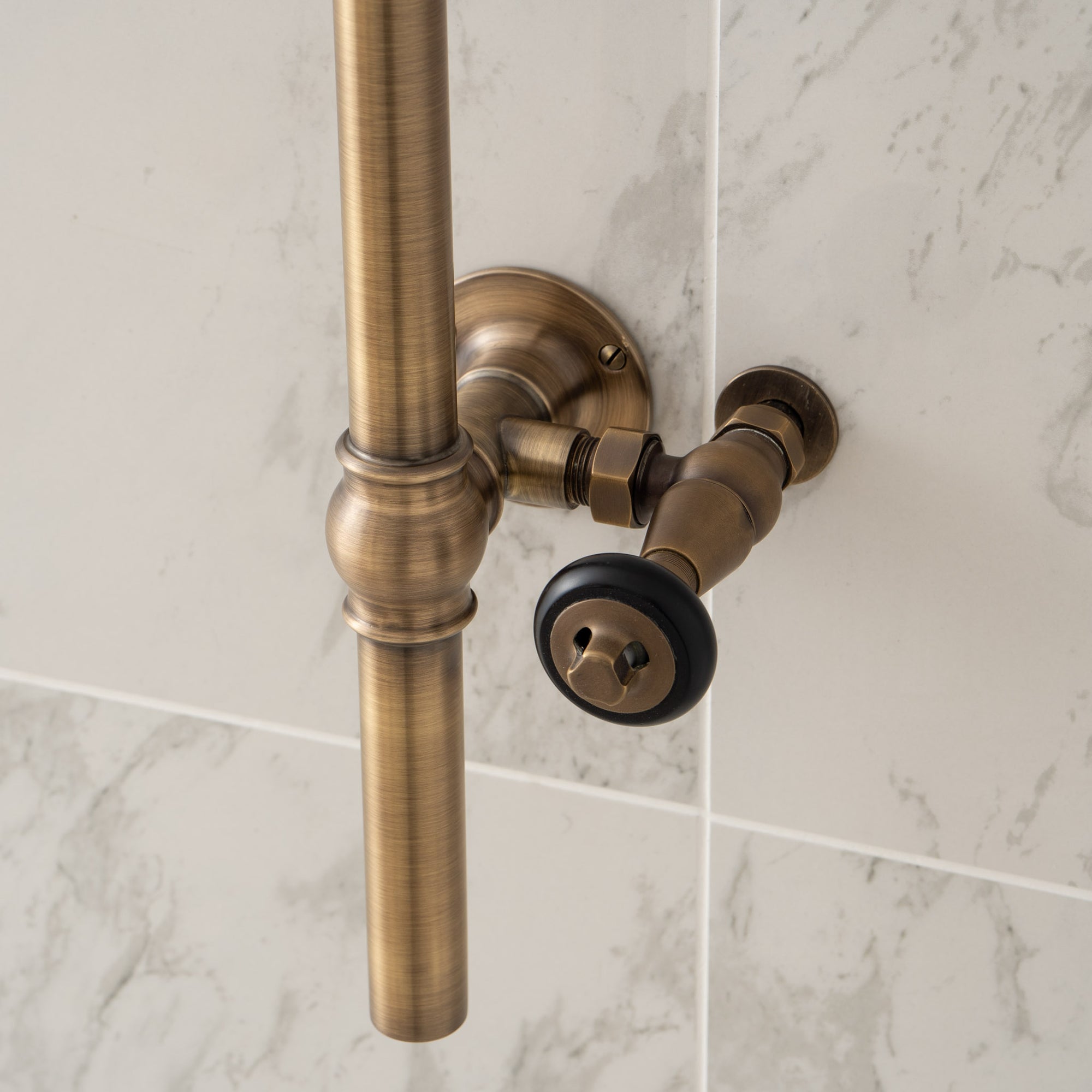
On central heating and dual fuel installations, radiator valves are visible components of the finished design.
They should therefore be treated as part of the bathroom specification rather than simply as plumbing hardware.
Traditional crosshead valves can complement a classically styled rail, while more restrained valve designs may suit contemporary products.
The finish should ideally coordinate with the towel rail itself and with the wider bathroom brassware.
Choosing a Finish for Your Heated Towel Rail
Once the heating configuration has been selected, finish becomes one of the most visually important decisions.
Rutland London heated towel rails are available in an extensive collection of finishes across Brass, Bronze, Nickel, Copper and Gold.
Polished (Unlacquered) Brass provides warmth and develops natural patina over time.
Brushed (Satin) Brass creates a quieter and softer appearance.
Aged Brass and Antique Brass introduce greater depth, while Nickel provides a cooler alternative.
Bronze can create architectural contrast against pale marble and ceramic surfaces.
Where the same finish is used across taps, shower fittings, vanity stands and the heated towel rail, the room can feel considerably more coherent.
Living Finishes & Patina
Many Brass, Bronze, Nickel and Copper finishes are living finishes.
This means the surface is expected to evolve naturally through handling, moisture and exposure to its surrounding environment.
The resulting patina is part of the character of the finish rather than a defect.
For more guidance on selecting and coordinating metal finishes, read our guide to choosing the perfect Brassware finish for a luxury bathroom.
Bespoke Heated Towel Rails
One advantage of choosing a product handmade to order is the ability to respond more closely to the architecture of the bathroom.
Bespoke dimensions can be considered across selected Rutland London heated towel rail designs.
A narrower rail may be required between architectural features.
A taller configuration can provide more hanging space while preserving floor area.
A larger bathroom may benefit from a wider rail that is more appropriately scaled to the room.
It should be noted that bespoke sizes may not carry a declared heat output unless specifically tested or stated, so this should be considered where the rail is intended to contribute significantly to room heating.
Are Electric & Dual Fuel Heated Towel Rails Tested?
Yes.
Rutland London heated towel rails are independently tested for safety and performance.
Central heating configurations are tested in accordance with EN 442 and other applicable standards.
Electric-only and dual fuel configurations on applicable models comply with relevant electrical safety standards including EN 60335-1 and EN 60335-2-43, with individual product requirements varying according to design.
Technical information should always be reviewed on the relevant product page before specification.
Central Heating vs Electric vs Dual Fuel: Which Should You Choose?
There is no universal best option.
The correct configuration depends on the property and the way the bathroom will be used.
Choose Central Heating If...
- A suitable wet heating circuit is already available
- The towel rail will mainly be used during the heating season
- Year-round independent operation is not required
- The rail is intended to integrate with the wider radiator system
Choose Electric Only If...
- No wet heating circuit is available
- Underfloor heating already provides room heat
- You want independent year-round operation
- Plumbing changes are being kept to a minimum
Choose Dual Fuel If...
- A wet heating circuit is available
- You want the rail to operate with the central heating in winter
- You also want warm towels when the heating is switched off
- Year-round flexibility is a priority
Frequently Asked Questions
What is the best type of heated towel rail?
There is no single best configuration. Central heating is a natural choice where a wet circuit already exists, electric only is useful for independent operation, and dual fuel offers the greatest seasonal flexibility where both electrical and heating connections are available.
Is dual fuel better than electric?
Not necessarily. Dual fuel provides two operating methods, but electric only may be simpler where there is no need for a wet heating connection. The correct choice depends on the project.
Is dual fuel better than central heating?
Dual fuel offers greater flexibility because it can continue operating electrically when the central heating is switched off. If summer operation is not required, central heating only may be sufficient.
Can I run a dual fuel towel rail in summer?
Yes. The electric element can be used independently when the main central heating system is switched off.
Can an electric towel rail be left on all year?
An electric towel rail can operate throughout the year, but control and usage should follow the manufacturer's instructions and the requirements of the installation.
Does an electric heated towel rail need plumbing?
No wet heating connection is required for an electric-only configuration. A suitable electrical installation is still required.
Can I use a heated towel rail with underfloor heating?
Yes. Underfloor heating can provide the principal room heat while an electric or dual fuel towel rail provides warm towels independently.
Can a heated towel rail replace a radiator?
Potentially, if the heat output is sufficient for the room. This must be established from the specific product output and the calculated heat loss of the bathroom.
Can a heated towel rail go on a domestic hot-water system?
Some brass-only Rutland London heated towel rails can be suitable for domestic hot-water systems. Models containing steel column or cast iron radiator inserts cannot and must be installed on an appropriate closed-circuit system. Always check the individual product specification.
What is the most efficient heated towel rail?
Efficiency cannot be determined from heating configuration alone. Product size, heat output, control strategy, required operating time and the way the bathroom itself is heated all influence overall performance.
Should I choose electric or dual fuel for a bathroom renovation?
If existing heating pipework is not being altered, electric only can provide a practical solution. If a wet heating circuit already exists and year-round operation is desirable, dual fuel may be more appropriate.
Are electric heated towel rails safe in bathrooms?
Yes, when the product is suitable for the application and installed correctly by a suitably qualified professional in accordance with the relevant electrical regulations and bathroom zones.
Can Rutland London make a heated towel rail to a bespoke size?
Yes. Bespoke dimensions are available across selected designs, subject to technical and manufacturing requirements.
Explore Rutland London Heated Towel Rails
Rutland London manufactures luxury heated towel rails for traditional and contemporary bathrooms, with central heating, electric-only and dual fuel configurations available across the collection.
- All Heated Towel Rails
- Traditional Heated Towel Rails
- Contemporary Heated Towel Rails
- Wall-Mounted Heated Towel Rails
- Floor-Mounted Heated Towel Rails
- Chester Heated Towel Rail
- Redcliffe Heated Towel Rail
- Arbour Heated Towel Rail
- Grosvenor Heated Towel Rail
- How to Choose the Perfect Heated Towel Rail
- How to Choose the Perfect Brassware Finish
Choose the Right Heating Configuration for Your Bathroom
The best heated towel rail is one that suits both the design of the bathroom and the way the room will actually be used.
Central heating provides a familiar connection to the home's wet heating system.
Electric only provides independent operation without requiring heating pipework.
Dual fuel combines the two and offers particularly useful year-round flexibility.
By deciding on the heating configuration early, the pipework, electrical connection, valves, dimensions and finish can all be coordinated before the bathroom is completed.
Explore the full Rutland London Heated Towel Rail collection to compare traditional and contemporary designs handmade to order in England.