
























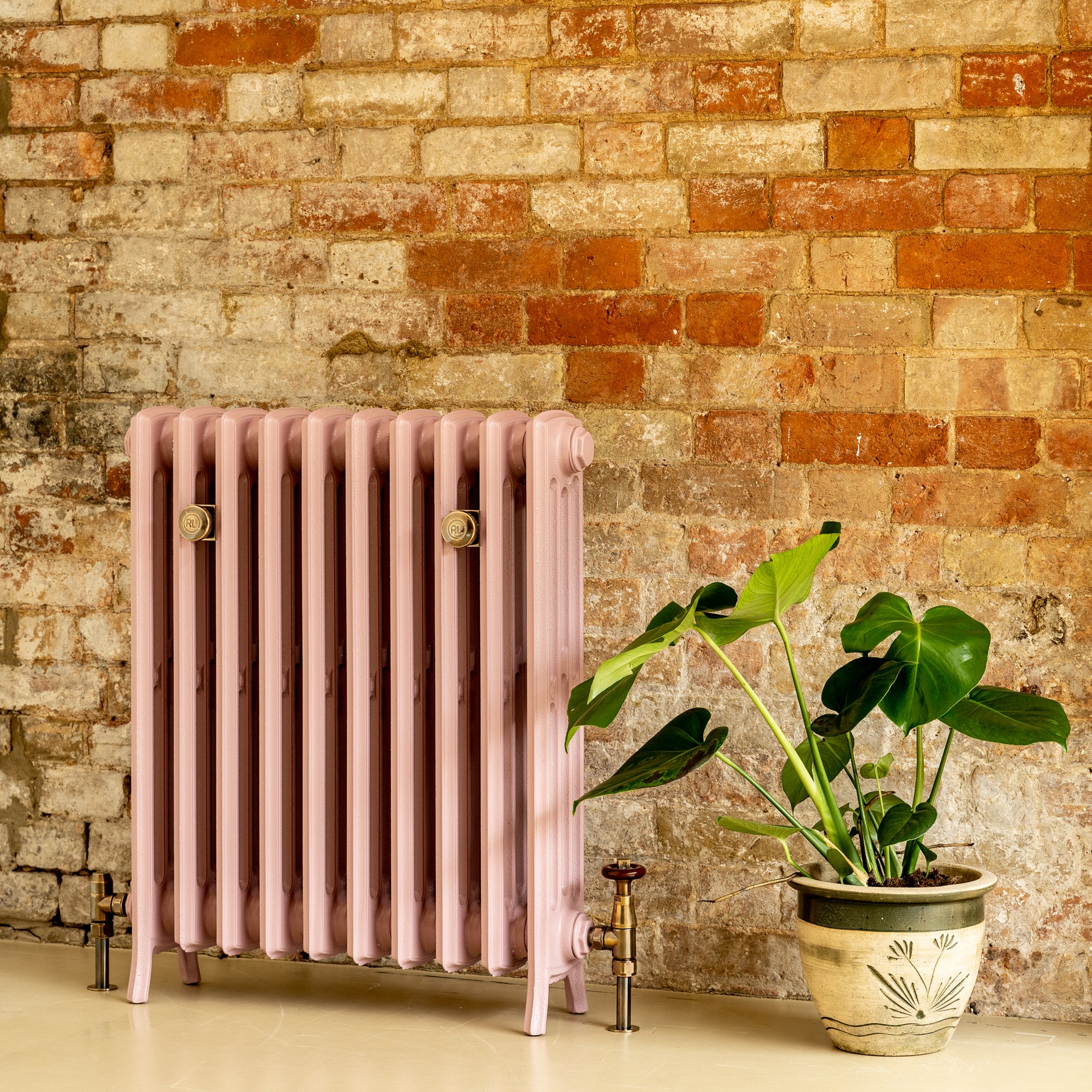

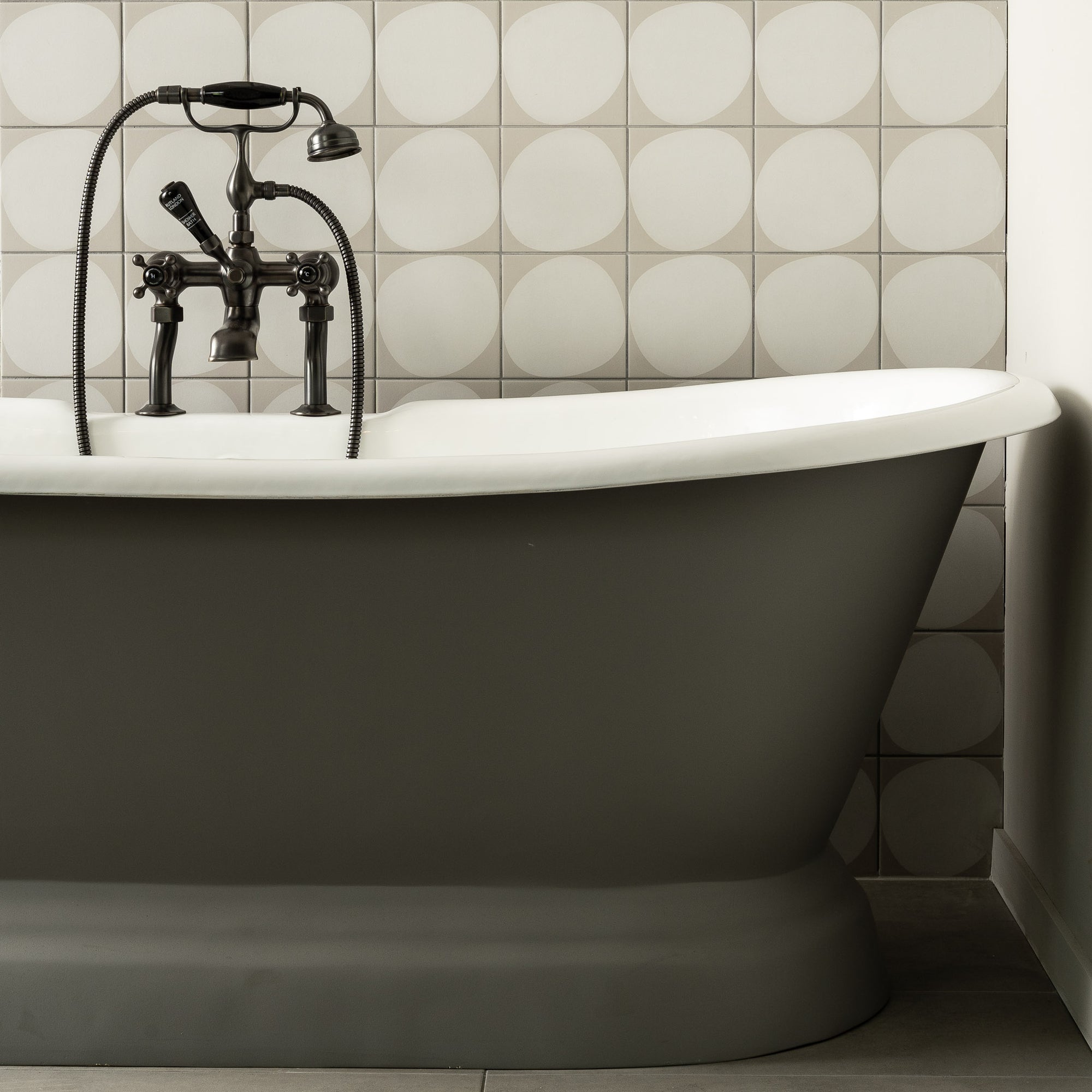

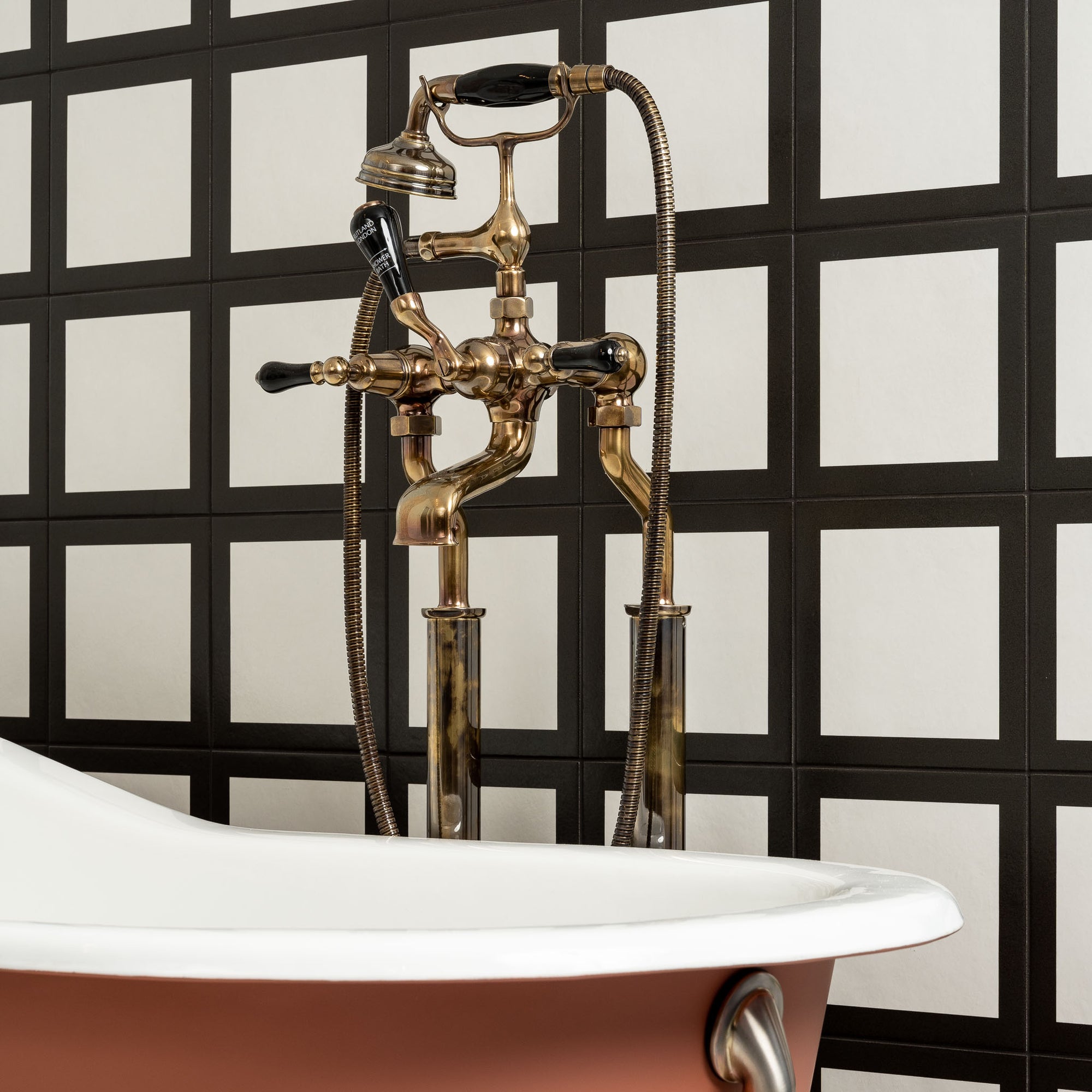

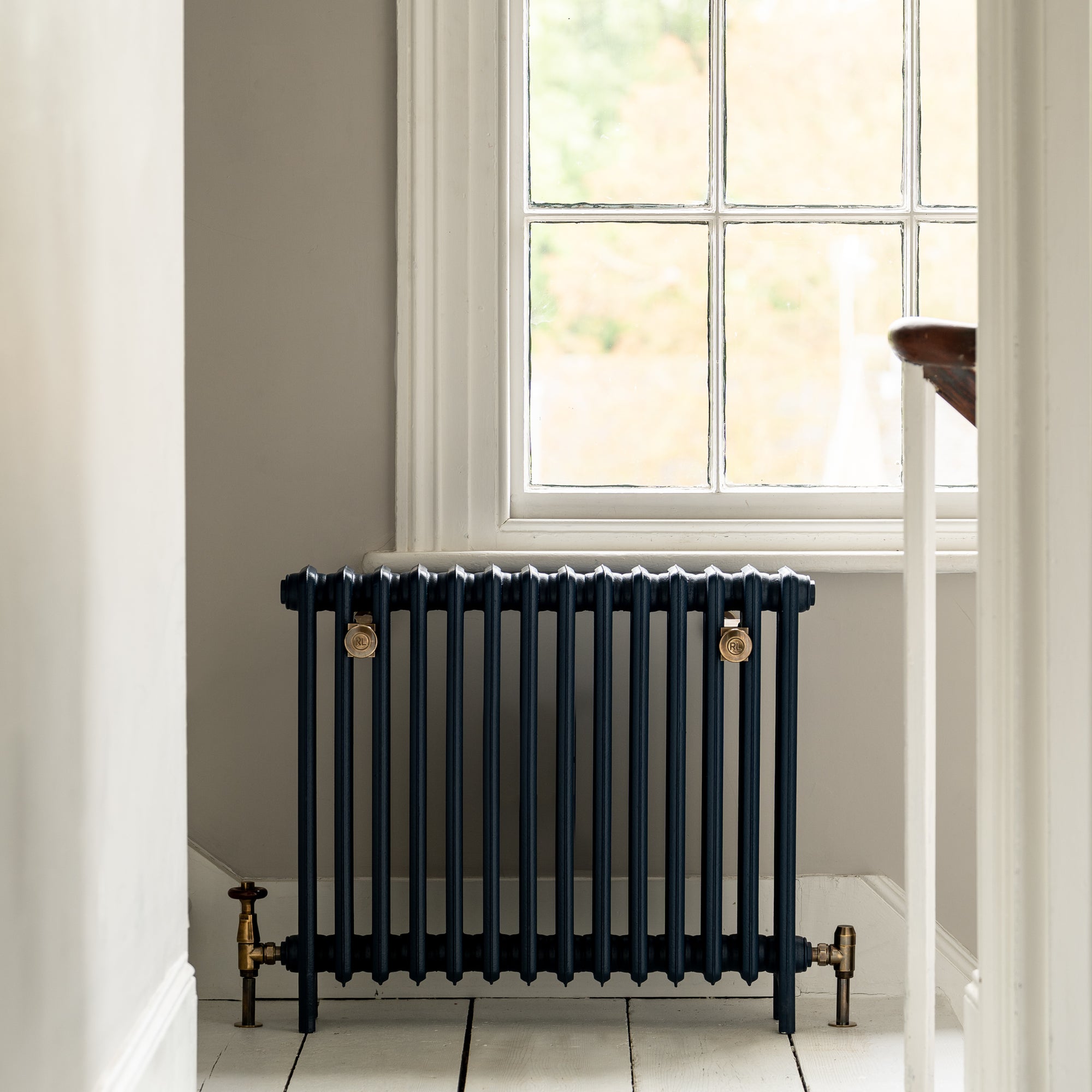









A heated towel rail is one of the few bathroom fittings that combines genuine everyday practicality with the opportunity to introduce a beautiful piece of architectural metalwork.
For British bathrooms, the heated towel rail has long been considered an essential fixture. Yet choosing the right design involves considerably more than simply finding a rail that fits an available section of wall.
Size, heat output, heating configuration, mounting position, brassware finish and the number of towels you wish to accommodate should all be considered before a model is specified.
At Rutland London, our luxury heated towel rails are handmade to order in England from DZR brass, with hand silver-soldered joints and an extensive selection of handcrafted finishes.
Available in traditional and contemporary designs, wall-mounted and floor-mounted configurations, and with central heating, electric and dual fuel options across the collection, our towel rails can also be manufactured in bespoke sizes for individual projects.
This guide explores how to choose a heated towel rail for a luxury bathroom, including the differences between heating configurations, how to select the correct size and style, when to consider a radiator insert and why bespoke manufacture can provide a better solution for unusual spaces and period properties.
Why the Heated Towel Rail Deserves More Attention
Bathroom design naturally focuses upon the largest visual elements within the room.
The bath, vanity, shower enclosure and marble are often selected first, while the heated towel rail can be considered much later in the specification process.
We believe this overlooks the significant contribution a beautifully designed towel rail can make to an interior.
Unlike many bathroom fittings, a heated towel rail combines function with a substantial architectural presence. Its proportions, metalwork and finish can reinforce the wider design language of the room while providing somewhere warm and practical to hang towels.
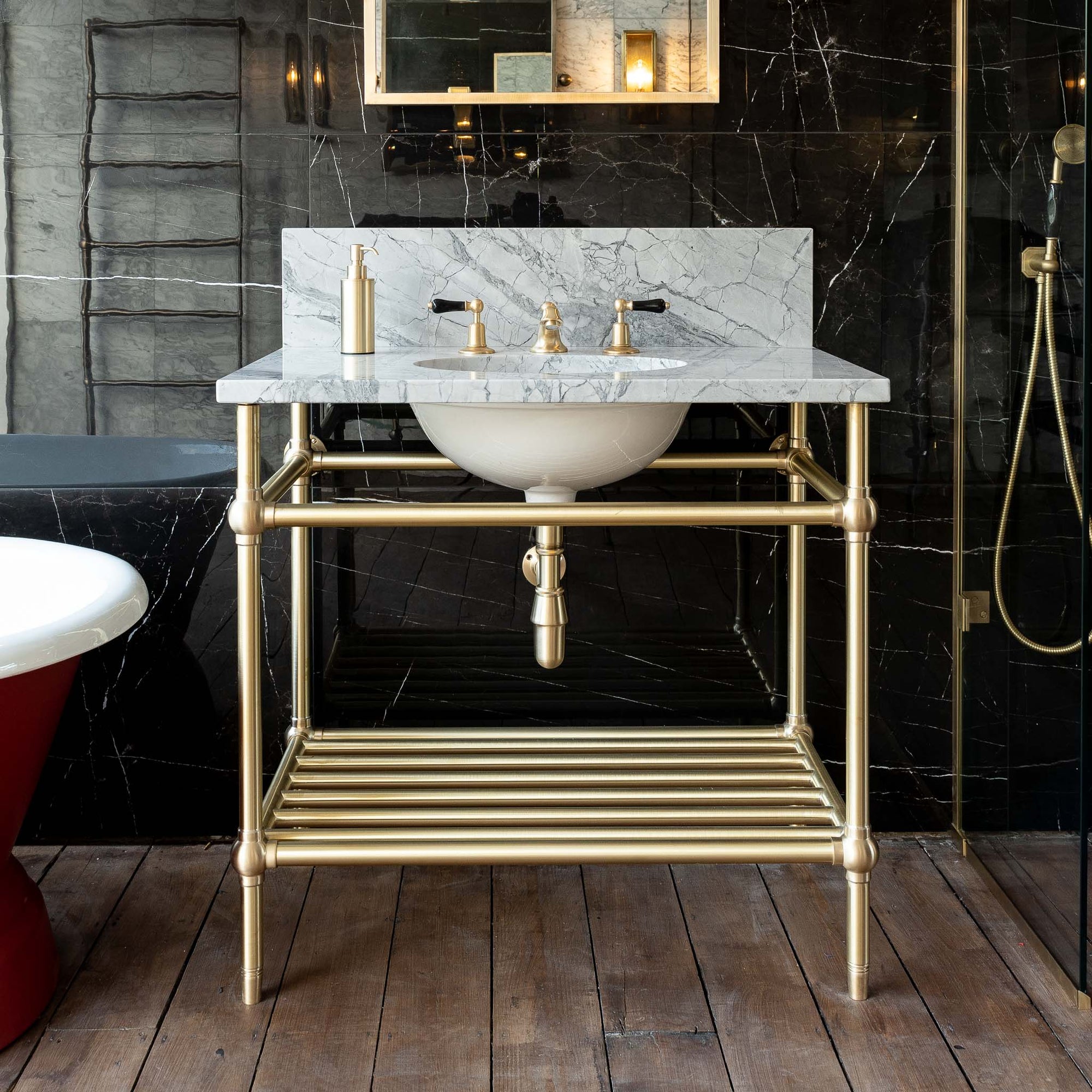
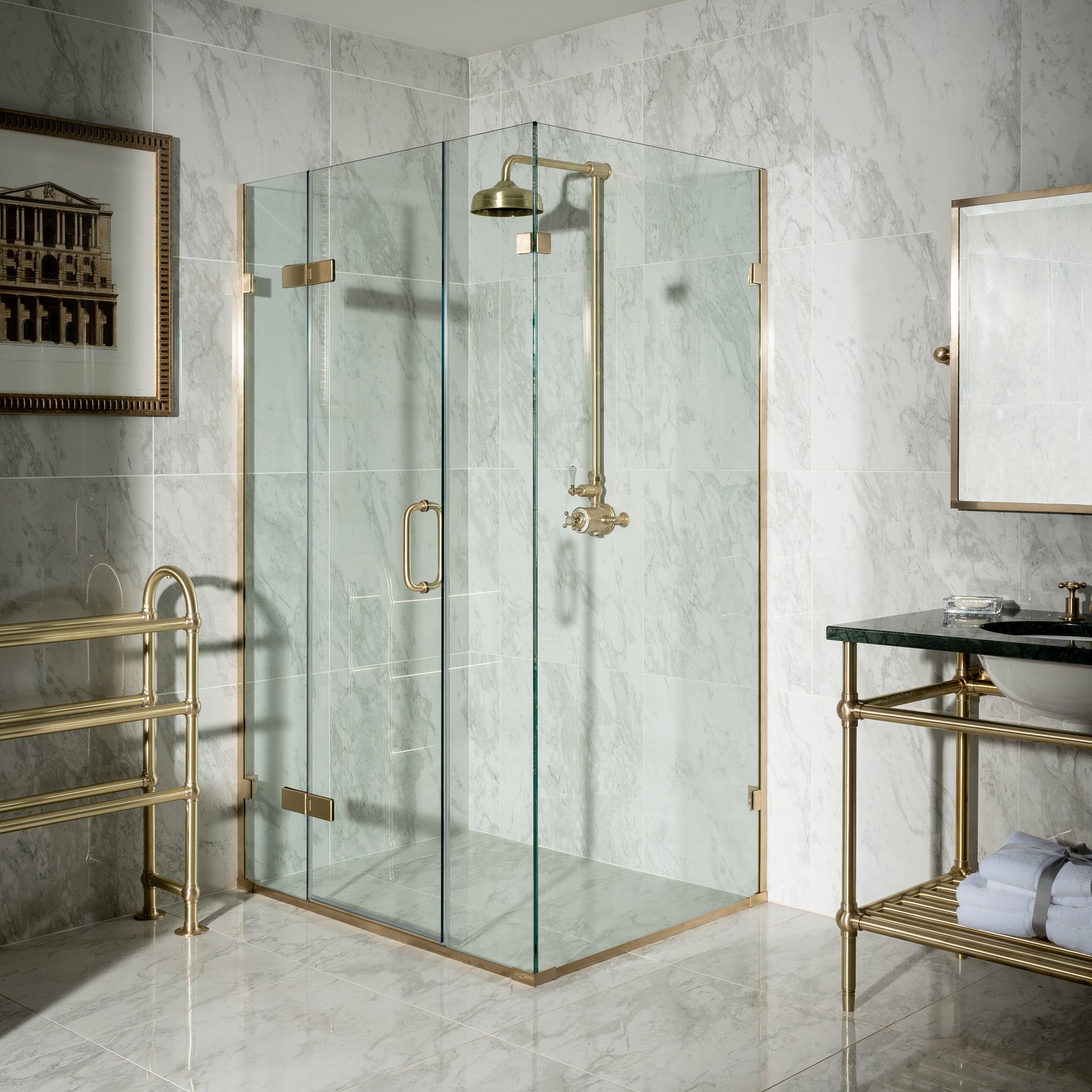
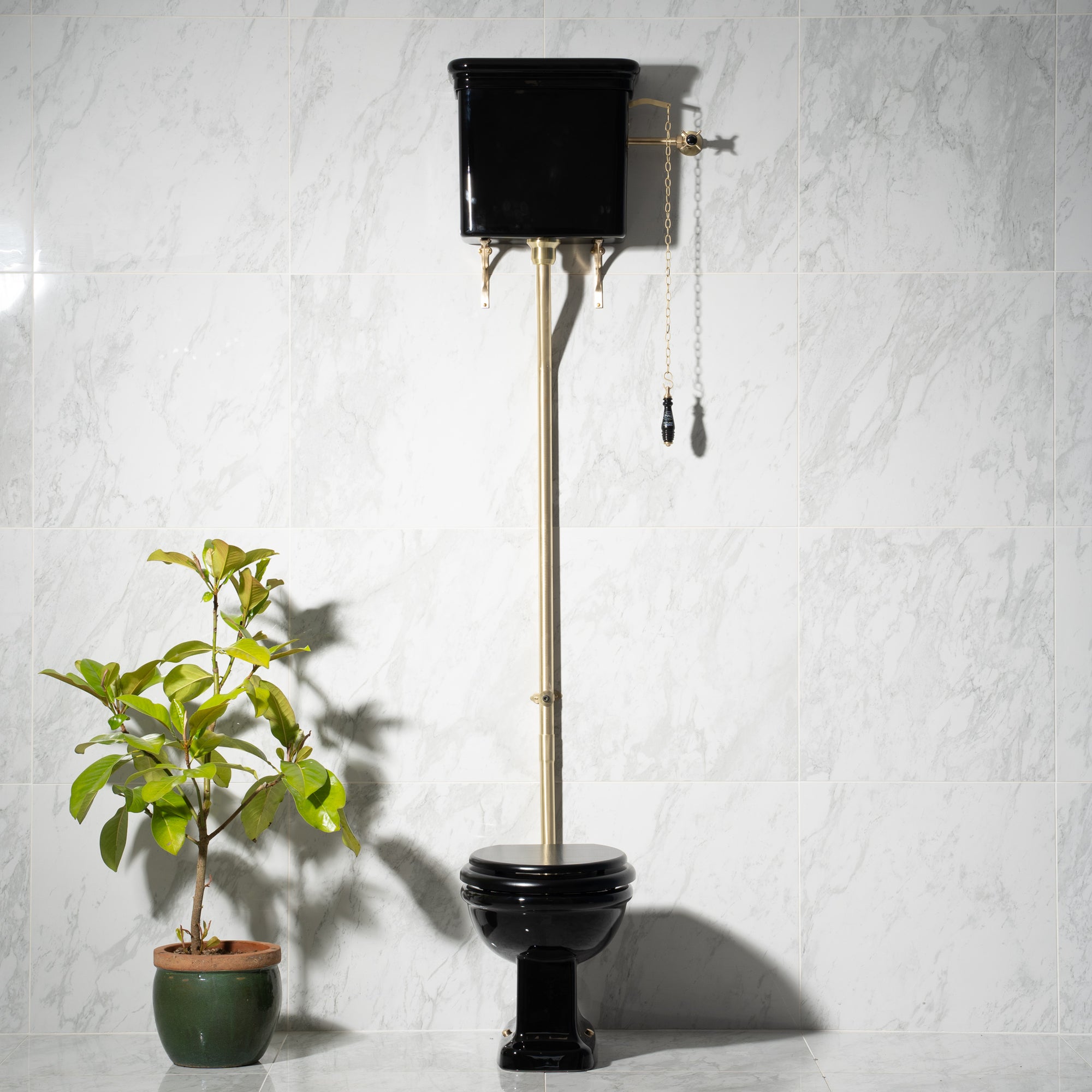
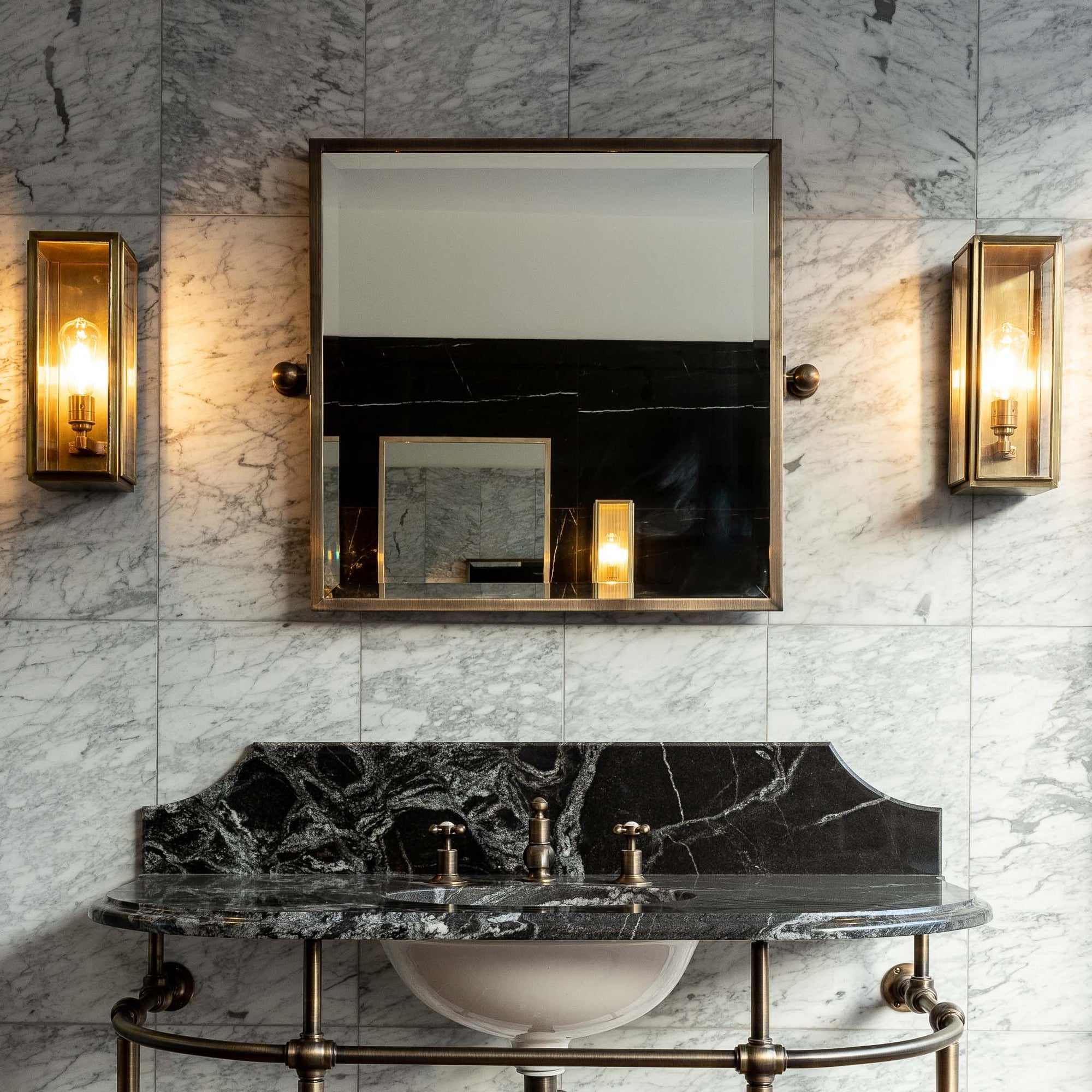
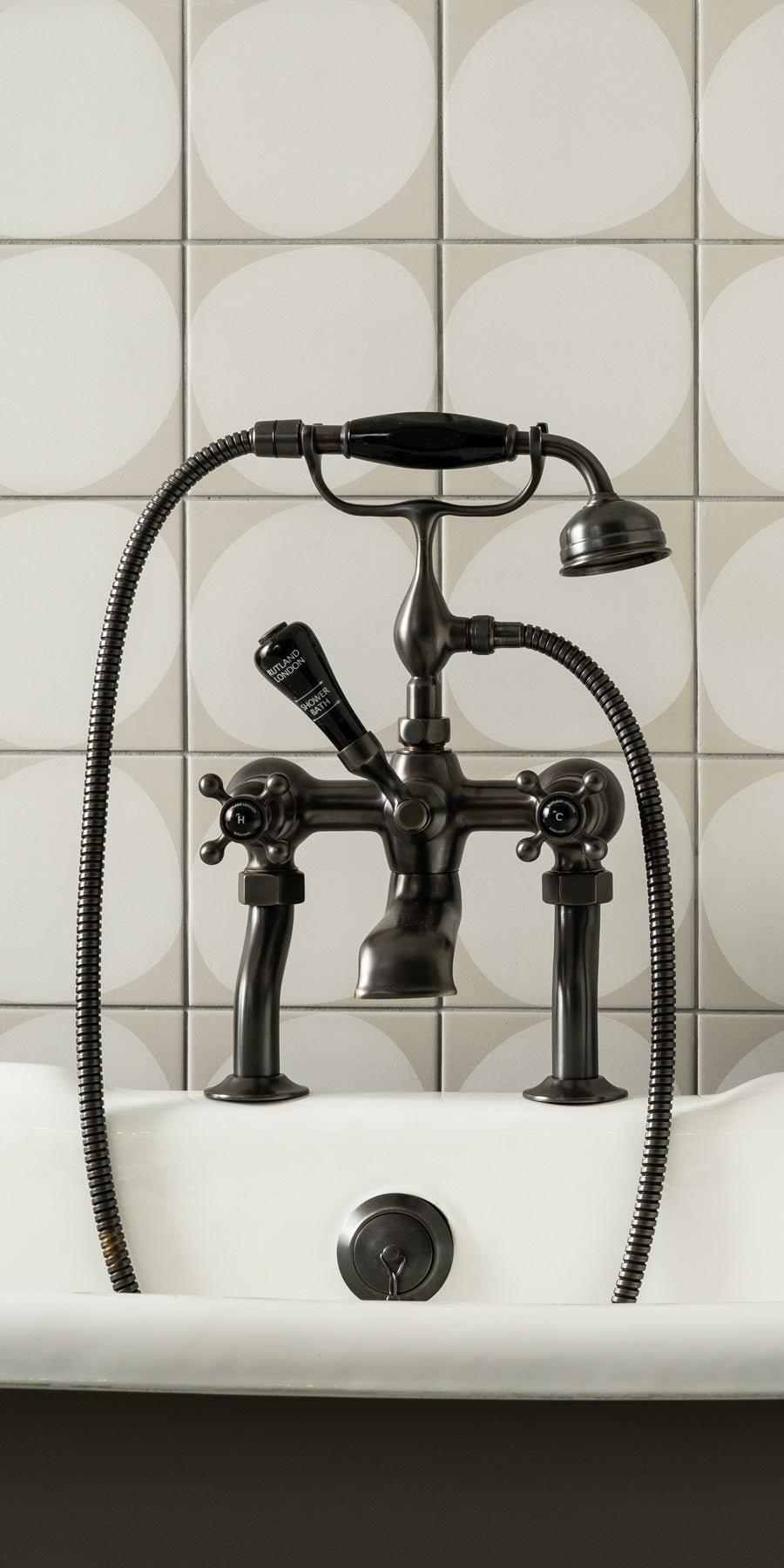
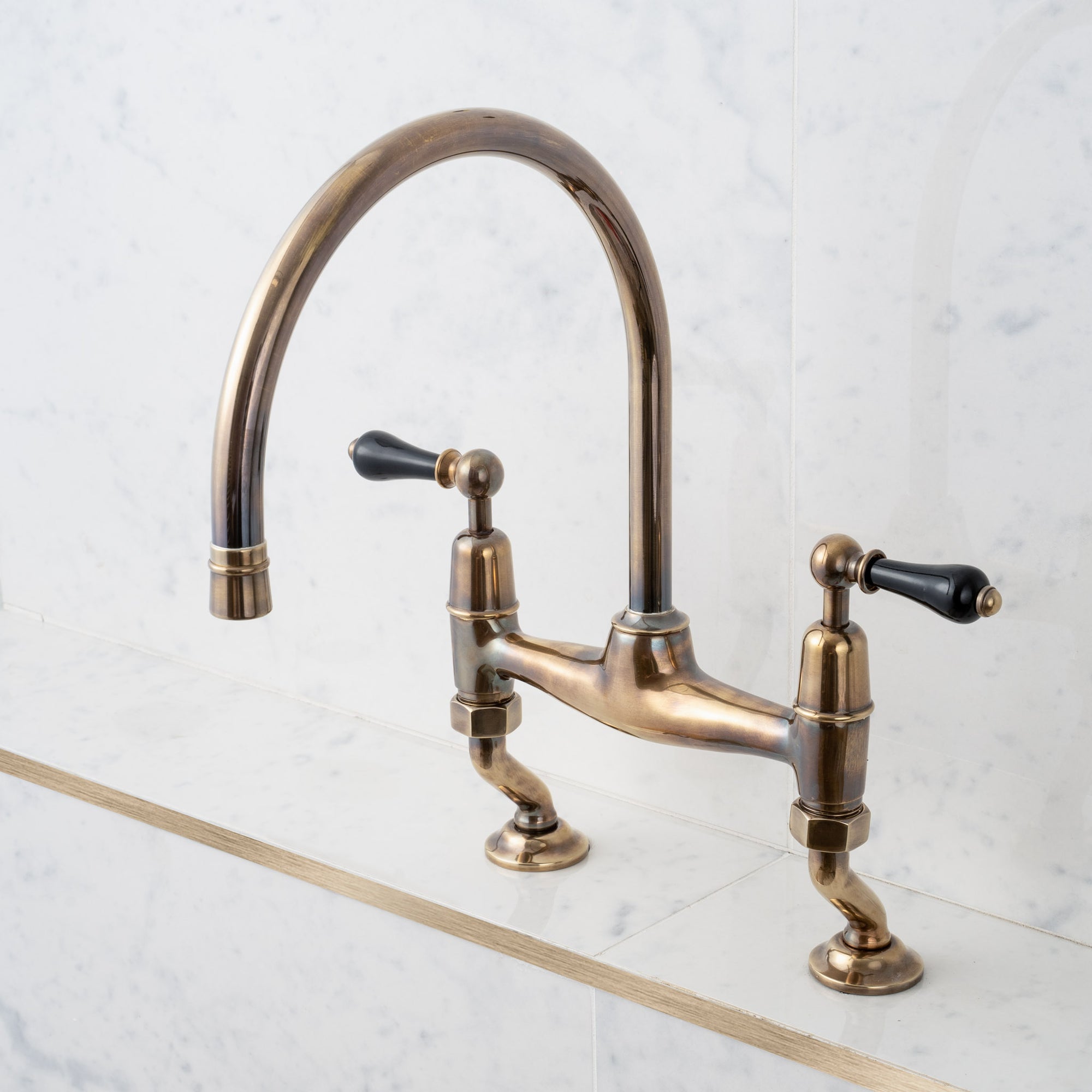
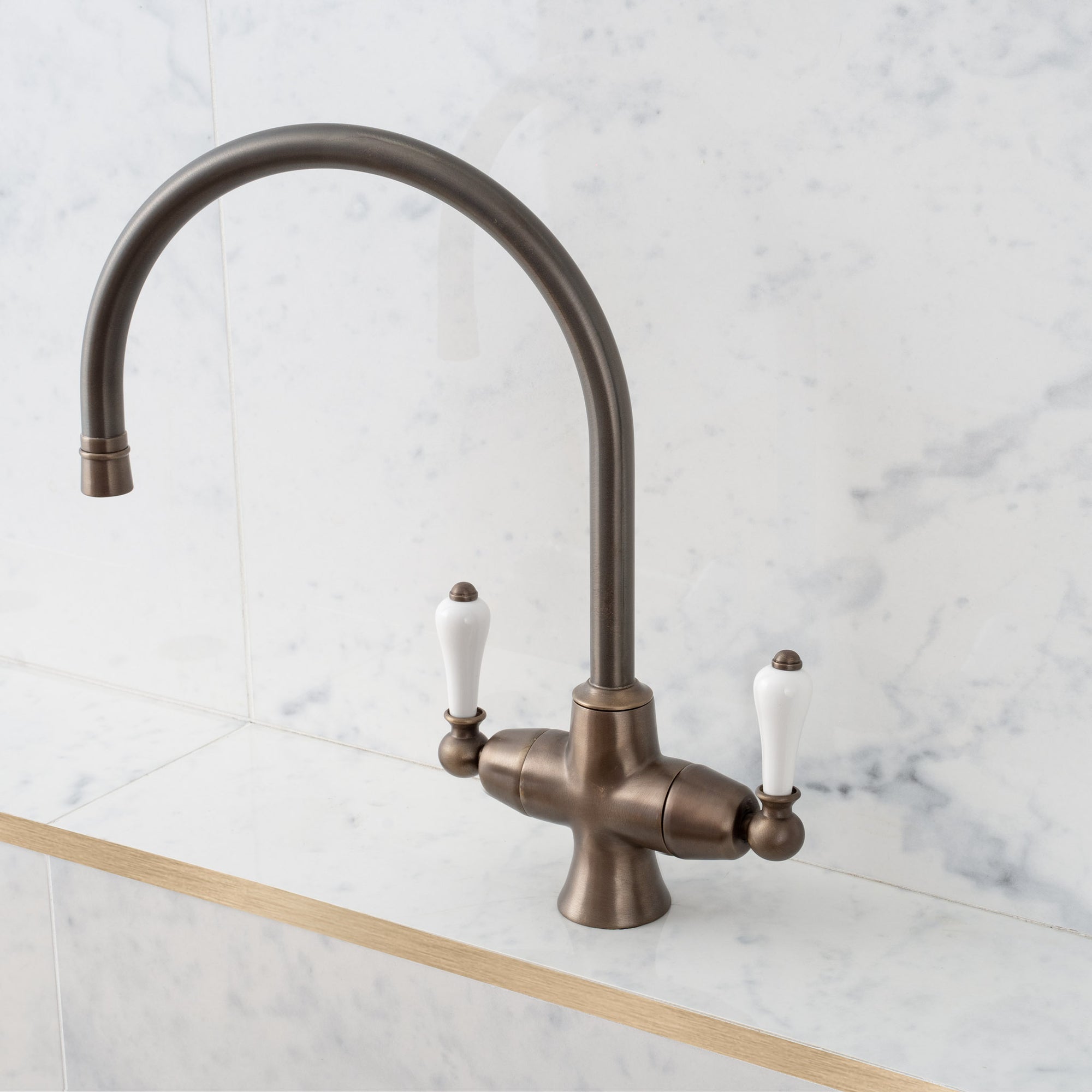
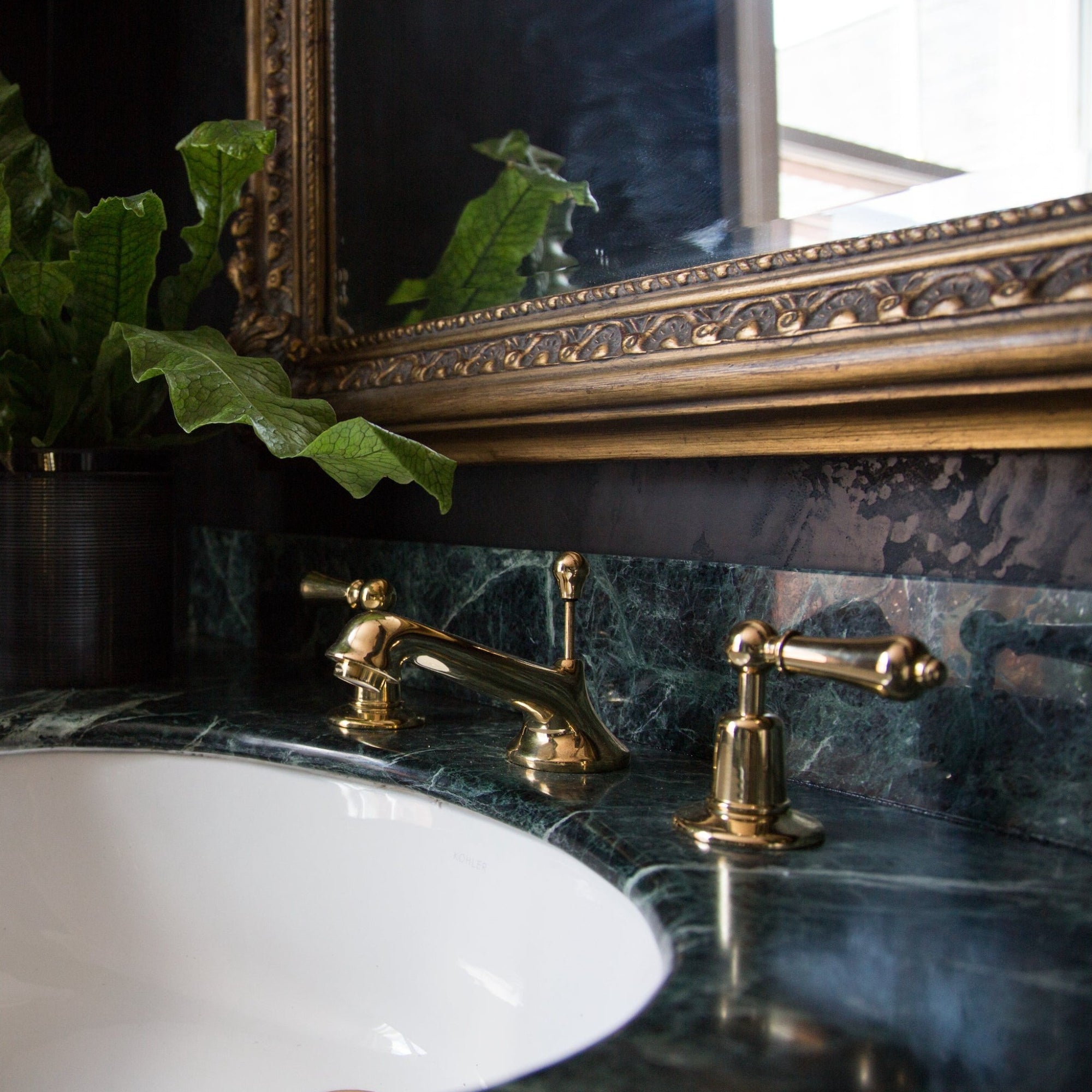
A carefully selected rail can complement taps, shower fittings, vanity stands and mirrors, creating a consistent brassware palette throughout the bathroom.
It should therefore be treated as part of the interior design rather than simply as a heating accessory.
What Makes a Luxury Heated Towel Rail?
There is a considerable difference between a conventional bathroom radiator and a genuinely luxurious heated towel rail.
Materials are important.
Construction is important.
Proportion is important.
And the quality of the finish is particularly important on a product that will be touched and used every day.
Rutland London heated towel rails are handmade to order in our family-owned Hampshire factory using DZR brass tube and hand silver-soldered joints.
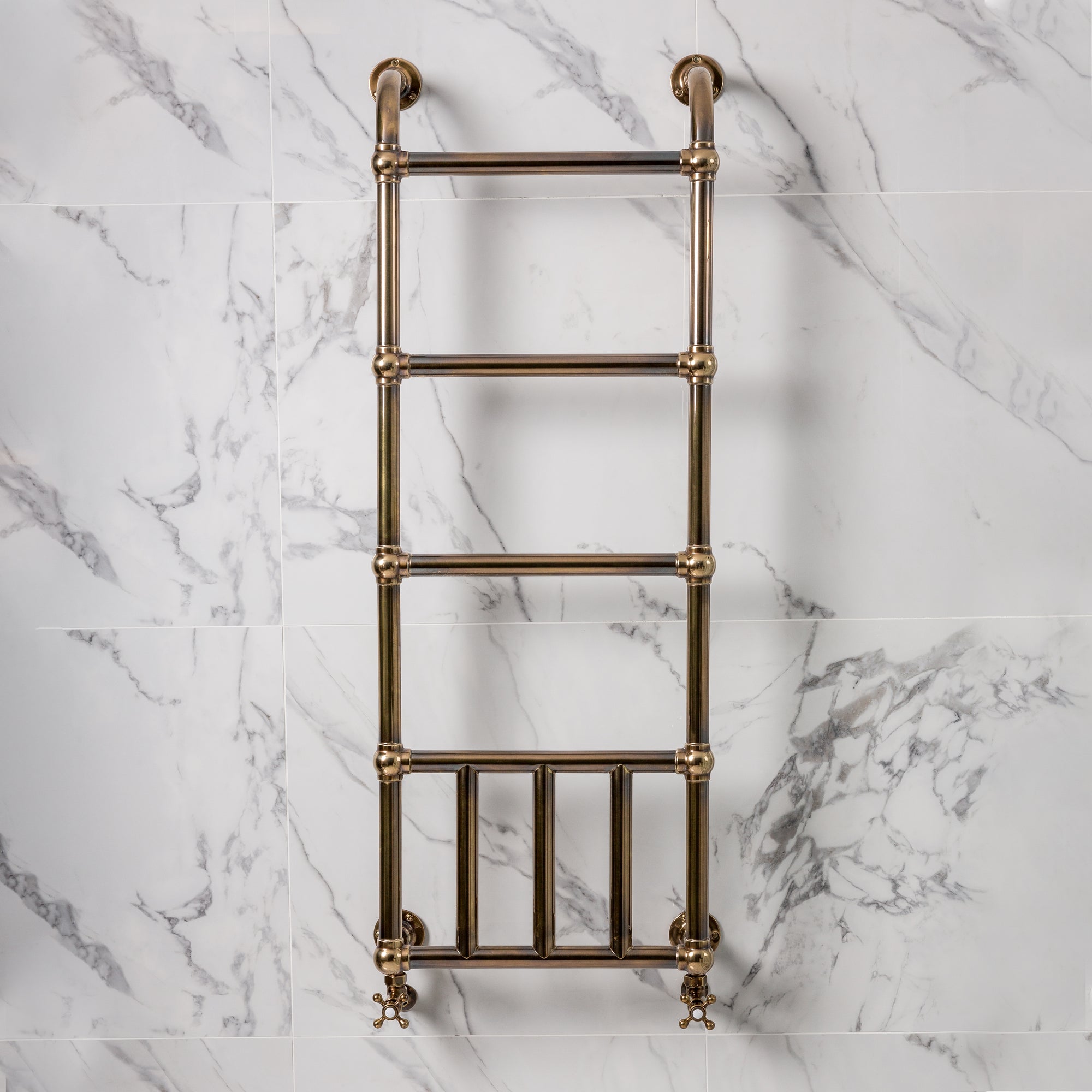
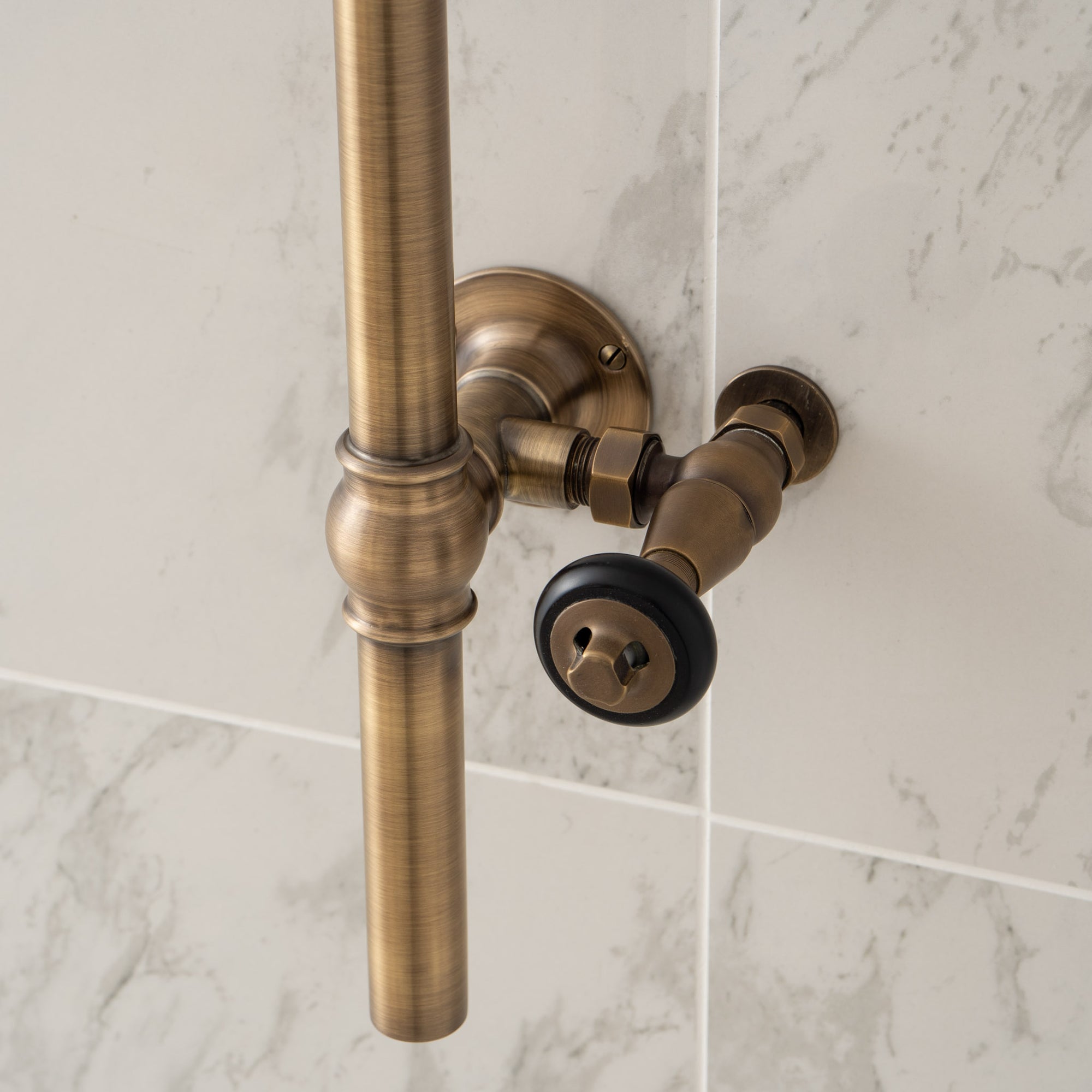
Rather than concealing the construction, many of our designs celebrate it through traditional ball joints, substantial wall and floor plates, exposed valves and carefully proportioned rails.
The result is a functional bathroom fitting that also feels like a permanent piece of architectural metalwork.
Handmade Heated Towel Rails in England
Every Rutland London heated towel rail is handmade to order in England.
This allows us to offer a level of flexibility that is difficult to achieve with mass-produced heating products.
Individual components are manufactured and assembled before the completed rail is carefully prepared and hand finished in our Hampshire workshops.
Depending upon the design, bespoke dimensions can also be considered to suit a particular wall, bathroom layout or existing pipework.
This is especially valuable when working within period properties, where the available space may not correspond with conventional radiator dimensions.
It also allows architects and interior designers to specify a towel rail in proportion to the room rather than choosing the closest available standard size.
Central Heating, Electric or Dual Fuel?
One of the most important decisions when choosing a heated towel rail is how it will be heated.
Across the Rutland London collection, models are available in central heating, electric-only and dual fuel configurations, although the precise options and installation requirements should always be checked for the individual product.
Central Heating Heated Towel Rails
A central heating towel rail is connected to the property's heating system and operates in much the same way as other radiators on the circuit.
For many British homes, this is the most familiar configuration.
It can be particularly appropriate where the bathroom is being completely renovated and suitable pipework can be incorporated into the design from the outset.
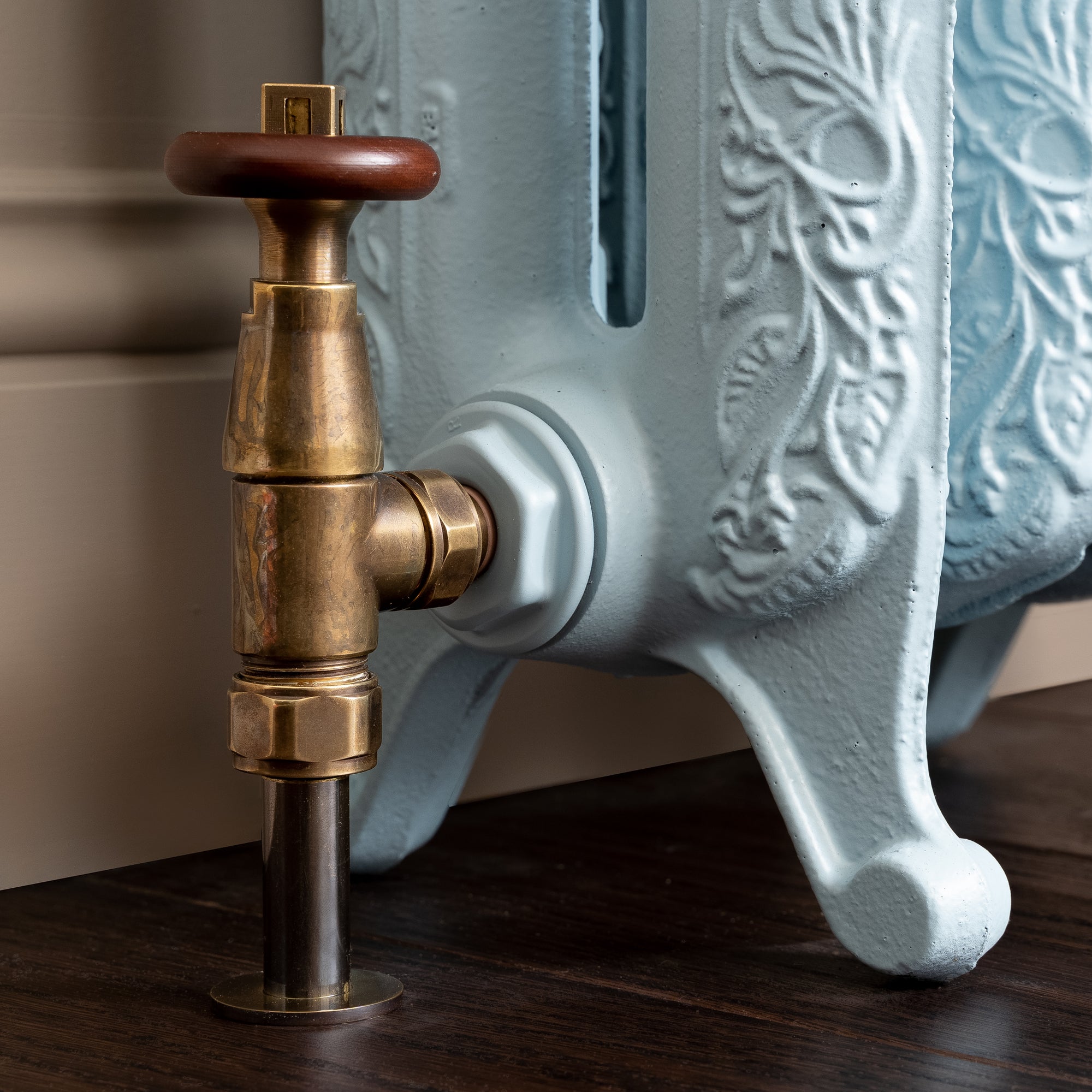
Central heating also allows the valves to become part of the visual composition of the rail, with beautifully finished radiator valves coordinated with the metalwork.
Electric Heated Towel Rails
An electric heated towel rail operates independently from the central heating system.
This can be particularly useful where introducing new heating pipework would be impractical or where the towel rail needs to operate independently from the rest of the house.
Electric-only models can also be useful in bathrooms where underfloor heating already provides the principal room heating and the towel rail is primarily required to warm towels.
Electrical installation should always be undertaken by a suitably qualified professional and in accordance with the requirements applicable to electrical equipment within bathrooms.
Dual Fuel Heated Towel Rails
For many UK bathrooms, dual fuel provides an especially useful combination.
A dual fuel towel rail can operate from the central heating system during colder months while also incorporating an electric heating element.
This allows the rail to be used when the main heating system is switched off.
That can be particularly welcome during spring and summer, when heating the entire house simply to warm bathroom towels would make little sense.
For homeowners seeking year-round use, dual fuel is therefore well worth considering.
Can You Use a Heated Towel Rail in Summer?
Yes, provided the heating configuration allows it.
This is one of the principal reasons electric and dual fuel towel rails are popular.
A central-heating-only rail will ordinarily depend upon the property's heating system being in operation. An electric rail operates independently, while a dual fuel model can use its electrical element when the central heating is switched off.
For a primary bathroom used throughout the year, the ability to warm towels on a cool summer morning can make dual fuel particularly attractive.
Wall-Mounted vs Floor-Mounted Heated Towel Rails
The mounting configuration has a significant effect upon both the appearance of a heated towel rail and the way it occupies the room.
Wall-Mounted Heated Towel Rails
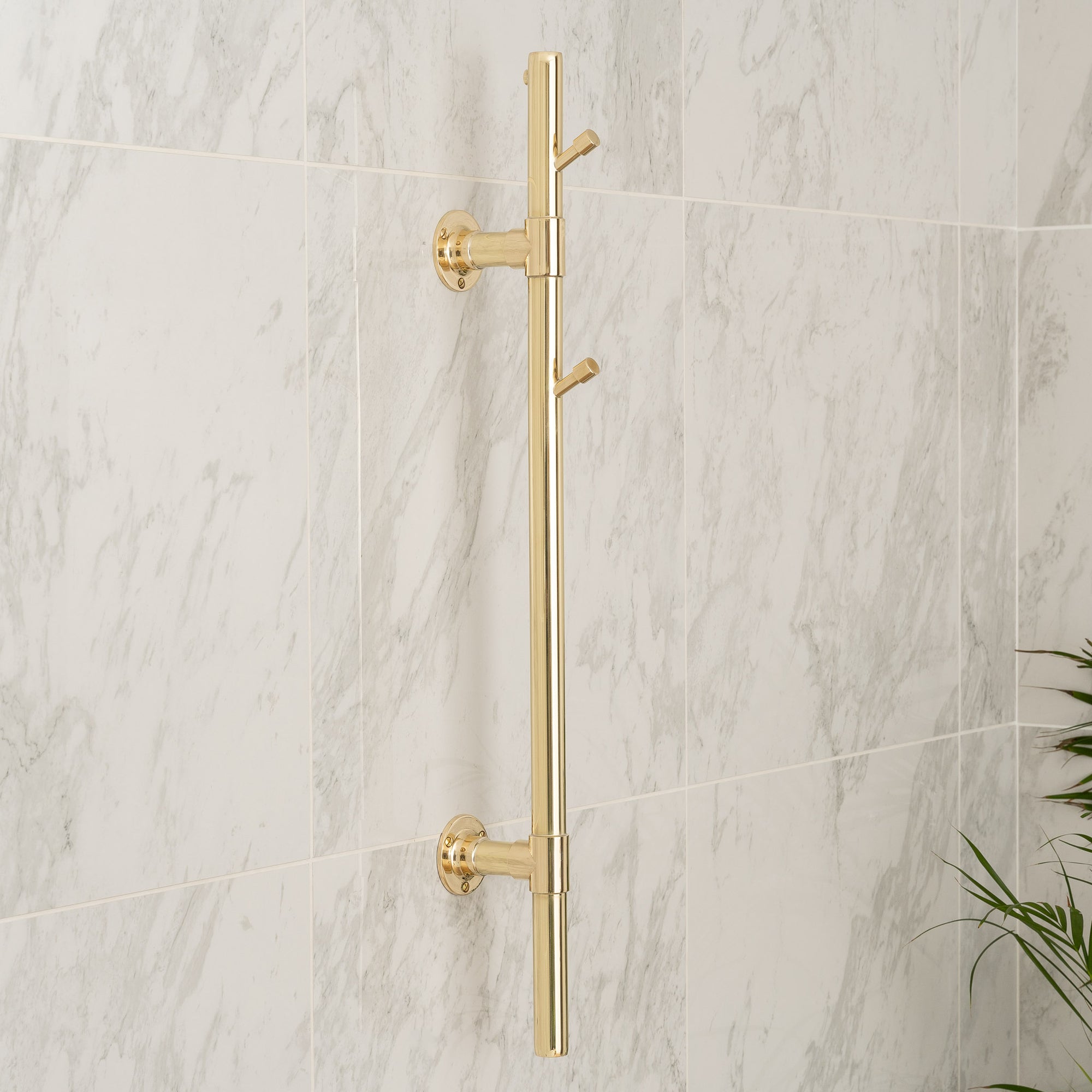
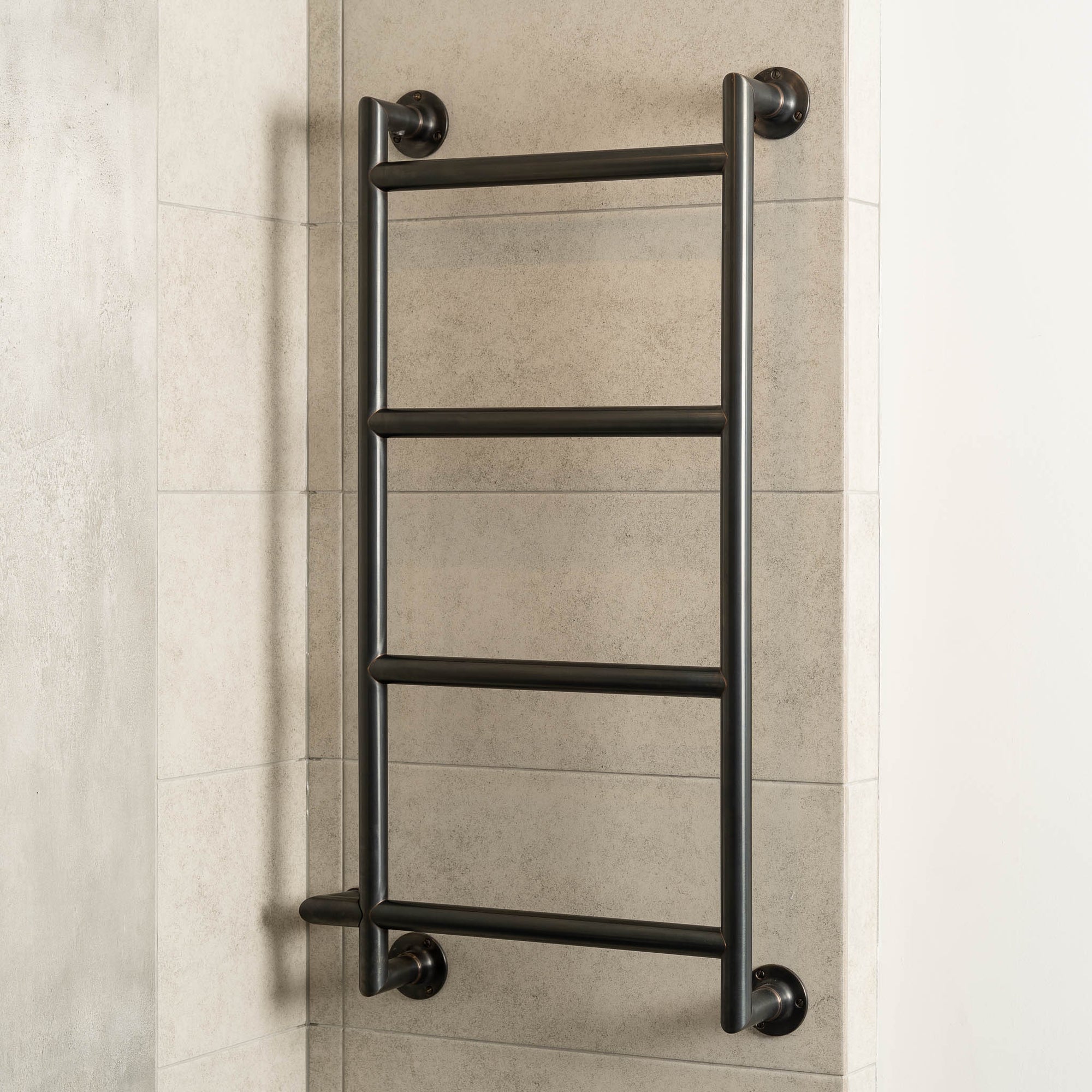
Wall-mounted heated towel rails provide an elegant solution where floor space is limited or a lighter visual appearance is desired.
Because the rail is supported from the wall, the floor remains visually uninterrupted beneath it.
This can be particularly useful within compact bathrooms, ensuites and cloakrooms, or where beautiful flooring should remain as visible as possible.
Wall-mounted designs also offer considerable flexibility over positioning, provided appropriate structural support and heating connections can be accommodated.
Floor-Mounted Heated Towel Rails
Floor-mounted heated towel rails have a very different presence.
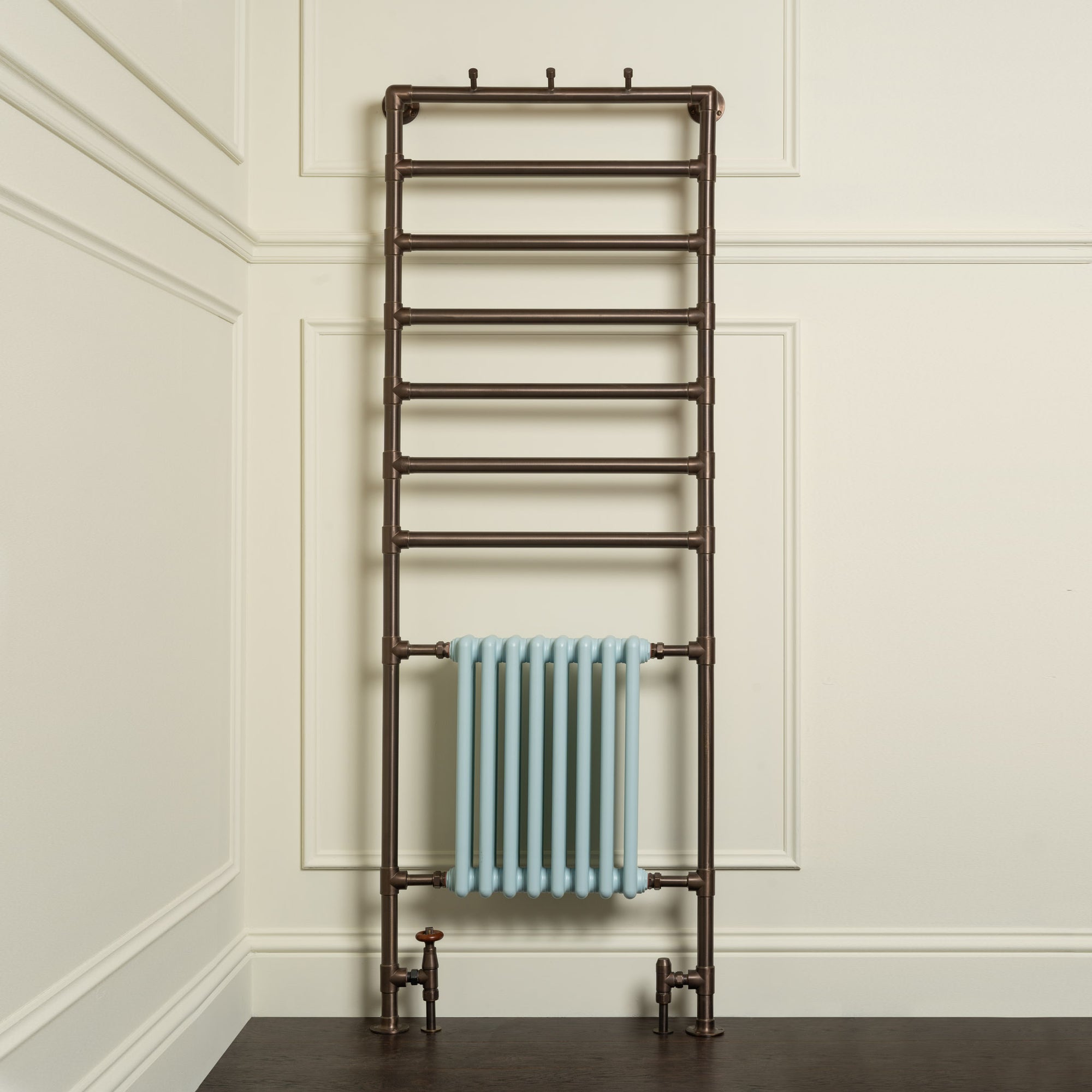
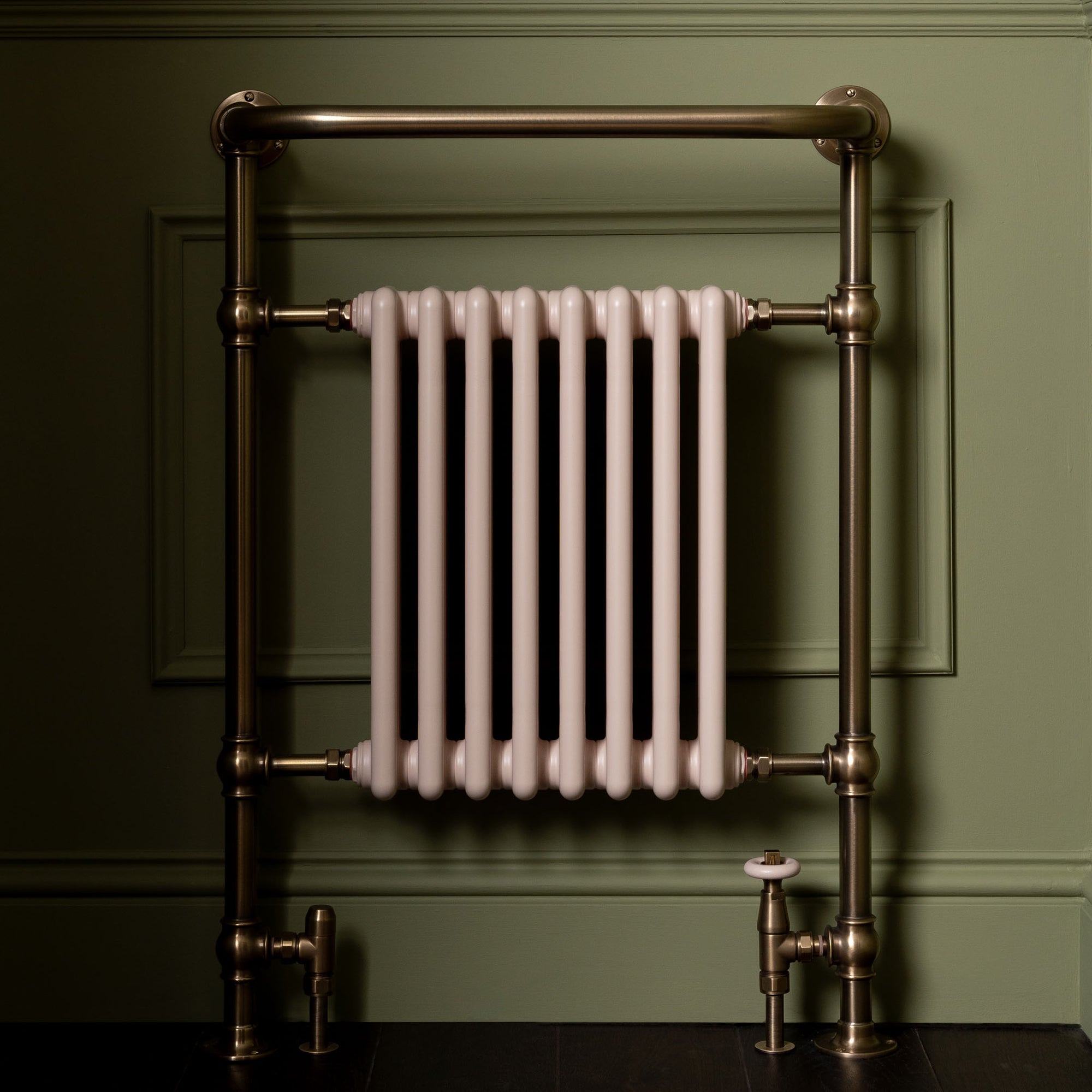
The vertical legs extend to the floor, creating a more substantial and furniture-like piece of bathroom metalwork.
Within traditional bathrooms and larger spaces, this can give the rail a sense of permanence and architectural importance.
Floor-mounted models can be particularly striking beside a freestanding bath, against marble wall panelling or positioned on an otherwise unused section of wall.
Traditional Heated Towel Rails
The traditional heated towel rail is an enduring feature of the English bathroom.
Exposed brass tubing, substantial joints, crosshead valves and beautifully proportioned horizontal rails create a design language that works naturally within Georgian, Victorian and Edwardian-inspired interiors.
Yet traditional does not have to mean old-fashioned.
A beautifully engineered brass towel rail can provide warmth and character within a contemporary bathroom, particularly when paired with restrained marble, modern lighting or simple sanitaryware.
Our traditional heated towel rail collection includes designs ranging from relatively restrained wall-mounted rails to substantial floor-mounted models incorporating radiator inserts.
Contemporary Heated Towel Rails
For more streamlined interiors, a contemporary towel rail can provide the same craftsmanship with simpler detailing.
Clean junctions, restrained proportions and reduced ornamentation allow the metalwork to sit comfortably within modern and transitional bathrooms.
Finish choice can also significantly change the character of a contemporary design.
Polished Nickel can create a crisp and refined appearance, while Brushed Brass or Bronze can introduce warmth against pale stone and plaster.
This versatility is why we recommend considering the shape and finish of a towel rail together rather than viewing style as a choice between simply "traditional" and "modern".
Heated Towel Rails with Radiator Inserts
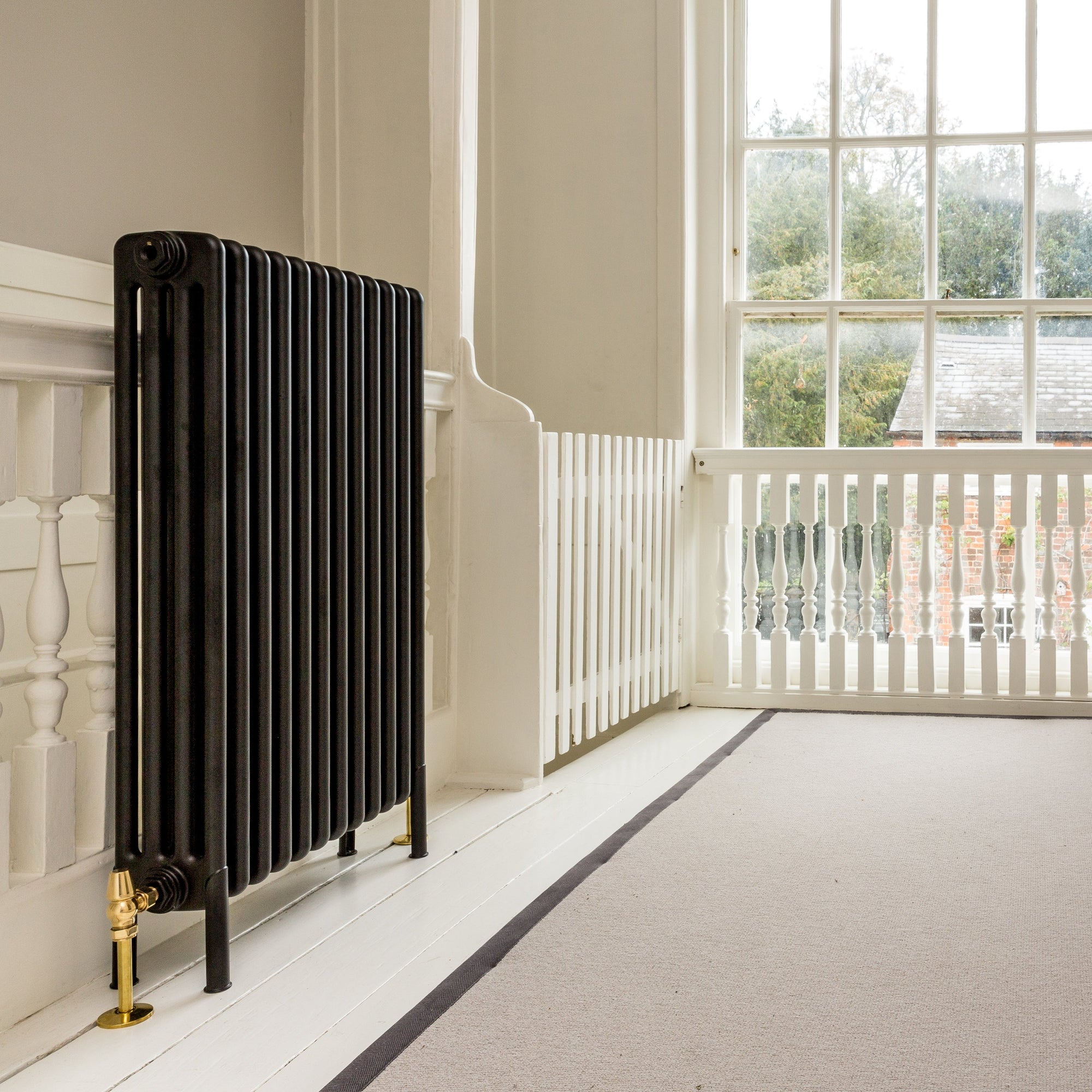
For bathrooms requiring greater heat output, a heated towel rail incorporating a radiator insert can provide an elegant solution.
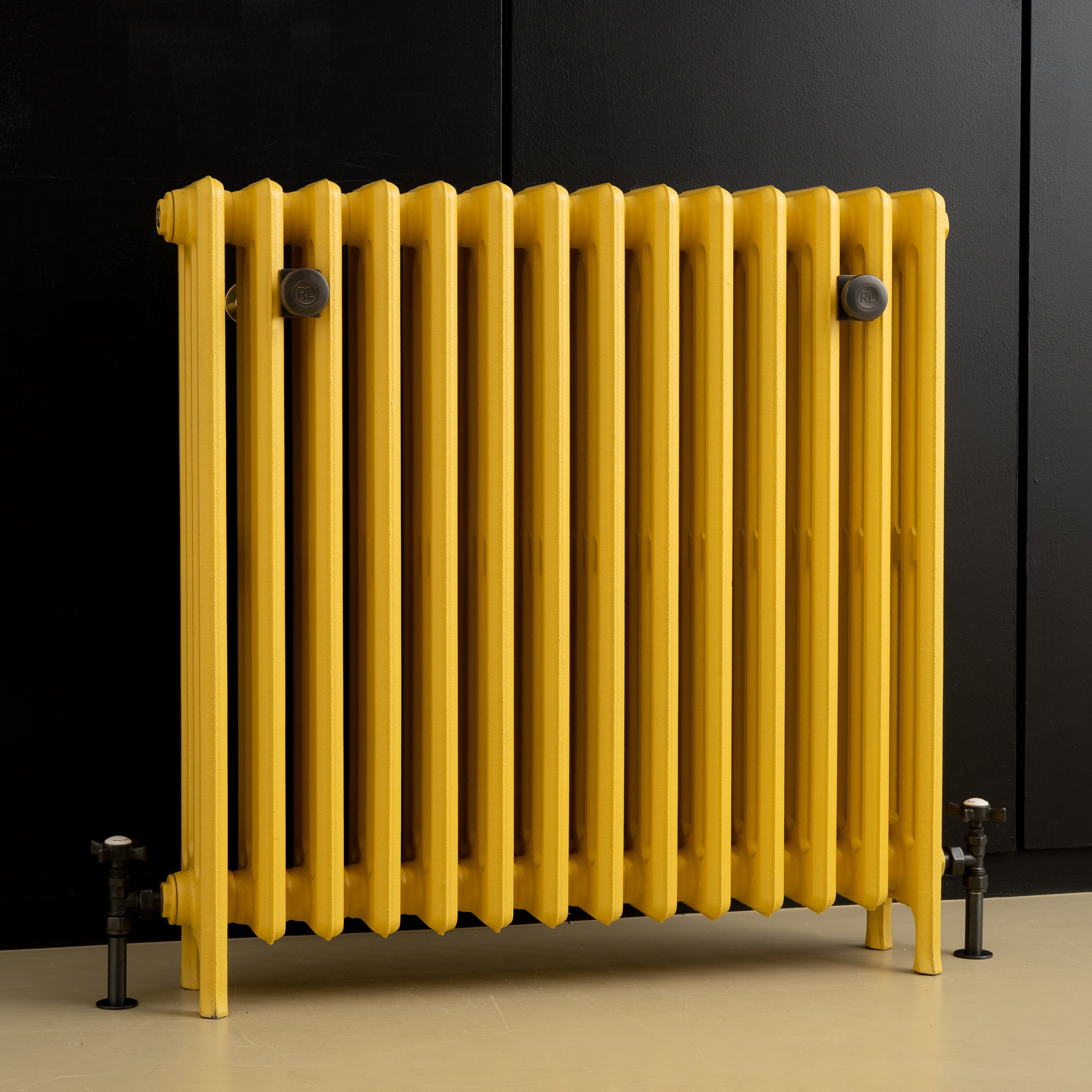
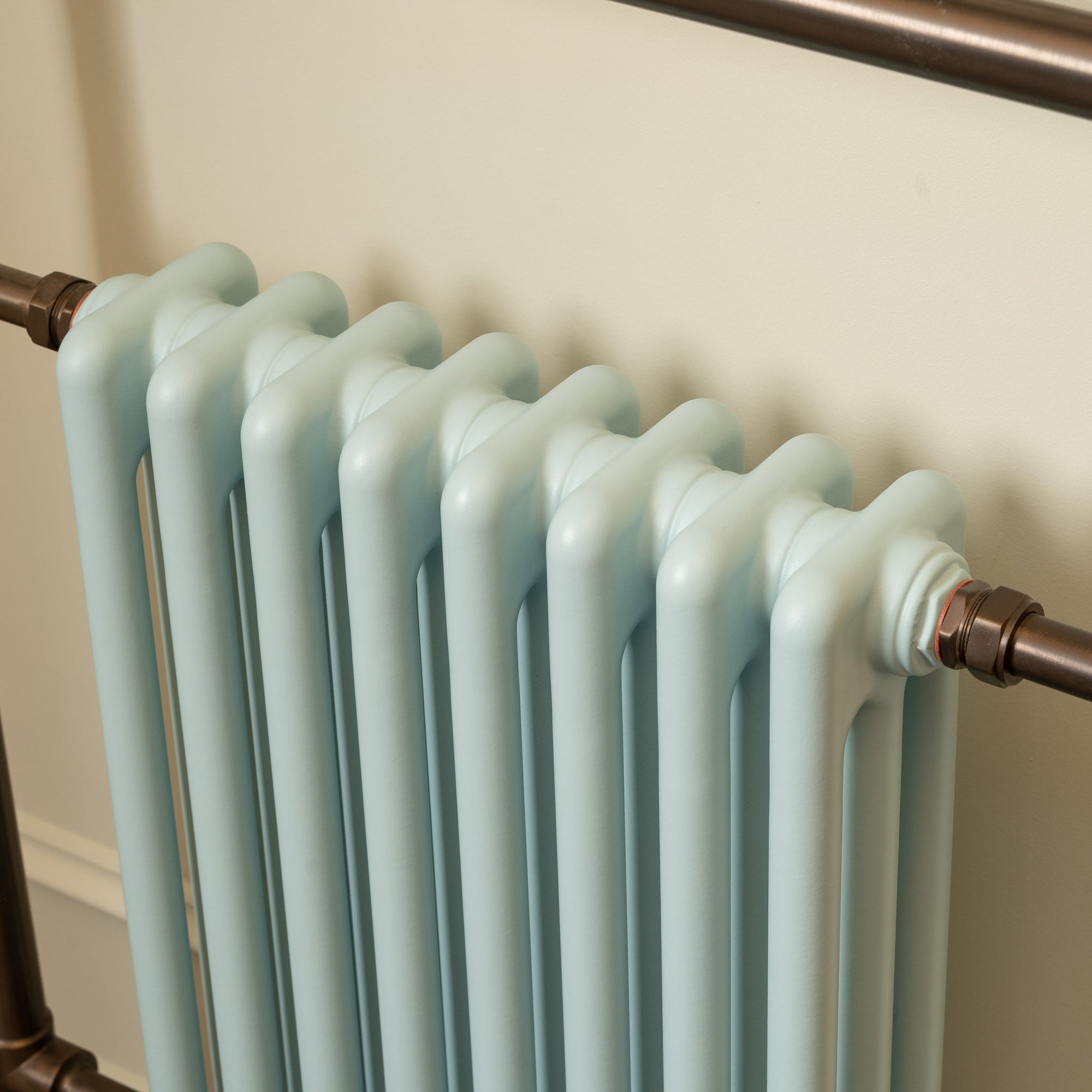
These designs combine the practical horizontal rails used for warming towels with a column or cast iron radiator positioned within the frame.
The radiator becomes part of the design rather than a separate heating appliance elsewhere in the room.
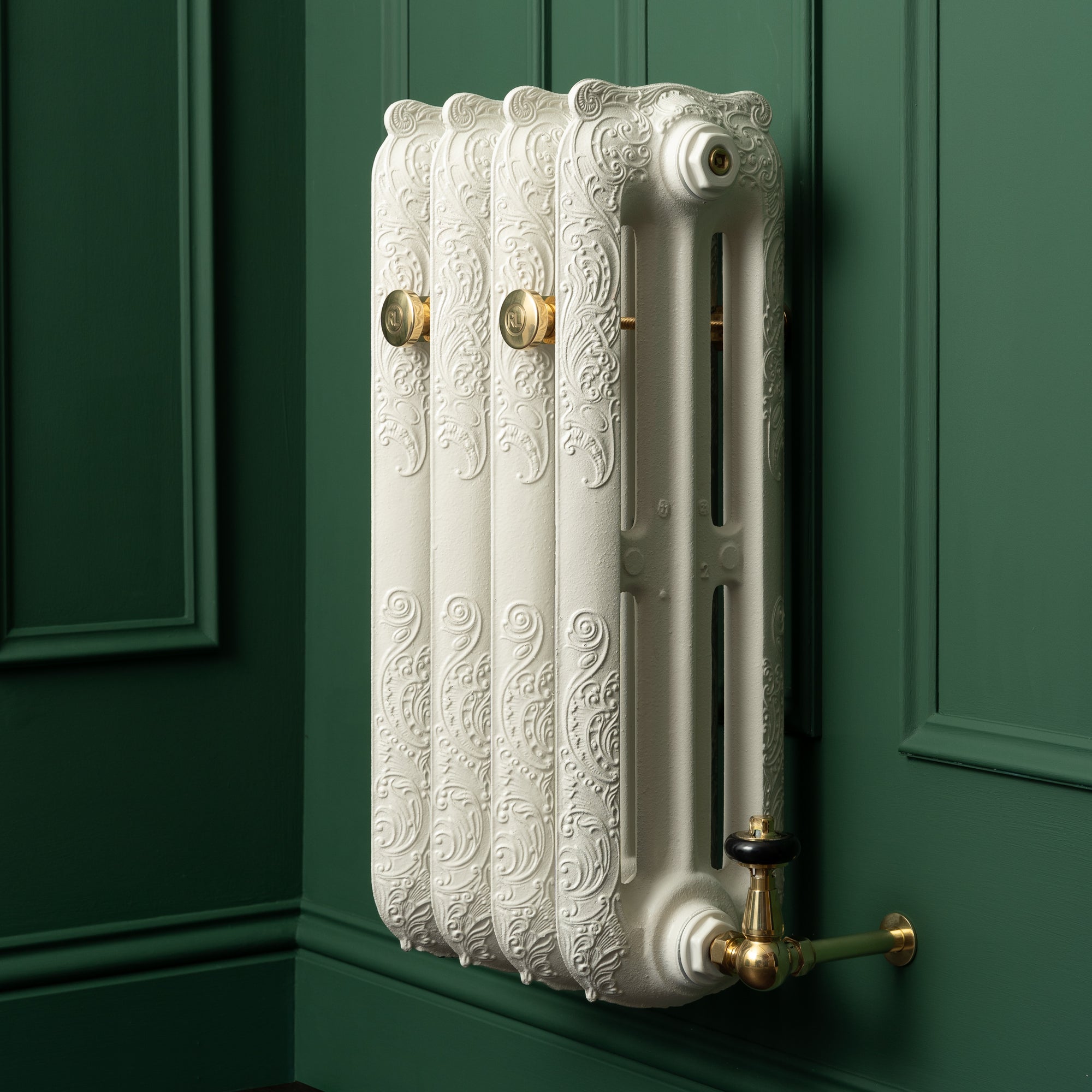
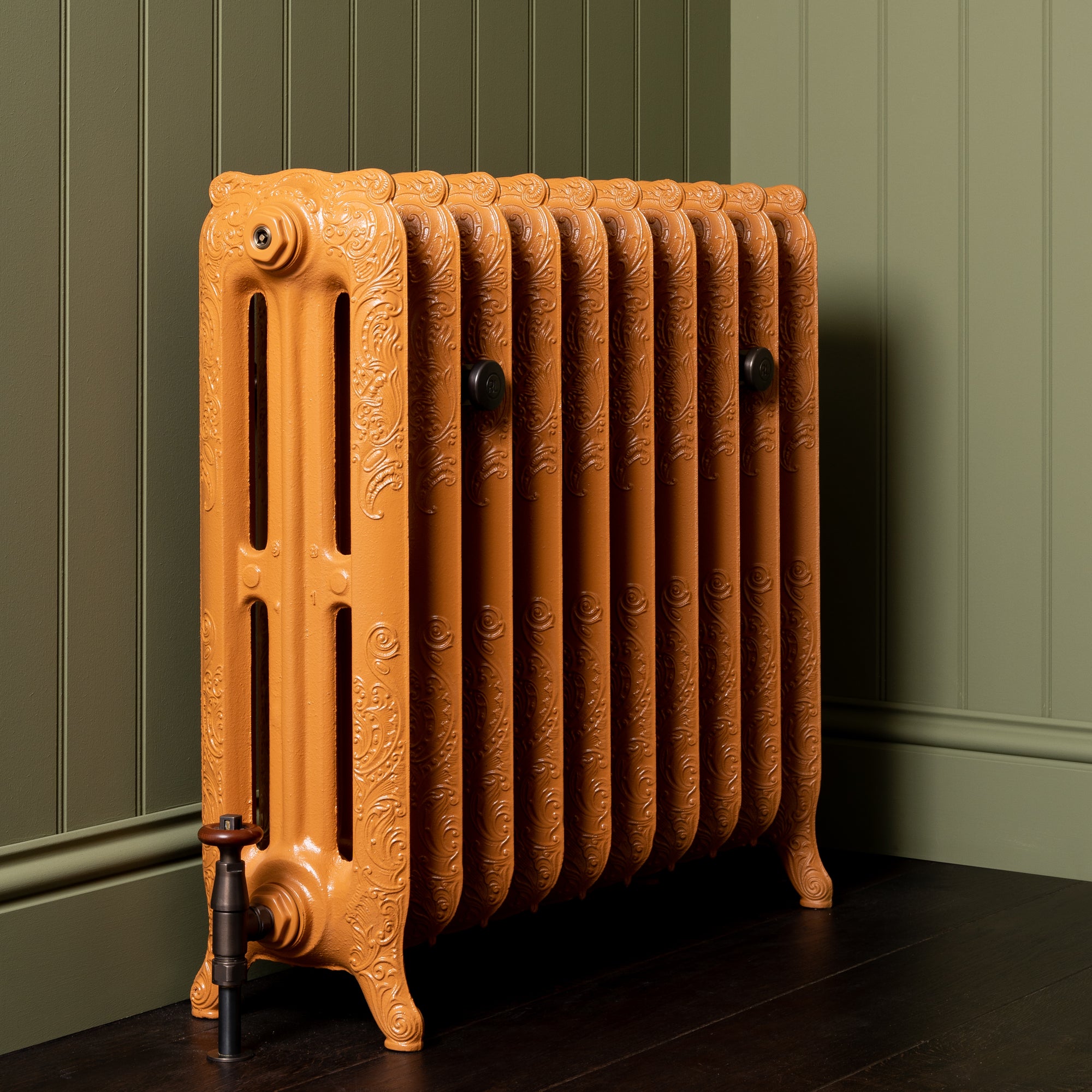
Models such as the Capstan Heated Towel Rail combine handcrafted brass tubing with an Italian column radiator, creating a substantial traditional heating feature.
For a more imposing interpretation, the Hurlingham Heated Towel Rail incorporates a cast iron radiator within a freestanding brass frame.
Radiator-insert models have different system requirements from some simpler brass rails. In particular, selected models must only be installed on a suitable closed-circuit system and cannot be connected to a domestic hot-water circuit.
For this reason, the technical requirements of the individual model should always be reviewed with the heating engineer before specification.
Does a Heated Towel Rail Heat the Bathroom?
It depends upon the design and heat output.
The primary purpose of many heated towel rails is to provide warm rails for towels rather than to act as the sole source of room heating.
However, models incorporating column or cast iron radiator inserts can provide considerably greater heat output.
Room size, insulation, glazing, external walls and other heat losses all affect the amount of heating required, so the appropriate output should be established for the individual space.
Where room heating is an important requirement, heat output should be considered alongside aesthetics rather than simply selecting a towel rail by its external dimensions.

Choosing the Right Size Heated Towel Rail
There is no single correct size for a heated towel rail.
The right dimensions depend upon the available space, number and size of towels, desired visual proportions and required heat output.
A small ensuite may benefit from a narrow wall-mounted design, while a large family bathroom may require a taller rail with numerous horizontal bars.
Equally, a large primary bathroom can accommodate a substantial floor-mounted design that becomes a feature in its own right.
When considering dimensions, think about:
- The width and height of the available wall
- The number of towels regularly used
- The size of those towels
- Clearance from baths, vanities and doors
- Existing or proposed pipe centres
- Electrical connection requirements where applicable
- Required heat output
- The proportions of the wider room
It is usually better to consider these factors together than to select a rail based solely upon the available wall width.
Bespoke Heated Towel Rails
Standard dimensions do not suit every bathroom.
This is particularly true within period properties, where existing pipework and architectural features can make conventional sizes difficult to accommodate.
Rutland London regularly manufactures bespoke heated towel rails for individual projects.
Depending upon the model and technical requirements, bespoke requests can include changes to width, height and overall proportions.
This allows a rail to respond more naturally to the architecture of the bathroom.
A narrow section of wall may require a taller, slimmer design.
A large bathroom might benefit from a wider rail capable of accommodating several bath sheets.
A renovation may require dimensions that work around existing pipework.
Rather than compromising the room around a standard product, bespoke manufacture allows the product to be considered around the room.
Heated Towel Rails for Period Properties
Period properties present some of the most interesting challenges when specifying bathroom heating.
Walls may be unusually narrow or wide. Existing pipe centres may be difficult to move. Architectural panelling, skirting, windows and sanitaryware can all restrict the available positions.
At the same time, the towel rail needs to feel appropriate to the character of the property.
A handmade brass rail can be particularly effective because its construction and materials complement the permanence associated with traditional architecture.
Bespoke dimensions can then help resolve the practical constraints without introducing a product that feels visually compromised.
This makes made-to-measure towel rails particularly relevant to renovations of London townhouses, country houses and other historic British properties.
Choosing a Brassware Finish
The finish of a heated towel rail can completely change its character.
Rutland London offers an extensive collection of brassware finishes across variations of Brass, Bronze, Nickel, Copper and Gold, allowing the towel rail to coordinate with the wider bathroom scheme.
Polished Unlacquered Brass
Polished Unlacquered Brass begins bright and reflective before gradually developing a natural patina.
Its evolving surface makes it particularly suitable for interiors where materials are intended to acquire character over time.
Brushed Brass
Brushed Brass offers a softer and more understated interpretation, with a satin-like surface that works beautifully alongside natural marble, painted timber and traditional sanitaryware.
Antique and Aged Brass
Antique and Aged Brass finishes introduce greater depth from the outset.
They can be especially effective in period properties or bathrooms where the designer wants new fittings to sit naturally alongside established architectural materials.
Nickel
Nickel provides a cooler alternative to brass.
Polished Nickel offers brightness and refinement, while brushed or satin variations create a quieter appearance.
Bronze
Bronze finishes introduce greater contrast and depth, particularly against pale marble, limestone and ceramic surfaces.
They can also provide a useful visual link to darker door furniture, lighting and other architectural details.
Should Bathroom Brassware Finishes Match?
They do not necessarily need to be identical, but they should feel considered together.
A heated towel rail occupies enough visual space for its finish to influence the wider bathroom.
For a highly coordinated scheme, the towel rail can be specified in the same finish as the taps, shower controls, shower enclosure, vanity stand and mirror.
Alternatively, complementary finishes can be deliberately layered where the wider interior supports a more eclectic approach.
What should generally be avoided is an accidental near-match, where two finishes appear as though they were intended to be identical but are visibly different.
Using products from a coordinated brassware collection can make this considerably easier.
Living Finishes and Patina
Many traditional brassware finishes are living finishes.
This means their appearance naturally changes over time as the surface responds to moisture, handling, cleaning and the surrounding environment.
Brass, Bronze, Nickel and Copper finishes can all develop individual character through this process.
For many designers and homeowners, patination is an important part of specifying genuine metal finishes.
Rather than remaining permanently uniform, the towel rail evolves as part of the bathroom.
The rate and appearance of this ageing will vary depending upon the selected finish and environment, so finish samples are particularly useful where the eventual character of the metal is an important design consideration.
Valves Are Part of the Design
Radiator valves are sometimes considered purely as plumbing components.
On a beautifully made heated towel rail, they should be treated as part of the design.
The style, proportions and finish of the valves can either complement or distract from the rail itself.
Traditional crosshead valves can reinforce the character of a classically inspired design, while more restrained valves may suit contemporary installations.
The orientation of the pipework should also be considered early enough to ensure the correct valve configuration can be selected.
Where valves remain visible, coordinating their finish with the towel rail creates a much more resolved installation.
Planning Pipework for a Heated Towel Rail
Pipework should ideally be considered before final wall and floor finishes are completed.
This is particularly important where a floor-mounted rail is being installed against marble, stone or decorative wall panelling.
Accurate positioning allows pipework to align neatly with the valves and prevents unnecessary compromises once expensive finishes have been installed.
If renovating an existing bathroom, establishing the existing pipe centres early can also help determine whether a standard rail will work or whether a bespoke size would provide a cleaner solution.
The same principle applies to electric and dual fuel models, where the position of the electrical connection should be coordinated with the rail and surrounding finishes.
Choosing a Heated Towel Rail for a Small Bathroom
A small bathroom does not mean sacrificing a heated towel rail.
Wall-mounted designs can make excellent use of vertical space without occupying valuable floor area.
Taller, narrower proportions may allow several towels to be accommodated on a relatively limited section of wall.
Careful positioning can also make use of areas that would otherwise provide little practical function, such as the wall beside a bath or between other bathroom fittings.
Because bespoke dimensions are available across selected Rutland London designs, a rail can also be adapted where a conventional width would be unsuitable.
Choosing a Heated Towel Rail for a Large Bathroom
In a large bathroom, the challenge is often the opposite.
A small conventional towel rail can look lost against expansive walls and substantial sanitaryware.
A taller or wider floor-mounted design can provide more appropriate visual scale while offering greater capacity for bath sheets and towels.
Models incorporating column or cast iron radiator inserts can also become significant architectural features while contributing useful room heating.
Within a large primary bathroom, the towel rail should therefore be selected in proportion to the architecture rather than treated as a small accessory.
Frequently Asked Questions About Heated Towel Rails
Are Rutland London heated towel rails made in England?
Yes. Rutland London heated towel rails are handmade to order in our family-owned factory in Hampshire, England.
Can a heated towel rail run from central heating?
Yes. Central heating configurations are available across the Rutland London collection. The individual product specification and heating-system requirements should always be checked before installation.
Can a heated towel rail be electric only?
Yes. Electric-only configurations are available across the collection, providing a useful solution where connection to a central heating circuit is unnecessary or impractical.
What is a dual fuel heated towel rail?
A dual fuel heated towel rail combines a connection to the heating system with an electrical heating element. This allows the rail to operate electrically when the central heating is switched off, making it particularly useful for year-round towel warming.
Can I use a heated towel rail during summer?
Yes, if an electric or suitable dual fuel configuration is specified. This allows the towel rail to operate without requiring the main central heating system to be running.
Can a heated towel rail heat a bathroom?
Potentially, depending upon its heat output and the requirements of the room. Models incorporating column or cast iron radiator inserts can provide greater heat output, but room size and heat loss should be considered when determining the required heating capacity.
Can heated towel rails be made to measure?
Yes. Rutland London can manufacture bespoke sizes across selected designs, subject to the practical and technical requirements of the individual model.
What is the difference between wall-mounted and floor-mounted towel rails?
A wall-mounted towel rail is supported from the wall and leaves the floor clear beneath it. A floor-mounted rail extends to the floor, creating a more substantial and architectural appearance.
Can I match my heated towel rail to my taps?
Yes. Rutland London offers an extensive range of handcrafted brassware finishes, allowing heated towel rails to coordinate with taps, shower fittings, vanity stands and other bathroom brassware.
Will a brass heated towel rail patina?
Many Brass, Bronze, Nickel and Copper finishes are living finishes and will naturally develop patina. The extent and rate of ageing will depend upon the finish, handling and surrounding environment.
Can a radiator-insert towel rail connect to a domestic hot-water system?
Not necessarily. Models incorporating steel column or cast iron radiator inserts have specific system requirements and selected designs cannot be connected to a domestic hot-water circuit. The technical specification for the individual model should always be checked before installation.
Are Rutland London heated towel rails tested?
Yes. Rutland London heated towel rails are independently type tested to confirm essential performance characteristics in accordance with EN 442 and other applicable standards.
Why Architects and Interior Designers Choose Rutland London Heated Towel Rails
A heated towel rail should work with the bathroom rather than simply occupy an available section of wall.
By manufacturing our towel rails to order in England, Rutland London can provide architects, interior designers and homeowners with considerably greater choice over size, style, finish and heating configuration.
- Handmade to order in Hampshire, England
- Manufactured from DZR brass
- Hand silver-soldered joints
- Traditional and contemporary designs
- Wall-mounted and floor-mounted options
- Central heating configurations
- Electric-only configurations
- Dual fuel options
- Bespoke sizes available across selected designs
- Radiator-insert models available
- Extensive choice of Brass, Bronze, Nickel, Copper and Gold finishes
- Independently tested in accordance with EN 442
The result is a collection capable of responding to everything from a compact ensuite to the principal bathroom of a substantial country house.
Explore Rutland London Heated Towel Rails
From restrained wall-mounted rails to substantial freestanding designs incorporating traditional radiator inserts, Rutland London's heated towel rails combine practical warmth with enduring English craftsmanship.
- Luxury Heated Towel Rails
- Traditional Heated Towel Rails
- Wall-Mounted Heated Towel Rails
- Floor-Mounted Heated Towel Rails
- Chester Heated Towel Rail
- Capstan Heated Towel Rail
- Hurlingham Heated Towel Rail with Cast Iron Radiator
- Millennium Heated Towel Rail
Find the Perfect Heated Towel Rail for Your Bathroom
The best heated towel rail is one that feels as though it was designed as part of the bathroom from the beginning.
Its proportions should suit the architecture, its heating configuration should respond to the way the room will be used and its finish should complement the wider brassware scheme.
For some projects, that may mean a compact wall-mounted electric towel rail. For others, it might be a substantial floor-mounted dual fuel design or a bespoke rail incorporating a traditional radiator insert.
By considering these decisions together, the heated towel rail becomes much more than a practical bathroom fitting.
It becomes part of the room.
Explore our luxury heated towel rail collection or contact Rutland London to discuss bespoke sizes, heating configurations and finishes for your project.